Vietnam adds 41 new entry points for e-visa holders

The Vietnamese Government has decided to add 41 international checkoints where foreigners may use electronic visas for entry and exit, bringing the total number of such points to 83.
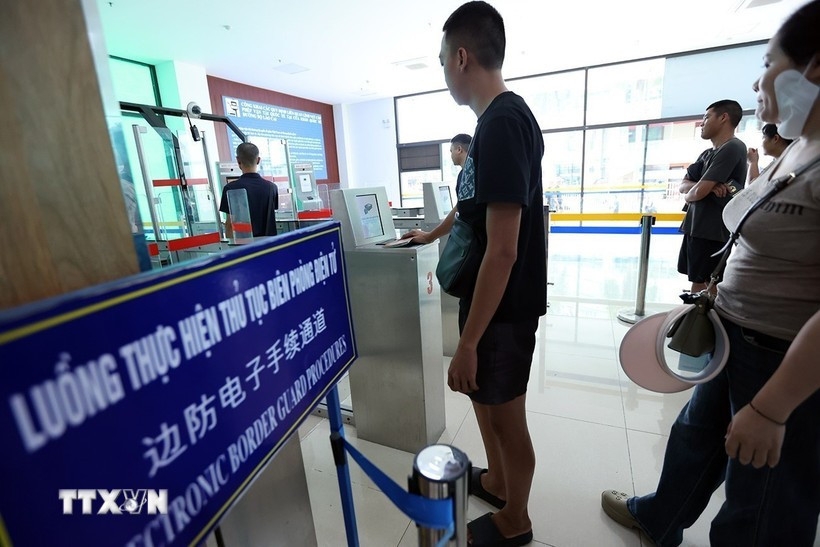
According to Resolution 389/NQ-CP, recently issued by the Government, the additional places consist of four airports, 11 land border gates, and 26 seaports.
The four international airports are Long Thanh International Airport (to be applied once it is officially put into operation), Gia Binh International Airport (also to be applied once it becomes operational), Vinh International Airport, and Chu Lai International Airport.
Previously, under Resolution No. 127/NQ-CP, issued on August 14, 2023, 42 international checkpoints, comprising 13 airports, 16 land border gates, and 13 seaports, were authorised for foreign nationals to enter and exit Vietnam using an e-visa.

Vietnamese e-visa policy promoted in Hong Kong
VOV.VN - The Vietnam Airlines branch in Hong Kong (China) has co-ordinated efforts with the Society of IATA Passenger Agents Ltd. (SIPA) to organise a seminar aimed at enhancing the promotion of Vietnamese destinations and the benefits of the electronic visa (e-visa) policy for tourists from Hong Kong (China).