
Vietnamese businesses ‘shy away’ from Thai market

(VOV) - Despite the fact that Thailand has a population of 64.5 million and is one of the largest consumer markets in Southeast Asia, Vietnam businesses have not seized the economic opportunities it presents for growth.
Recently, Thailand’s Commercial Counselor in Vietnam, Ms Usa Wijarurn sat down with a reporter from the Vietnam Economic Times to discuss trade issues pertaining to Vietnam and Thailand.
Following are translated excerpts capturing the gist of the interview.
Reporter: What is your assessment of the state of trade relations between Vietnam and Thailand over past years?
Ms Wijarurn: I think that trade ties between the two countries have developed robustly since diplomatic ties were established in 1976. In 1991 the pace of trade picked up speed and really began to mushroom following Vietnam’s admission to ASEAN in 1995.
Thailand’s total goods and services trade swelled from just US$3 million in 1995 to US$10.6 billion in 2014, according to official statistics.
 |
In the first half of this year alone, Thai businesses combined imports and exports from and to Vietnam reached a record high US$5.4 billion, an increase of US$1 billion compared against the first six months of last year.
The government of Thailand has set a target of reaching US$20 billion in total trade by 2020.
Reporter: Do you think that the target is realistic?
Ms Wijarurn: In my opinion, the target is very realistic and doable, particularly in light of ASEAN Economic Community (AEC) coming into existence later this year and the associated elimination of tariff and non-tariff trade barriers.
Reporter: At present, Thai entrepreneurs seem to be particularly interested in the retail market in Vietnam. Why do you think Thai businesses are so bullish on retail?
Ms Wijarurn: Currently, Vietnam is the second largest ASEAN trade partner of Thailand and the two countries apart from being in close proximity to each other share many similarities in cultural preferences and consumption patterns.
With the added advantage of a relatively young 90 million strong consumer market, Thai businesses consider it to be a dynamic highly lucrative retail market with ample openings for businesses to prosper.
Thai businesses are particularly savvy when it comes to marketing and studying consumers buying habits. They also understand fully how to innovate and design products, catering to those consumer wants and desires.
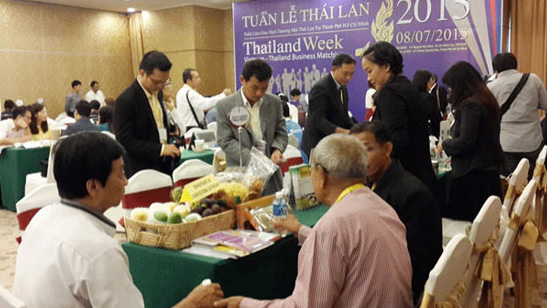
That is why they have organized high numbers of trade fairs and expos over the past 14 years throughout Vietnam and have spent considerable amounts of money and time investing in developing their brand and reputation for quality products.
Reporter: Factually, relatively few Vietnamese businesses have taken the initiative to invest in the Thai market although admittedly this is a large market in Southeast Asia. Could you elaborate on the situation?
Ms Wijarurn: This apathy towards the Thai market stems from Vietnam businesses lack of understanding of how open markets and businesses in general operate. Managing and operating a business and competing are things new to Vietnam.
The Thai trade office has made many overtures to assist Vietnamese businesses introduce their products in Thailand and has on many occasions invited them to participate in trade fairs and variety of other trade promotion events, but to little avail.
We also offered to fund all the costs of their participation but no businesses took us up on the offer.
The indifference might be attributed to the fact that Vietnamese businesses lack skilled managers who have the necessary business aptitude and skills needed to compete in the market and so they are holding back.
It seems pretty straightforward and logical that they need to compete in their own back yard, in Thailand if they ever expect to effectively compete in the major marketplaces around the globe such as the EU, US and Japan markets.
At present, Vietnam’s exports to Thailand are lower than imports from the market and this lopsided balance of trade needs to be rectified.
To balance trade, Vietnam businesses need to get active in the market and get serious about learning how markets work and how to compete effectively.
This is also going to require a well-coordinated and thought-out effort from the business communities and the two nation’s governments.
Reporter: What do Vietnam businesses have to do to accelerate trade activities in Thai market?
Ms Wijarurn: Thailand and Vietnam share many similarities in products and consumer buying and spending habits and that will facilitate Vietnamese businesses understanding the Thai marketplace.
However, they will experience language barriers and overall lack of skilled management and organizational skills in knowing how to run a successful business and in particular, how to approach the Thai market in a structured manner.
They will need to do much work studying and imitating Thai businesses and they should pay a great deal of attention to product quality, prices and factors like culture and lifestyles of Thai people.
Reporter: Thank you very much.