Weather changes trigger unseasonal hailstorms in Northern Vietnam: expert

VOV.VN - Northern and North-Central Vietnam may continue to experience severe thunderstorms, hail, and strong winds in the coming days as transitional weather conditions persist, a senior meteorological expert has warned.
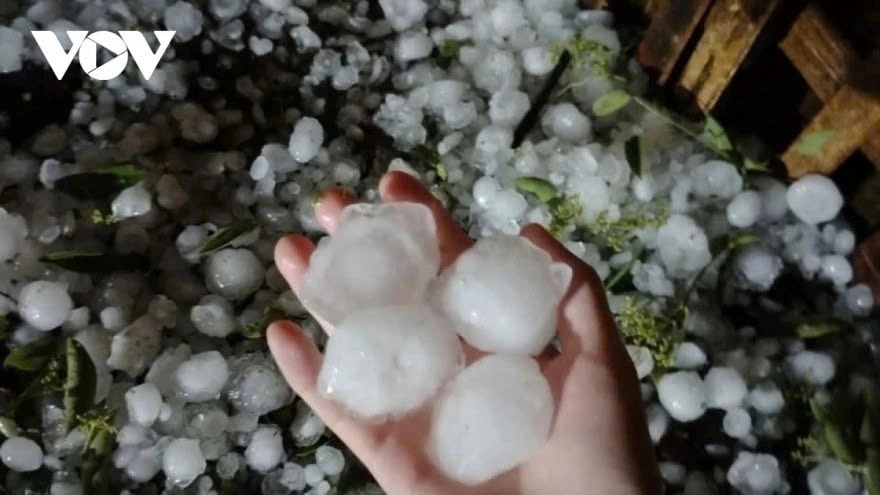
In early May, multiple provinces across northern and north-central Vietnam have experienced a series of severe weather events, including thunderstorms, lightning, strong winds, and hail. These phenomena have caused significant damage to homes, crops, and infrastructure. Notably, hail has not only occurred in mountainous areas but has also spread to midland and lowland regions, including Hanoi.
This is a typical yet intensified pattern of extreme weather during the seasonal transition period, when multiple atmospheric factors interact simultaneously, said Dr. Truong Ba Kien, deputy director of the Vietnam Institute of Meteorology, Hydrology and Climate Change’s Centre for Meteorology and Climate Research.
The expert explained that April and May mark the transition from spring to summer in northern Vietnam - a period prone to strong convective weather such as thunderstorms, whirlwinds, lightning, and hail. However, this year stands out due to earlier-than-usual heatwaves, with temperatures exceeding long-term averages. This has made near-surface air hotter, more humid, and more energy-laden.
Prior to recent hailstorms, many areas experienced temperatures ranging from 35 to 37°C. When late-season cold air masses moved in, though weaker than winter systems, they collided with the existing hot and humid air near the surface. This interaction created strong vertical instability in temperature, humidity, and wind conditions, triggering rapid atmospheric disturbances.
This instability led to the rapid development of convective clouds. Warm, moist air rose quickly, forming vertically developed thunderclouds. Inside these clouds, powerful updrafts and downdrafts caused water droplets to freeze into ice particles, which grew larger through repeated collisions before falling as hail. These dynamic air movements also generated strong winds, localised heavy rainfall, and even tornado-like conditions.
A notable feature of recent hailstorms is their wide coverage and intensity, with some areas recording large and dense hailstones. This indicates that storm clouds developed to significant heights and persisted long enough for ice particles to grow before falling.
The simultaneous presence of three factors, namely high temperatures, accumulated atmospheric energy from moist air, and incoming late-season cold air, has created particularly favourable conditions for severe thunderstorms and hail formation, Dr. Kien explained.
While hail during seasonal transitions is not unusual, he warned that recent events have shown increased intensity, wider coverage, and greater damage. This trend is partly linked to higher baseline temperatures and increased atmospheric energy.
Climate change, he noted, does not directly cause individual storms but alters the overall climate system, allowing more energy to build up in the atmosphere. When triggering conditions arise, extreme weather events can become more intense and less predictable.
In the coming days, northern and north-central Vietnam will remain in the transitional period, meaning the risk of thunderstorms, lightning, hail, and strong winds will persist. The risk is particularly high when heatwaves are followed by weak cold air intrusions or low-pressure troughs.
People are advised to closely monitor weather forecasts and warnings, and to take proactive measures to minimise damage from hazardous weather events.
Late-season cold spell hits northern Vietnam with heavy rain, damage
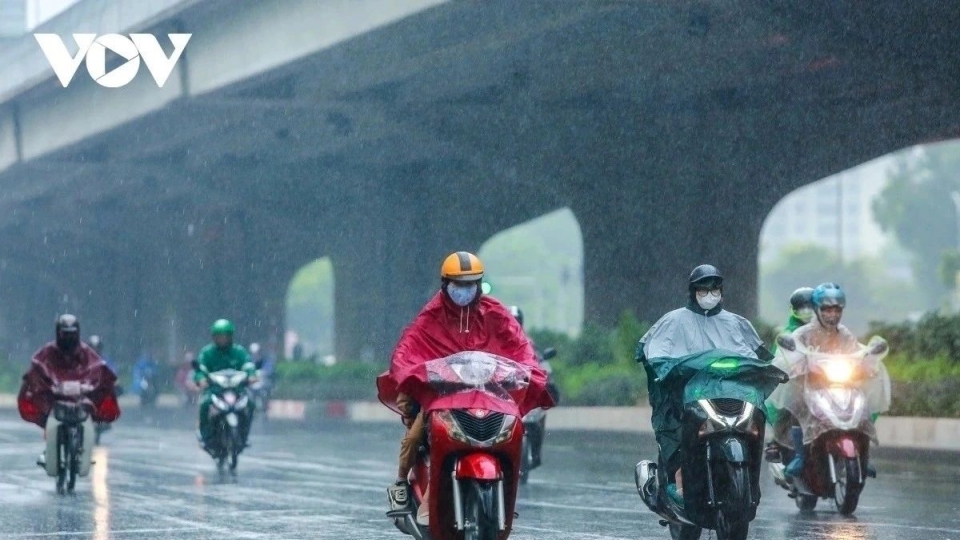
VOV.VN - A late-season cold air mass has moved into northern Vietnam, bringing a sudden drop in temperatures, widespread rain, and thunderstorms accompanied by hazardous weather conditions such as whirlwinds, lightning, and hail.