


Vietnam’s AI ambition runs into talent wall

AI is creating new growth opportunities for Vietnam, but a shortage of quality talent and a widening gap between training and practice are becoming hard bottlenecks.
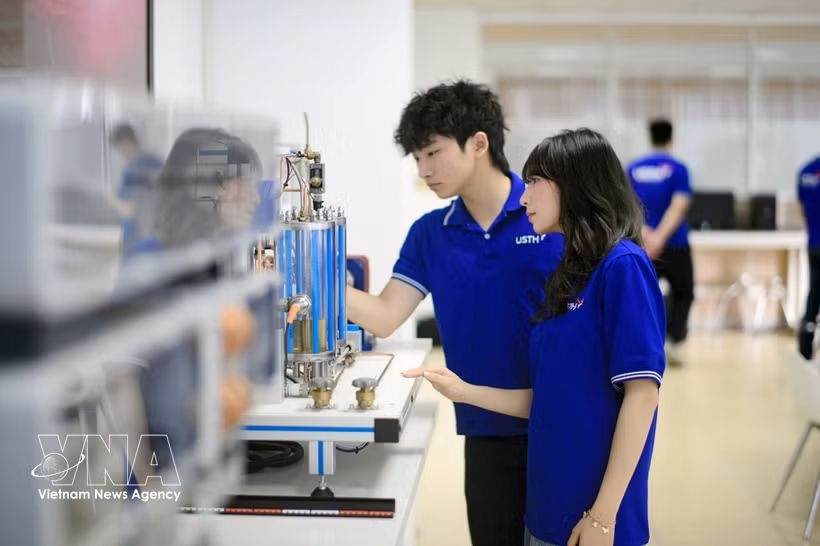
The fix is to overhaul training, tighten links among research institutes, universities and enterprises, and create bespoke incentives to attract talent, which are keys to mastering technology in the digital era.
Shortage of experts, infrastructure
AI is becoming a foundational technology, cutting across industrial production, healthcare, education, finance, governance and public service delivery. But turning technological potential into practical value requires a workforce able to study, master and apply AI to Vietnam’s real-world problems.
Assoc. Prof. Dr. Nguyen Long Giang, Deputy Director of the Institute of Information Technology under the Vietnam Academy of Science and Technology, said the first challenge is building a team of lecturers and experts with profound expertise and practical experience. Teaching AI demands not only maths, statistics and computer science but also the ability to guide learners through an entire problem, from data collection and model selection to testing and system operation.
Giang said the institute holds strengths in research and specialised training in AI, machine learning and big data. But producing a quality AI workforce requires learners to spend time in research groups, receive expert guidance and access computing infrastructure, quality data and practical problems. The immediate difficulty is attracting and retaining young, capable AI researchers as mechanisms and incentives remain inadequate. AI training also requires computing infrastructure and big data, demanding large investment.
Assoc. Prof. Dr. Tran Quang Anh, Vice President of the Posts and Telecommunications Institute of Technology, said the biggest challenge is fierce competition among universities, research institutes and technology enterprises for AI experts. Technology corporations have advantages in income, working conditions and research resources, while recruitment and incentive mechanisms at many public training establishments remain limited. The gap between university training and labour market demand is another barrier to clear.
Linking training with practice
The national scheme for AI workforce development to 2030, with orientations to 2035, recently approved by the Prime Minister, sets targets by 2030 to train new, convert and retrain at least 50,000 students at university level or above with the capacity to apply AI in key fields. It also aims to train and retrain at least 10,000 senior, specialised AI personnel, including at least 1,500 experts capable of studying, developing and mastering core technology and leading key AI tasks.
According to Vice Director of the Phenikaa University Prof.Dr. Pham Thanh Huy, training courses need to become more interdisciplinary, combining maths and computer science foundations with research, development and AI application ability. He said Phenikaa develops AI training on the pillars of a solid scientific foundation, research capacity and the ability to solve practical problems.
In addition to specialised AI and data science courses, AI knowledge is integrated into related information technology majors. Project-based training, early links among students, research groups and enterprises, and curriculum improvements under the international ABET standard help improve practical capacity. Phenikaa’s goal is not only to train AI users but also those who understand the essence of AI and can develop and master AI solutions.
To develop AI workforce, the University of Science and Technology of Hanoi (USTH) has applied project-based learning, allocating 40% of time to lab practice and at least three months to graduation internships at enterprises or research institutes, linked with graduation theses so students engage with real-world problems. The university trains applied AI and system engineers ready for the labour market, updating pioneering technologies such as generative AI, large language models and AI in robots and autonomous systems.
According to head of the USTH Department of Information and Communication Technology Assoc. Prof. Dr. Tran Giang Son, Vietnam soon needs a mechanism to place orders for hi-tech workforce training, expand university–enterprise cooperation, and offer tax incentives when enterprises fund labs or order studies at universities.
Many scientists believe that the State needs a key investment mechanism to avoid scattering resources and form AI training and research hubs with global and regional competitiveness. A special mechanism is also needed to attract, use and compensate AI experts, including those in Vietnam and abroad.
Looking ahead, the Ministry of Science and Technology (MOST) will continue working closely with the Ministry of Education and Training and relevant agencies embark on the AI workforce development schemes approved by the Prime Minister. It will increase the sharing of information on technology trends, workforce demand and corporate skills to update training courses within its authority.
The MOST has established the Vietnam Global AI Experts Network, which aims to gather and connect Vietnamese brainpower globally, based on ability, expertise and voluntary contribution, creating a community able to jointly study, advise, train, transfer technology and directly engage in solving Vietnam’s practical problems.
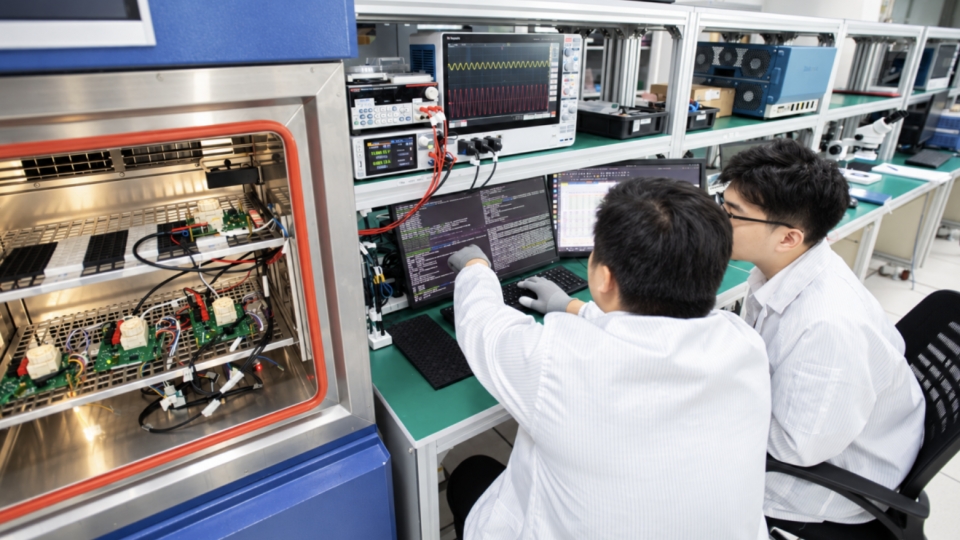
Vietnam positions itself in global AI supply chain
VOV.VN - While Vietnam does not manufacture leading-edge logic chips or high-bandwidth memory (HBM), it is enhancing its position in the AI supply chain by producing essential components that keep data centres running while becoming a major player in outsourced semiconductor assembly and testing (OSAT).

