Vietnamese biotechnology expert promotes Vietnam-Belgium cooperation

VOV.VN - After more than two decades living and working in Belgium, Dr. Nguyen Ninh Thuan, a biotechnology specialist, continues to stay engaged with Vietnamese agriculture and seeks to promote science and technology cooperation between the two countries, particularly in biotechnology for sustainable agricultural development.
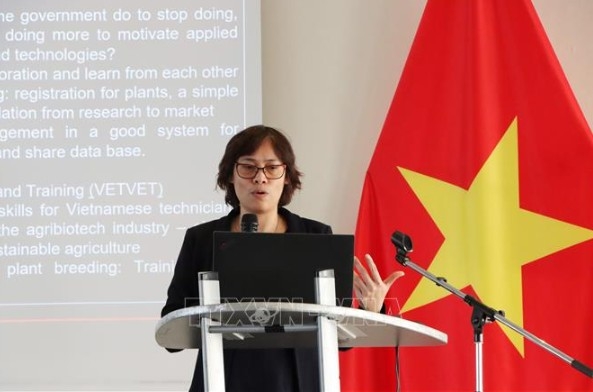
Currently working at BASF, Agricultural Solutions Belgium NV, she is involved in research, development and business of high-tech agricultural solutions. For her, however, the scientific journey began in Vietnam’s rice fields.
In 1999, she went to Belgium to pursue a PhD in biotechnology at Ghent University, one of Europe’s leading centres in plant biotechnology. Her research focused on the interaction between rice blast fungus and rice, as well as molecular mapping of disease-resistant genes in Vietnamese local rice varieties. She said that, thanks to a scholarship from the Rockefeller Foundation for young scientists from developing countries, she had the opportunity to work at the genetics laboratory of Professor Marc Van Montagu, a world-renowned scientist in plant biotechnology.
“It was a major opportunity for me. I had access to the most advanced equipment at the time for research on Vietnamese rice,” she said.
From Belgium’s advanced research environment, she continued to pursue the application of biotechnology to enhance the value of Vietnamese rice. In 2003, while completing her doctoral thesis, she was invited by Bayer CropScience to join a project on developing hybrid rice varieties using biotechnology. Her plan to undertake postdoctoral research in Australia was therefore set aside. “From 2003 to 2013, I was almost living with the dream of rice,” she said.
During her time at Bayer CropScience, she became involved in a number of projects directly related to Vietnam. The company developed hybrid rice varieties resistant to bacterial leaf blight using biotechnology and introduced them into cultivation in Vietnam. Her research team also developed rice varieties resistant to blast disease and planthoppers, while improving aroma and grain quality to better meet the preferences of Vietnamese consumers.
According to Dr. Nguyen Ninh Thuan, this is clear evidence of the effectiveness of international cooperation in scientific research, where knowledge, technology and experience from Europe can be applied to tackle practical challenges in Vietnamese agriculture.
In addition to her work at BASF, she is a member of the Vietnamese Intellectuals Association in Belgium and Luxembourg (ViLab), which connects Vietnamese experts in Belgium with partners in Vietnam. In her first year with ViLab, she helped promote cooperation with AI Academy Vietnam, Phenikaa University and the Ministry of Agriculture and Environment to develop training programmes for high-quality human resources in biotechnology and innovation.
She said Vietnam boast vast potential for high-tech agriculture, while Belgium and Europe have strengths in research, technology and innovation ecosystems. If each side makes full use of its strengths, Vietnam–Belgium cooperation can create new value for the agricultural sector.
Biotechnology can now be applied across the entire agricultural value chain, from breeding and the development of biofertilisers and microbial products to improving quality and post-harvest preservation. “To enhance the competitiveness of Vietnamese agricultural products, especially in the European market, greater investment in biotechnology and innovation is needed,” she said.
However, to step up cooperation between Vietnamese scientists abroad and domestic partners, Vietnam needs to further improve its legal framework on intellectual property and benefit-sharing from research. It is also necessary to build an ecosystem capable of bringing research results into production.
She said Vietnam does not lack capable scientists or core technologies but remains limited in large-scale implementation capacity and in human resources specialising in innovation management. Moving from research to commercial products is a long process that requires teams with both technical expertise and the ability to operate and scale production. She added that Vietnam needs to invest more in high-tech laboratories capable of handling large volumes of research, while strengthening practical training for technicians and young experts.
For Dr. Nguyen Ninh Thuan, scientific cooperation is not only about technology transfer but also about connecting people, sharing knowledge and working towards sustainable development. After more than 20 years in Belgium’s research environment, she continues to look toward Vietnam and augment cooperation between the two countries in biotechnology.
Vietnam, Belgium strengthen cooperation in education, research
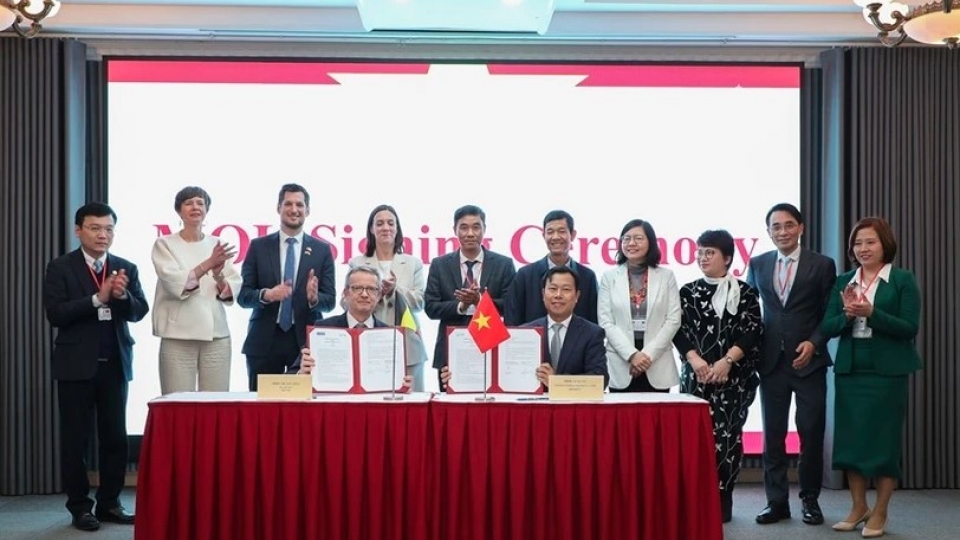
As part of the ongoing State visit to Vietnam by King Philippe and Queen Mathilde, a delegation of Belgian ministers, regional governors, and leaders from universities and research institutions visited the Vietnam National University (VNU) in Hanoi on April 1.