


Vietnam, China boast vast potential for humanoid robotics cooperation

VOV.VN - Vietnam and China hold huge potential for cooperation in technological research, supply chain development, application, and workforce training as artificial intelligence (AI) and humanoid robotics become key future industries.
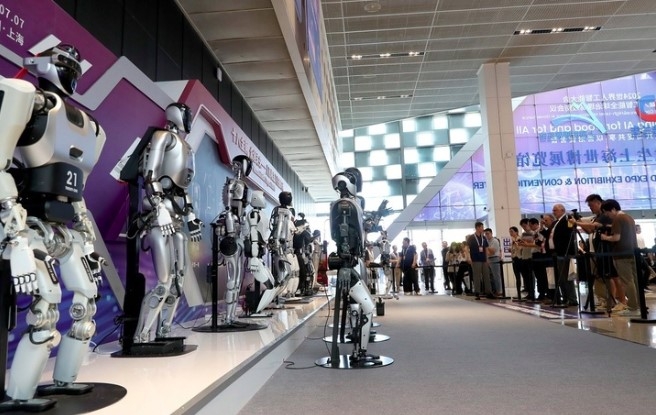
This assessment was made by Associate Professor Wang Xinsong from the School of Social Development and Public Policy at Beijing Normal University, who is also a commentator for China Global Television Network (CGTN), during a recent media interview.
According to the expert, Vietnam and China possess clear complementary advantages. China boasts strengths in research, development, and manufacturing of robotics and supporting industries, while Vietnam has a fast-growing manufacturing sector, an expanding tech workforce, and a production base deeply integrated into global supply chains.
The two countries can expand cooperation across four key pillars. In research and development, joint efforts can focus on technologies serving electronics assembly, precision operations, human-robot cooperation, image recognition, and autonomous decision-making, alongside establishing joint research and testing platforms.
Regarding industrial supply chains, enterprises from both nations can partner in component production, robot assembly, and system integration, enhancing regional supply chain efficiency and enabling Vietnam to participate more deeply in high-tech, high-value-added segments.
In application, Vietnam offers strong potential for testing humanoid robots in electronics production, automotive component manufacturing, and logistics facilities. Universities, research institutes, and businesses in both countries should also step up joint research projects, practical engineer training, and talent exchanges.
For Vietnam, Associate Professor Wang suggested capitalizing on its manufacturing base to promote industrial AI application, gradually mastering system integration, industrial software, and intelligent control capabilities.
Vietnam should also take advantage of international cooperation to improve independent R&D capacity, support sci-tech enterprises, and build an embodied intelligence ecosystem tailored to its national advantages.
China has systematically established development policies for this sector. In 2023, the Ministry of Industry and Information Technology issued guidelines on innovative development for humanoid robots, targeting the formation of a secure, controllable industrial and supply chain by 2027. The 15th Five-Year Plan (2026-2030) continues to identify embodied intelligence as a prioritized future industry.
Data from China's Ministry of Industry and Information Technology shows that in 2025, the country had over 140 humanoid robot manufacturers offering more than 330 products. International Data Corporation (IDC) reported that in the first half of 2026, China's humanoid robot shipments exceeded 19,000 units, accounting for roughly 78% of the global total.
While rapid output expansion underscores China's manufacturing capacity, large-scale commercialization still faces challenges in long-term operational stability and cost-effective performance in complex real-world environments. Over the next three to five years, competition will transition from basic mobility to autonomous task execution, commercial efficiency, and technology ecosystem building.
As global competition in embodied intelligence and humanoid robotics is still in its early stages, bilateral cooperation will generate new development opportunities, promoting smart, high-value-added transformation in the manufacturing sectors of both Vietnam and China.
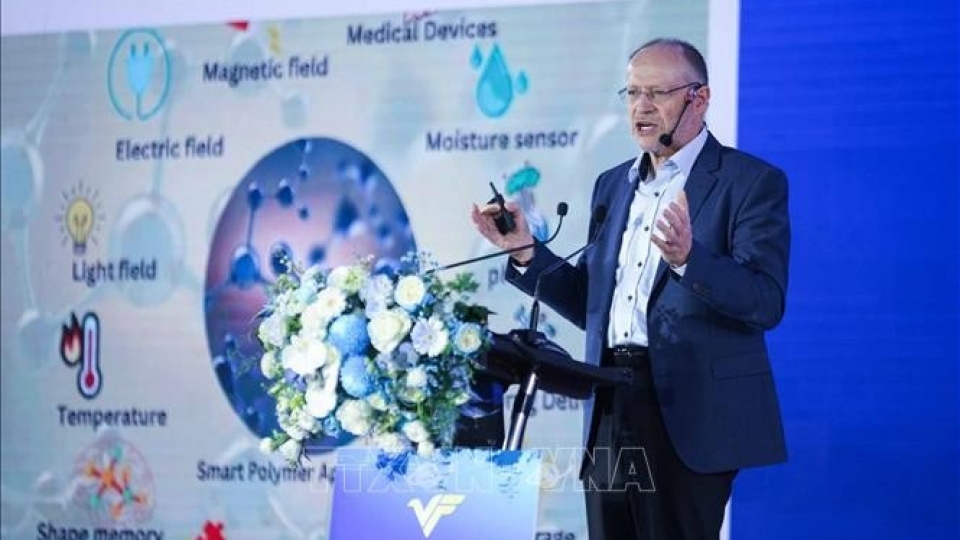
Vietnam has advantages to develop versatile humanoid robots: experts
Vietnam sees growing advantages in the global race to develop versatile humanoid robots - machines which are capable of performing complicated physical tasks, interacting naturally with humans and operating safely in a real-world environment.


