Upholding journalistic ethics in the digital age

VOV.VN - Amid growing pressure from social media competition, click-driven content, and cases of ethical violations in journalism, the need to safeguard professional standards has become more urgent than ever.
In recent times, public concern has grown over multiple cases of journalists being arrested for taking money from businesses, abusing their profession for personal gain, or collectively pressuring enterprises, seriously damaging the image of Vietnam’s revolutionary press.
A reporter from Voice of Vietnam Online conducted an interview with Le Quoc Minh, member of the Party Central Committee, Editor-in-Chief of Nhan Dan, deputy head of the Party Central Committee’s Commission for Communication and Mass Mobilisation, and chairman of the Vietnam Journalists Association, on this issue.
Chasing views alone is a dead end
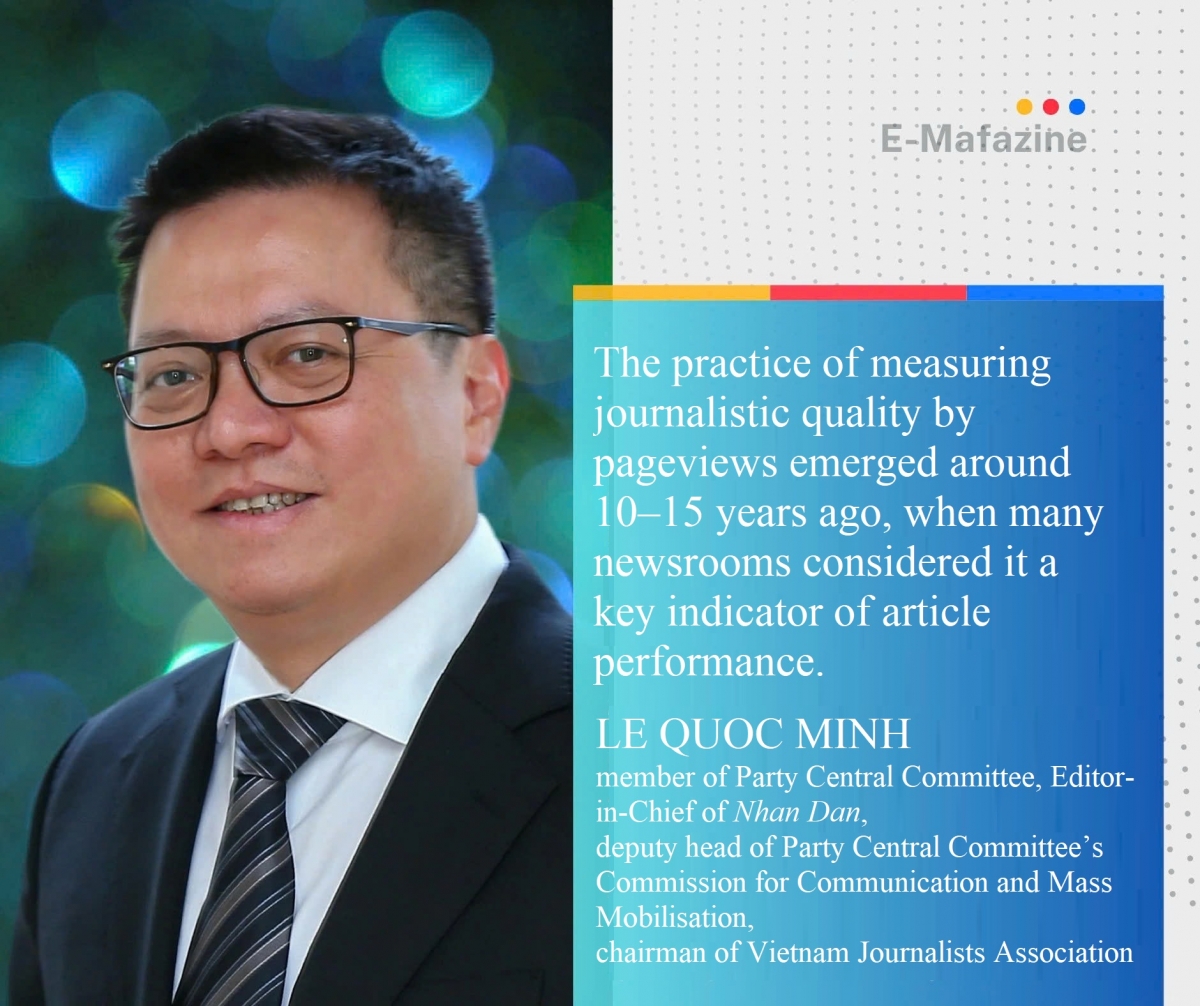
VOV: In the context of increasingly fierce competition between journalism, social media, and the spread of misinformation, many young journalists are drawn into a “race” for sensationalism and clicks. As the Chairman of the Vietnam Journalists Association, how do you assess the risk of ethical erosion among a segment of today’s journalism community?
Journalist Le Quoc Minh: The trend of assessing journalistic quality through pageviews emerged around 10–15 years ago. At one point, many newsrooms considered it a key indicator of editorial performance.
However, numerous analyses have shown that “click-driven” content often relies on sensational elements, commonly associated with a set of familiar triggers such as shock, sex, scandal, crime, and violence.
While such content may generate significant traffic, it does little to build a loyal readership or attract sustainable advertising revenue. On the contrary, it can erode the quality and credibility of news organisations, making its long-term value to brand development almost negligible.
Many newsrooms have since recognized this issue. The focus on sensational entertainment, celebrity gossip, and crime-related content to chase traffic is gradually declining. Increasingly, it is understood that competing directly with social media is an impossible race, and that pursuing pageviews alone is a dead end.
Statistics show that 20% of loyal readers can account for up to 80% of value in terms of revenue, advertising, and traffic. As a result, many media outlets are shifting their focus from “fly-by audiences” to building a strong base of loyal readers.
Today, journalism must prioritise cultivating long-term audience loyalty. To achieve this, there is no alternative but to improve content quality and clearly understand who the audience is. It is essential to define a specific target readership and serve them in the most effective and meaningful way.
Zero tolerance for those damaging the credibility of journalism

VOV: In recent times, public attention has been drawn to several cases involving violations of journalistic ethics, such as journalists being arrested for taking money from businesses, or instances where some reporters have abused their professional role to collectively pressure enterprises for personal gain.
How serious do you assess these incidents to be, and what are their implications for the credibility and reputation of the revolutionary press?
Journalist Le Quoc Minh: This is an unacceptable issue. Some argue that because the press must now be financially self-reliant, journalists are forced to seek revenue sources, which leads to unethical behavior. However, this is neither a valid explanation nor an acceptable justification.
Today, advertising is only one of many business models in journalism. Globally, there are around 14–15 different revenue models identified. Each media organisation needs to apply at least three models simultaneously in order to achieve sustainable development.
As for using negative coverage to pressure or extort businesses for personal gain, even in cases where a company may have legitimate wrongdoing, this is still unacceptable. Negative reporting, when it occurs, must serve the purpose of making society better, not turning violations into a tool for profit.
Nowadays, unethical practices have become increasingly sophisticated, ranging from individual misconduct to organized groups of journalists acting in a coordinated, “mob-like” manner. All such behaviours are firmly opposed and never accepted by the Vietnam Journalists Association.
We have issued the “10 Ethical Principles of Vietnamese Journalists” and, two years ago, promoted the development of a cultural environment within media organizations. Journalists must clearly understand that their profession is not about selling a commercial product in the usual sense, but about bearing responsibility to society.
A single article can affect many people, it can damage the reputation, even the survival, of a business or an entire industry. Those who choose journalism must do so with a commitment to higher social purposes. If journalism is pursued for confrontation or profit-driven attacks, then such individuals are not worthy of being called journalists.
Keeping the flame of journalism alive – renewing mindsets
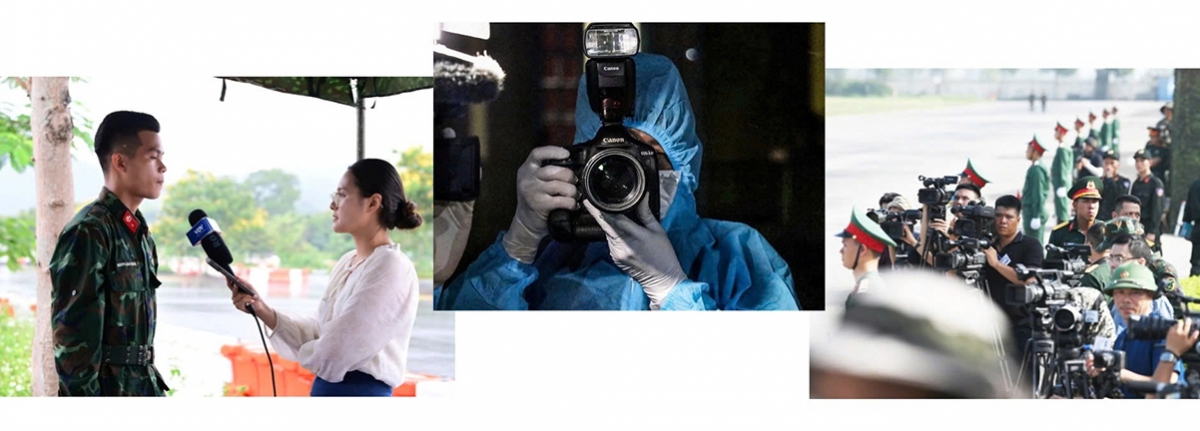
VOV: In your view, in order to strengthen the revolutionary ethics of journalists, beyond administrative regulations and sanctions, what long-term educational solutions should be introduced, particularly in journalism training at universities?
Journalist Le Quoc Minh: In the conventional approach, journalists themselves are ultimately responsible for their own professional self-cultivation. Measures taken by associations or regulatory bodies are mainly administrative and often only temporary in nature. Even when the Vietnam Journalists Association’s disciplinary council takes strong action, up to and including removing individuals from the profession, these are still case-by-case responses.
Therefore, the decisive role lies with news organisations themselves. Media outlets must maintain a clear stance of zero tolerance, refusing to accept individuals who violate professional ethics. Anyone who breaches these standards must be removed and not allowed to continue working within the system.
Internationally, there have been cases where photojournalists found guilty of fabrication were immediately dismissed and subsequently unable to find employment in other news organizations due to reputational damage.
Vietnam should also build a similar professional culture. If a journalist has been disciplined for ethical violations, other organisations should not rehire them. Only by doing so can the profession effectively eliminate the “bad apples” that undermine the integrity of the journalism environment.

VOV: What are your expectations for the younger generation of journalists in “keeping alive” the revolutionary traditions of the press while also “igniting” innovation in mindset within today’s modern media environment?
Journalist Le Quoc Minh: The younger generation of journalists brings fresh approaches and is especially quick to adapt to technology. Although they may lack experience, they possess strong enthusiasm and curiosity, both of which are essential qualities in journalism.
They are also equipped with modern reporting tools and emerging technologies. Therefore, I expect young reporters to more easily keep pace with global journalism practices and to produce creative, engaging content that resonates with today’s audiences.
We cannot continue relying on traditional writing styles, filming techniques, or reporting formats that are increasingly out of step with how most audiences consume information today. Young journalists can be the driving force for such change.
However, whether young or experienced, the most important requirement remains strict adherence to professional ethics. Without a strong ethical foundation, journalists are easily vulnerable to influence and corruption.
Internationally, many countries have very clear regulations to minimize such risks. For example, sports journalists are not allowed to accept complimentary match tickets, and financial reporters are prohibited from trading stocks. These rules help ensure objectivity and integrity in journalism.
In Vietnam, we still do not have such specific and detailed regulations in place.
VOV: On the occasion of the 100th anniversary of the Vietnamese revolutionary press, what message would you like to send to the journalism community?
Journalist Le Quoc Minh: My message to the journalism community is that we should strive every day to become as professional as possible.
Professionalism is reflected not only in reporting practices, but also in the ability to adopt new technologies and embrace modern journalism methods. Even more importantly, journalists must maintain a positive and constructive mindset - one that ensures every article, image, video, or broadcast contributes to building a better society, rather than focusing solely on its negative aspects.
Japanese veteran journalist praises Vietnamese press’ progress
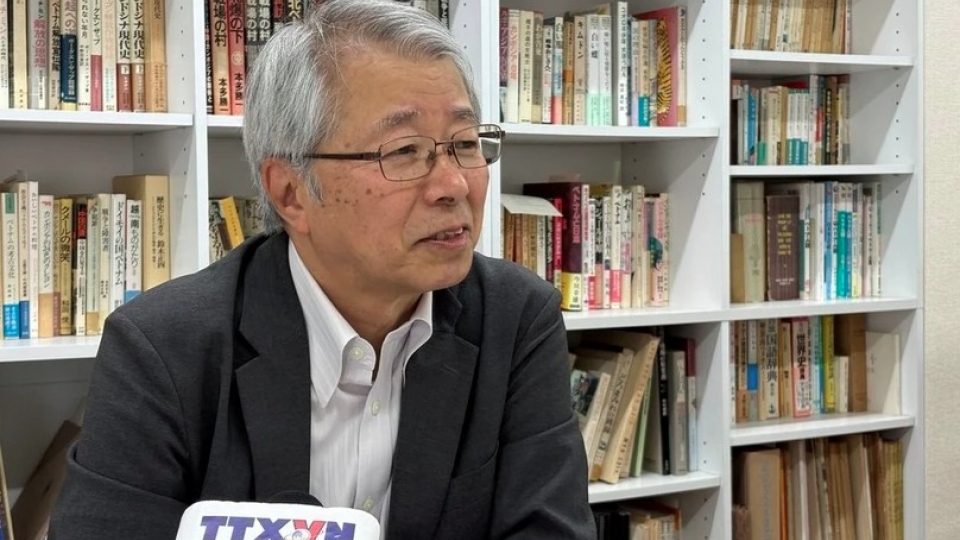
As Vietnam commemorates a century of revolutionary journalism, veteran Japanese journalist Toshifumi Kitagawa, long-time correspondent in Vietnam for Akahata, the official newspaper of the Japanese Communist Party, has shared his admiration for Vietnam's revolutionary press and its impressive strides in digital transformation.