Spring returns to northern frontier, where people stand guard

VOV.VN - As the Lunar New Year (Tet) approaches, red national flags flutter in villages along Lai Chau’s border, where ethnic communities and border guards quietly safeguard peace on Vietnam’s northern frontier.
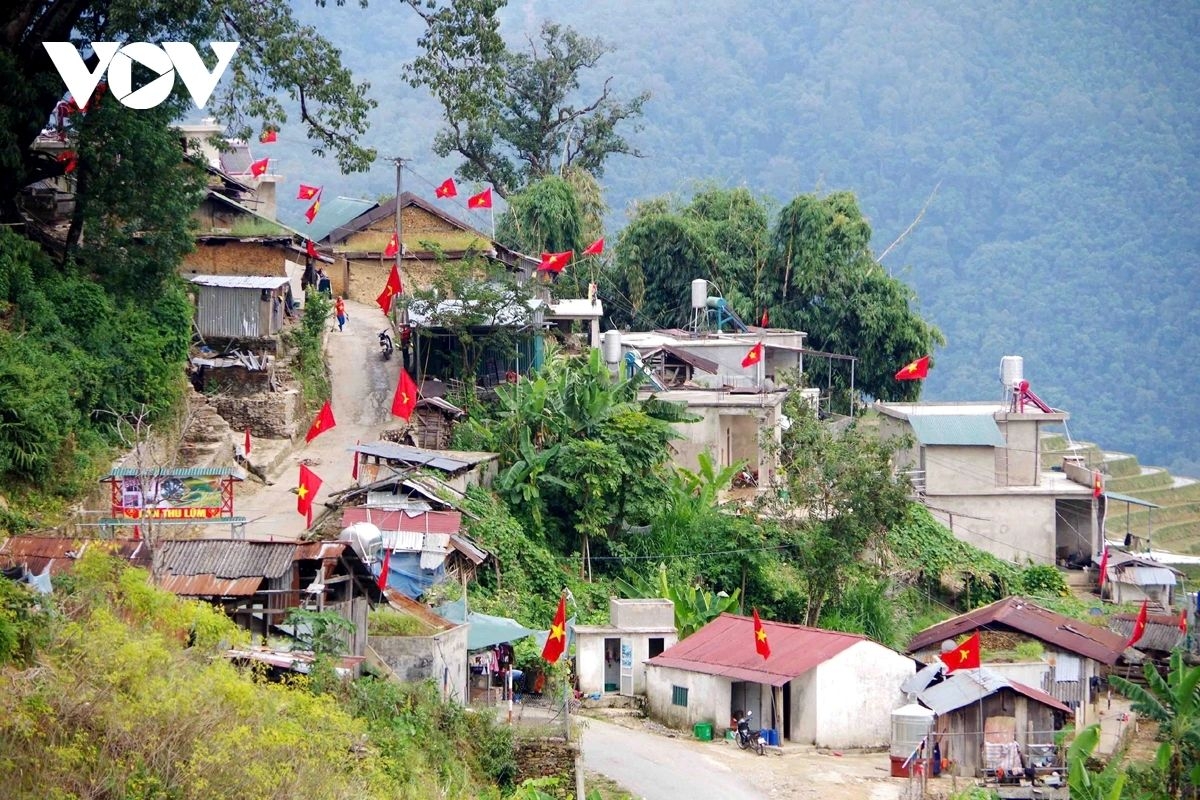
In Thu Lum commune, home to Ha Nhi and La Hu ethnic groups in Lai Chau’s far northwestern highlands, daily life continues steadily in the crisp mountain air. Some residents repair rooftops, others clear fields, while many hang bright red flags in front of their homes in preparation for Tet.
Here at the country’s frontier, peace is not an abstract concept. It is reflected in each household, each flag raised on a hillside, and in the enduring commitment of people who have long chosen to stay rooted to their land.
Under Resolution 33 of the Politburo on the Strategy for Safeguarding National Borders, citizens are identified as key stakeholders directly involved in protecting national sovereignty. In Lai Chau’s border areas, that principle is visible not just in policy documents, but in everyday life.
Each resident, in their own way, serves as a “living border marker,” affirming sovereignty through their enduring presence.
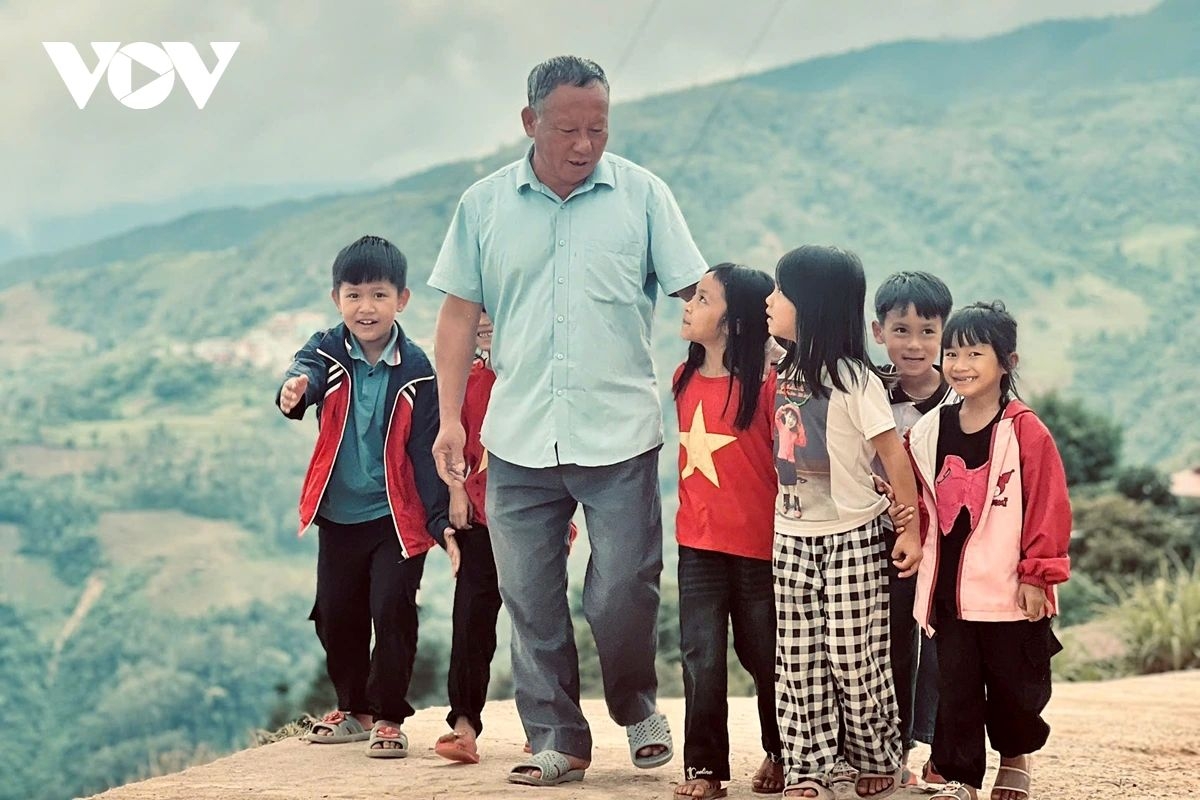
Si Hu Pha, head of Lo Na village in Thu Lum commune, said border guard units and local authorities visit disadvantaged households every Tet with gifts and well wishes.
“These gifts are meaningful to us,” he said. “They help families celebrate a warmer, happier Lunar New Year. People feel cared for and supported.”
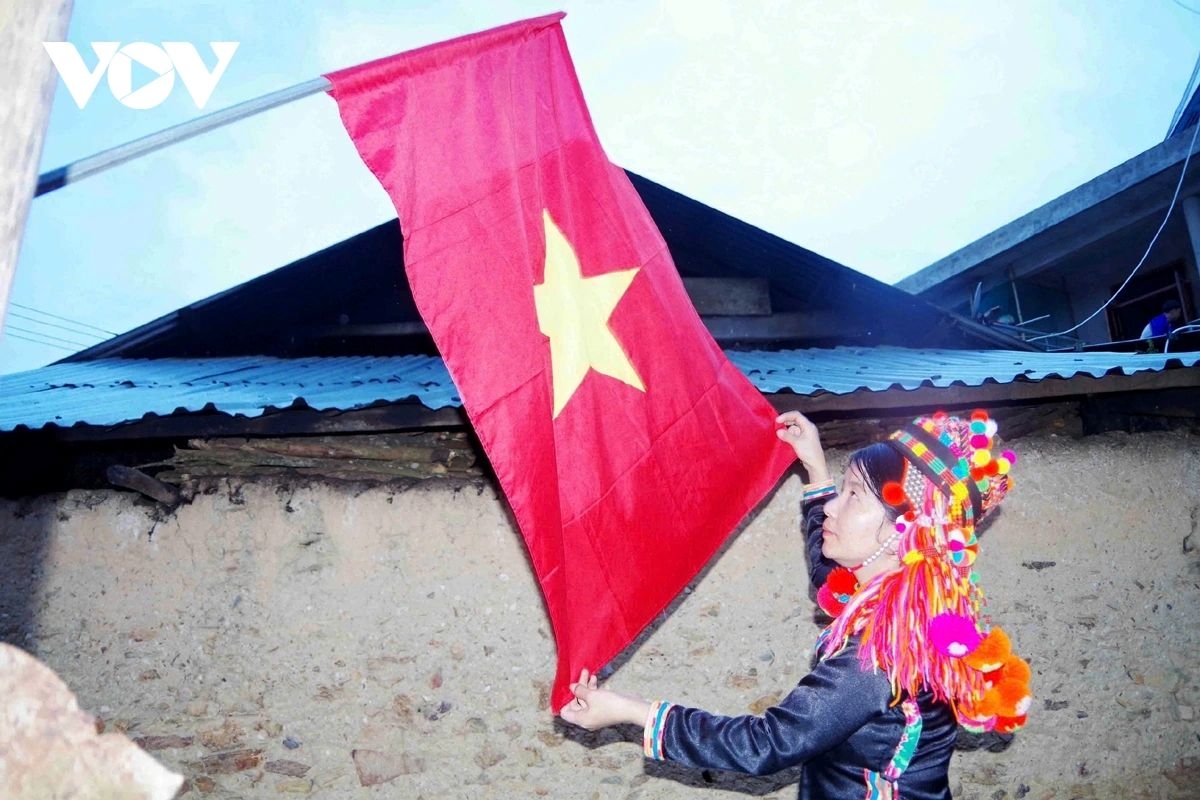
The Tet presents and national flags distributed to villagers carry not only material value but also symbolise solidarity between the military and civilians along the country’s frontier.
In Thu Lum, Chu Xe Lu’s story illustrates what Vietnamese officials describe as the “people’s hearts and minds posture” in border protection. For more than two decades, he has traversed over 50 kilometres of rugged border terrain, serving as both a local official and a trusted guide for border guards during surveys, boundary demarcation and patrol route maintenance.
“Safeguarding border security is the responsibility of all citizens,” Lu said. “Living here, we must be even more responsible. I have encouraged villagers to clear pathways so soldiers can patrol and maintain border markers more easily.”
The quiet determination of border residents is echoed by a younger generation who have chosen to wear the green uniform of the border guard force. Captain Chu Ha Pha of Ka Lang Border Guard Station grew up listening to his father’s stories about patrol missions along the frontier. Inspired by those accounts, he decided to follow the same path.
“I dreamed of becoming a border guard to contribute, even in a small way, to protecting our territorial sovereignty and border security,” he said.
According to leaders of the Lai Chau Border Guard Command, the strength of border protection lies in public unity, particularly among ethnic minority groups who make up much of the population in these remote areas.
Colonel Le Cong Thanh, Deputy Political Commissar of the Lai Chau Border Guard Command, said ethnic minority communities in border areas demonstrate strong patriotism and close ties with the Party, the State and the border guard force.
“This is a crucial foundation for building a solid national defence and security posture, as well as strong public support,” he said.
Over the years, border guard units have implemented various socio-economic development initiatives, including poverty reduction and livelihood support programmes, to help improve living standards and encourage residents to remain in their villages.
As Tet draws near, the villages of Lai Chau glow with red flags against the mountain landscape. Along winding patrol paths, the footprints of soldiers and civilians intertwine - a quiet testament to shared responsibility.
In this frontier region, the border is safeguarded not only by stone markers, but by trust, unity and the enduring presence of its people, with each one a “living border marker” standing firm to keep spring peaceful at the edge of the nation.
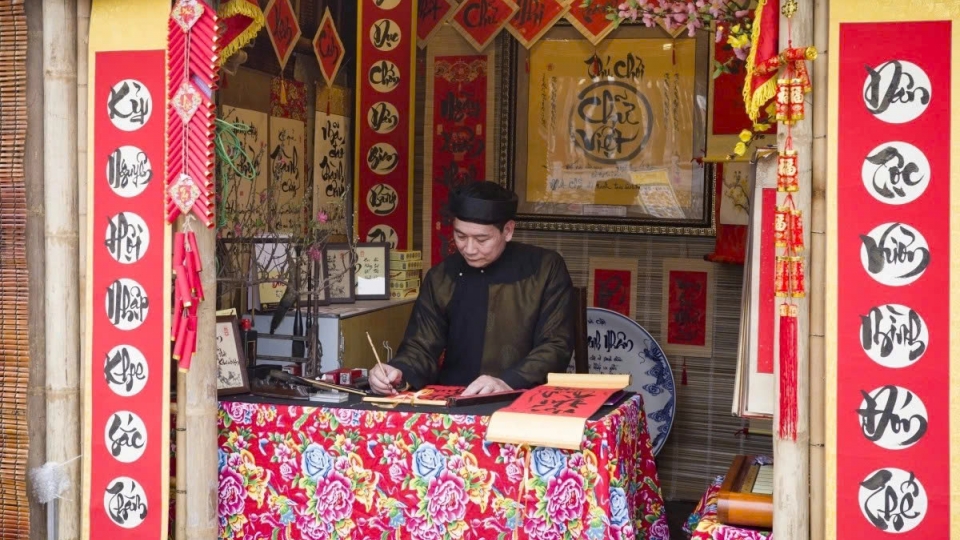
Spring calligraphy festival marks Tet 2026 at Temple of Literature
VOV.VN - The annual spring calligraphy festival will return to Ho Van area, within the Van Mieu - Quoc Tu Giam Special National Relic, Hanoi, on February 11 to kick-start a series of cultural activities in celebration of the Lunar New Year of the Horse 2026.