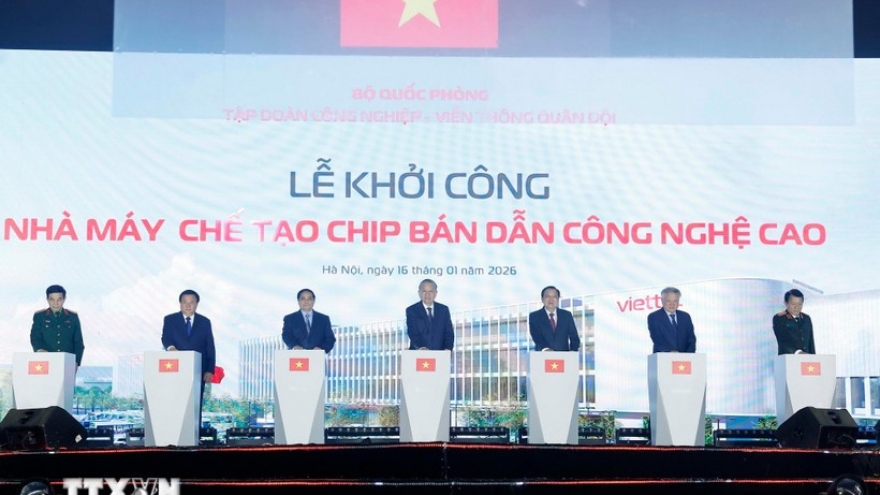
Resolution 57: Infrastructure investment for strategic technologies

Vietnam is accelerating investment in national research infrastructure for strategic technologies as it seeks to translate the Politburo's Resolution 57-NQ/TW, issued in late 2024 on breakthroughs in sci-tech, innovation and national digital transformation, into tangible momentum.
The push is expected to gradually convert the resolution's ambitions into core engines of rapid, sustainable economic expansion.
Addressing practical challenges
On December 28, 2025, the Prime Minister approved the national science, technology and innovation scheme for strategic technology products earmarked for immediate rollout.
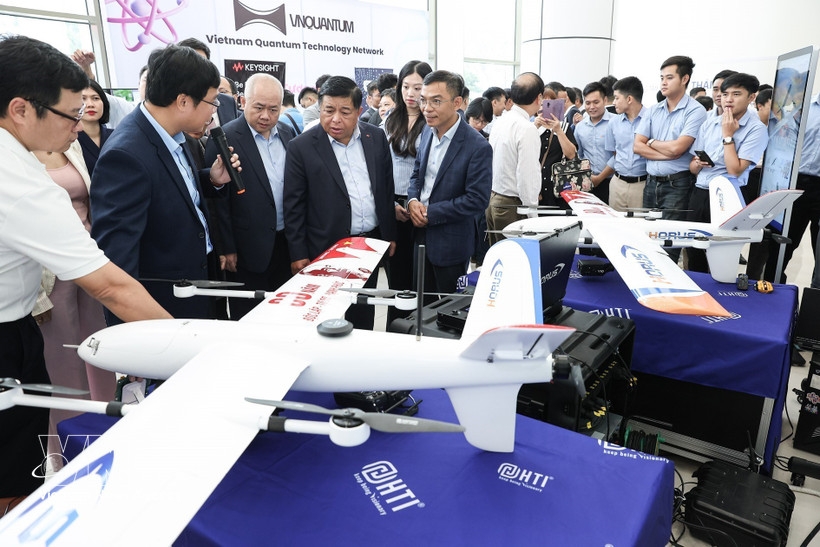
The scheme spotlights six pioneering strategic products, including Vietnamese large language models and virtual assistants, edge AI cameras, autonomous mobile robots, 5G mobile network systems and equipment, blockchain infrastructure and apps for traceability and digital assets, plus unmanned aerial vehicles (UAVs). These are positioned to displace imports over time and embed more deeply into global value chains.
The selections mark initial progress toward mastering 11 national strategic technology groups poised to directly influence socio-economic advancement. The groups span AI, semiconductors and microchips, robotics and automation, biotechnology, advanced materials, new and renewable energy, aerospace, big data and cloud computing, blockchain, next-generation mobile networks (5G/6G), and UAV technology.
By 2030, the scheme targets mastery of at least 80% of core technologies, a domestic value-added ratio of at least 60% in product pricing and 40% in production costs, coverage of at least 30% of local demand, and exports of select items. The benchmarks underscore Vietnam's shift from technology outsourcing toward indigenous creation of high-value, science-driven products.
Permanent Deputy Minister of Science and Technology Vu Hai Quan said the ministry has structured strategic technology efforts around three pillars, namely core technology, infrastructure and workforce. Each is broken into standardised missions with defined contexts, goals, scope, methodologies, outputs, timelines, budgets, resources and evaluation metrics.
These missions will spawn specific projects drawing in companies, research institutes, universities, ministries, localities and other players. The ministry aims to progressively construct a full-fledged innovation ecosystem anchored in strategic technologies and products.
This year, the ministry will commission R&D tasks centred on core technologies and strategic products that tackle real-world needs from state agencies, localities and markets. Concurrently, it will cultivate collaboration across the state, scientists and enterprises to engage all links in the innovation chain, from research and design through testing, production and commercialisation. The approach is viewed as a critical fix for bridging the research-to-market divide, propelling strategic technology products out of labs and into rapid socio-economic application.
Building a national lab system for 11 strategic technologies
Vietnam now operates 16 national key laboratories established from earlier phases, focusing on seven priority areas, including biotechnology, information technology, materials technology, mechanical engineering -automation, petrochemicals, energy, and several other sci-tech fields.
From 2026 - 2030, national sci-tech infrastructure efforts will centre on building, upgrading and efficiently running a network of nine national key labs and three centralised research and testing centres dedicated to strategic technologies.
The Ministry of Science and Technology has submitted the proposal to the PM to concretise the Resolution 57-NQ/TW.
Accordingly, 12 core units, including nine national key labs and three centralised research and testing centres, will serve as focal points for intensive investment supporting the 11 national strategic technologies. These units are to operate under special financial mechanisms, with full coverage of regular operating costs in the initial five years. The scheme also targets forming 20 strong research groups and train 1,000 PhD-level researchers tied to major projects.
Comprehensive and long-term investment in research infrastructure is projected to sharply elevate Vietnam's capacity for international-standard technology testing and validation, marking a leap in endogenous technological prowess. It will lay vital groundwork for flagship industries and bolster technological self-reliance amid escalating global rivalry in cutting-edge fields.
The ministry is also preparing a project to establish a broader system of national research centres, testing facilities and labs for strategic technologies, supplying infrastructure to fuel an accelerated innovation phase from 2026 onward.
In tandem, it plans to present the PM with a comprehensive strategic technology and industry scheme covering all 11 strategic technology groups. Previously, the ministry submitted a national scheme for UAV development and application through 2030, with a 2045 outlook to the Politburo.
Together with these schemes, bolstering the national lab system and centralised research/testing centres is set to form a cornerstone of a stronger national innovation ecosystem.
The combined drive is expected to lift Vietnam's standing on the global innovation map, with aspirations to rank among the top three ASEAN countries in the Global Innovation Index in the years ahead.
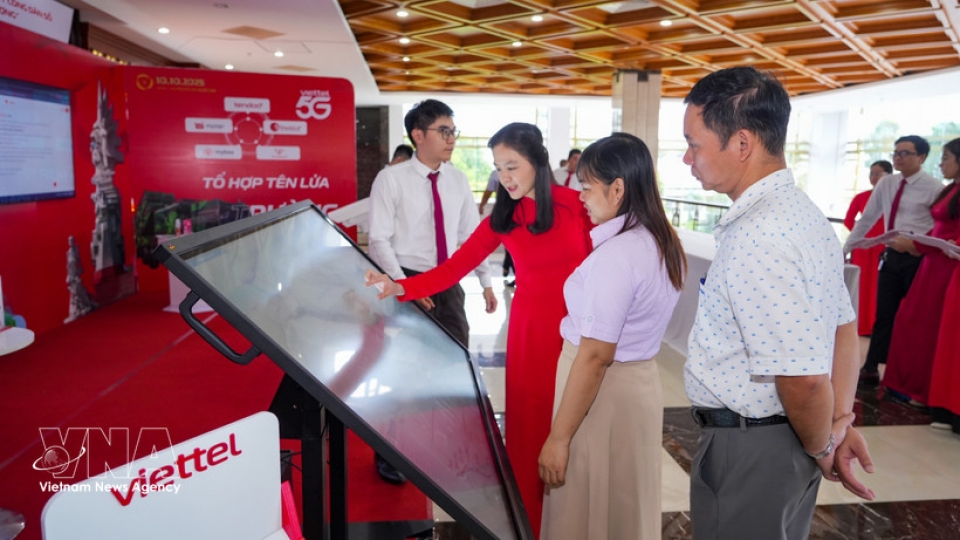
Resolution 57: Science communication expanded on digital platforms
Efforts to expand science communication on digital platforms are being stepped up to implement the Politburo's Resolution No. 57-NQ/TW, which aims to create breakthroughs in science, technology, innovation and national digital transformation.