
Overseas Vietnamese expertise tapped for national development

Overseas Vietnamese intellectuals in Thailand have stated that the Party’s and State’s increasing support for their participation in policy-making is a key move to tap the expertise of the Vietnamese community abroad as the country enters a new development phase.
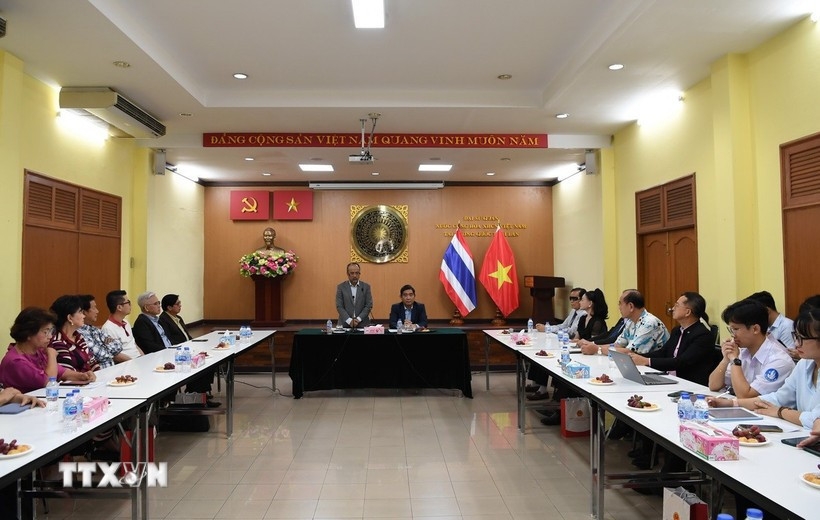
Assoc. Prof. Nguyen Duy Hung from Sirindhorn International Institute of Technology (SIIT), under Thammasat University, Thailand, valued the invitation for Vietnamese intellectuals in Thailand to attend a meeting with the Vietnamese Embassy in the country.
He highlighted their opportunity to contribute ideas to the implementation of the Politburo’s Resolution No.57-NQ/TW on breakthroughs in science and technology development, innovation, and national digital transformation, as well as to provide feedback on the draft documents for the upcoming 14th National Party Congress.
He pointed out that, when well-organised, the initiative can fully leverage the extensive expertise of Overseas Vietnamese (OVs), including top specialists in diverse fields. He stressed that, amid rapid development across multiple sectors, accurately identifying and connecting experts in their respective disciplines is key to maximising the impact of their contributions.
From the perspective of education and training, Hung said that SIIT currently maintains many cooperation programmes with Vietnamese universities through scholarships and student exchanges. However, lecturer exchanges remain limited. He said that if overseas Vietnamese professors were able to engage in part-time teaching at educational institutions in the homeland, they can make more practical contributions to the nation’s development.
Meanwhile, Cao Tat Minh, Chairman of the Vietnamese Association in Khon Kaen province, Thailand, said that the Party’s and State’s forums for OVs to contribute opinions reflects recognition of the overseas Vietnamese community as an inseparable part of the nation.
He highlighted the role of the Vietnamese Consulate General in Khon Kaen in maintaining connectivity activities that help OVs stay promptly informed about the Party’s guidelines and the State’s policies.
According to Minh, throughout different historical periods, generations of OVs in Thailand have consistently contributed to the homeland. In the current context, as Vietnam enters a new era—that of the nation’s rise, the Vietnamese community in Thailand continues to demonstrate its readiness to stand alongside the country and contribute even more to national development, for the goals of harmony and sustainable development.
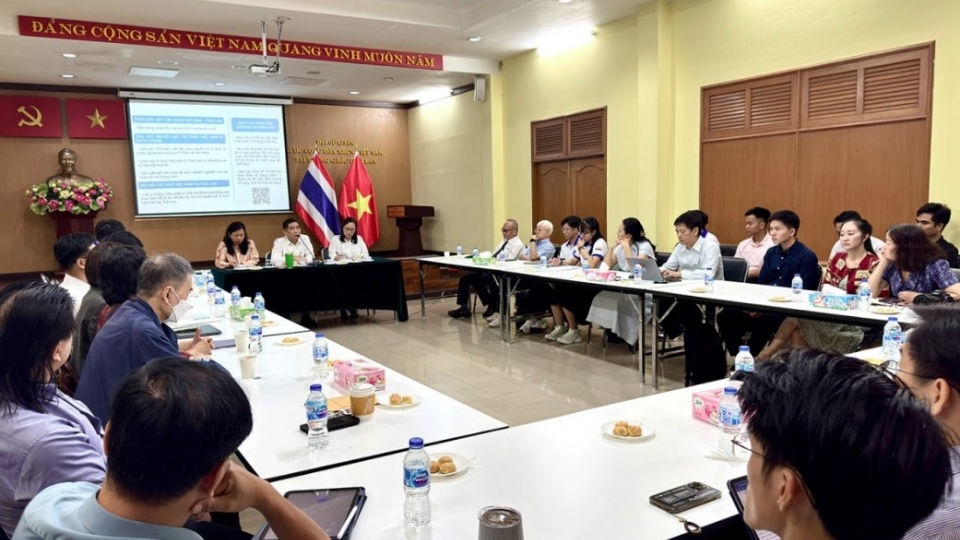
Overseas Vietnamese stand alongside the homeland through open dialogue forums
VOV.VN - In recent years, dialogue forums organized by Vietnam’s overseas representative agencies have served as a bridge linking overseas Vietnamese (OVs) with the homeland.
