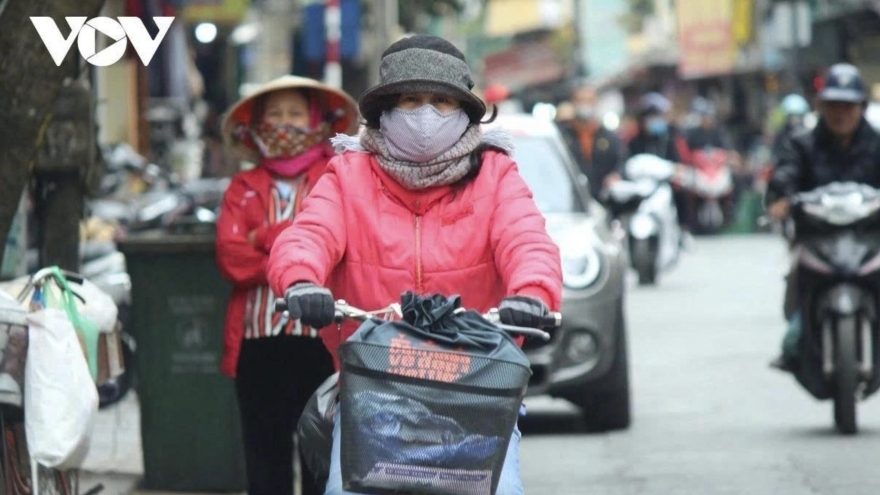
Lunar New Year holiday may see severe cold spell in Vietnam

VOV.VN - Vietnam may experience severe cold spells during the Lunar New Year holiday as subsequent cold air outbreaks are forecast to hit northern and central regions from late January into early February, meteorologists said.

Amid increasingly erratic weather patterns driven by climate change, meteorological experts warned that northern Vietnam and several other regions could brace for cold air outbreaks in the second half of January, extending into early February 2026.
The first cold spell is forecast to hit between January 21-25, pushing temperatures in northern mountainous areas down to 9-10°C, with some locations falling lower. In the Red River Delta and Hanoi, temperatures are expected to drop to around 13-14°C. Central Vietnam will see nighttime temperatures of 17-20°C, while Da Lat could cool to 12-13°C. The cold surge is also anticipated to bring light, scattered rain to central regions, intensifying cold and damp conditions.
A second, stronger cold air mass is forecast from around January 28, persisting into early February 2026. Temperatures in highland areas of northern Vietnam could fall to as low as 6°C, while the Red River Delta is projected to see lows of 12–13°C.
Provinces from Quang Tri to Quang Ngai may experience prolonged light rain and chilly, humid weather, with bird’s nest farmers advised to strengthen cold-protection measures for swiftlet populations.
The National Centre for Hydro-Meteorological Forecasting said the Lunar New Year in 2026 is scheduled to fall in February, a period when cold air activity is typically strong.
Although average cold intensity over the next three months is forecast to be weaker than in many previous years, severe cold spells are likely to be concentrated in February, potentially making this year’s holiday colder than in recent years. Frost and snowfall risks have also been flagged for high-altitude areas in northern Vietnam during January and February.
Meteorologists attributed the outlook to the El Nino–Southern Oscillation (ENSO) currently in a weak La Nina phase, with sea surface temperature anomalies in the central Pacific at around minus 0.5°C. Over the next three months, ENSO is expected to shift toward neutral conditions with a 75%-85% probability, while the likelihood of La Nina persisting has fallen to 15%-25%, increasing short-term weather volatility and the risk of unusually intense cold spells.
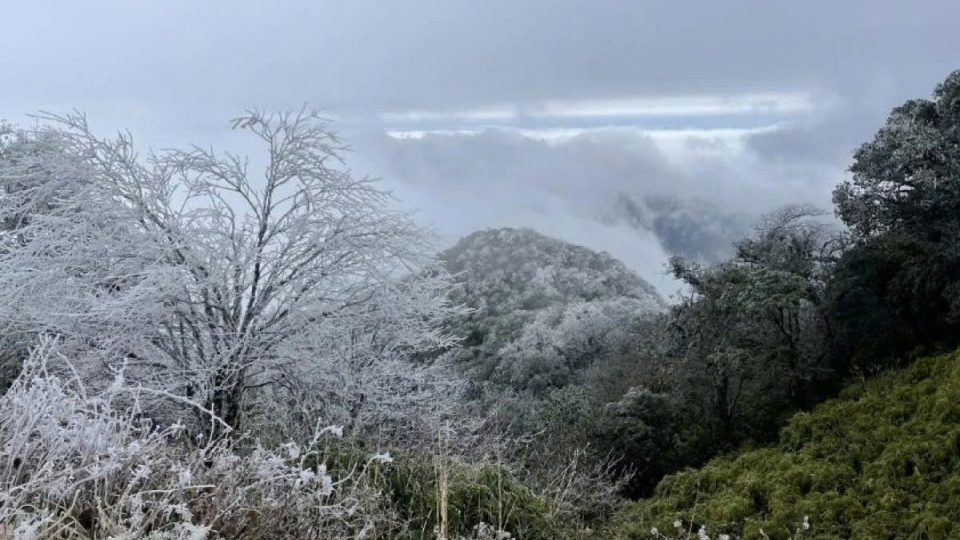
Cold surge brings severe cold to northern Vietnam
VOV.VN - A strengthened cold air mass swept into Vietnam from late January 20, first affecting mountainous areas in Lang Son and Cao Bang before spreading across the northern region, according to the national weather bureau.