


Lao Party official highlights mission of Vietnam’s revolutionary press

VOV.VN - Vietnam’s revolutionary press has a glorious history, standing alongside the nation throughout its struggle for national liberation and reunification as well as its path toward socialism, according to a Lao official.
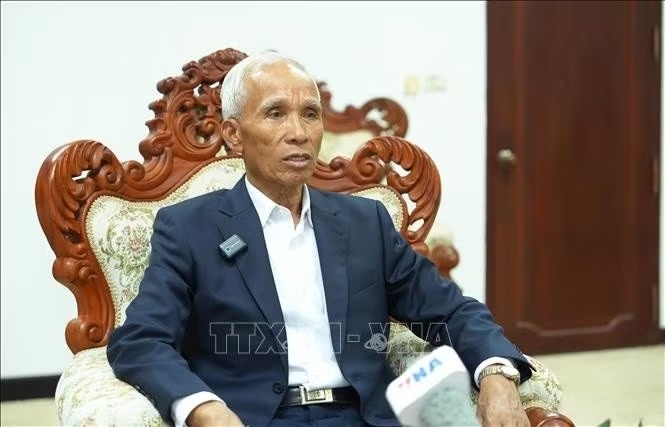
Khamphanh Pheuyavong, chairman of the Lao People’s Revolutionary Party (LPRP) Central Committee’s Commission for Propaganda and Training, was speaking during an interview with the Vietnam News Agency in Vientiane on the occasion of the 100th anniversary of Vietnam’s Revolutionary Press Day (June 21, 1925–2025), highlighting the press’s evolving role in the new era amid rapid technological change and global media trends.
From the anti-colonial struggle to the Đổi mới (Renewal) period and international integration, the Vietnamese revolutionary press has consistently played a pioneering role on the ideological and cultural front, he said, stressing that it has been a sharp ideological weapon of the Party and a companion of the people through all stages of revolution.
Citing President Ho Chi Minh’s journalistic philosophy, Khamphanh noted that it is a guiding principle for today’s press, requiring journalists to uphold political integrity, remain loyal to Party ideals, stay close to the people, and continuously improve their professional and ethical standards.
He also underlined that the press is not only a communication tool but also an instrument for organising and mobilising society, contributing to national solidarity and development.
Regarding the Fourth Industrial Revolution, he said Vietnam’s press faces both opportunities and challenges from advances in AI, big data, social media, and the Internet of Things. Media organisations, he pointed out, must enhance journalists’ technological capacity while adhering to political orientation, legal frameworks, and professional ethics.
He stressed the importance of actively countering misinformation on social media and guiding public opinion by distinguishing truth from falsehood in an increasingly complex information environment.
On digital transformation, Khamphanh said it is an inevitable process reflecting changes in public media consumption, with audiences shifting from traditional outlets to digital platforms such as Facebook, YouTube, and TikTok.
He added that digital transformation must go beyond technology, encompassing content strategy and communication methods, with a strong focus on verifying and delivering accurate information to combat fake news and misinformation.
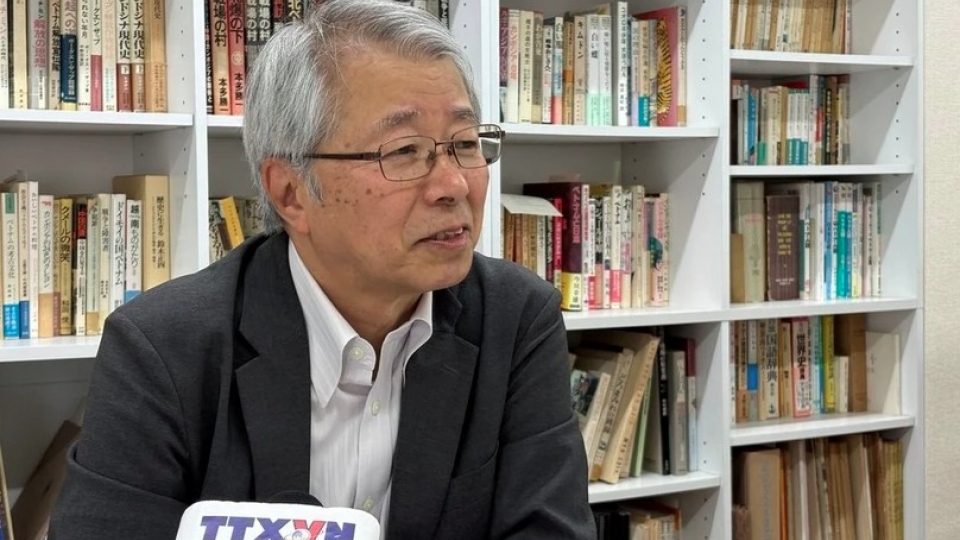
Japanese veteran journalist praises Vietnamese press’ progress
As Vietnam commemorates a century of revolutionary journalism, veteran Japanese journalist Toshifumi Kitagawa, long-time correspondent in Vietnam for Akahata, the official newspaper of the Japanese Communist Party, has shared his admiration for Vietnam's revolutionary press and its impressive strides in digital transformation.
