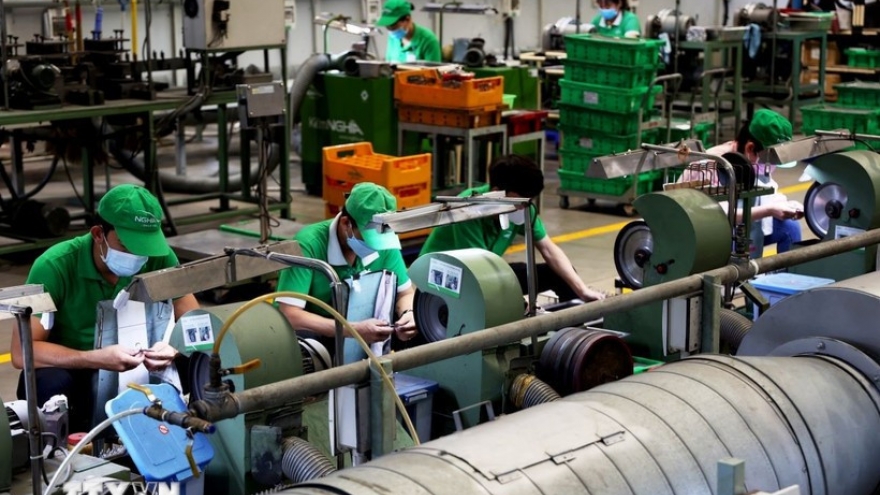
Labour market eyes strong rebound in 2026 after weathering 2025 challenges

VOV.VN - Vietnam’s labour market closed 2025 with signs of steady recovery, though structural challenges remain, particularly regarding workforce quality and mismatches between labour supply and demand.
Looking ahead to 2026, hiring demand is expected to rise sharply, raising questions over how the market can achieve sustainable growth.
A shortage of skilled workers – the biggest bottleneck
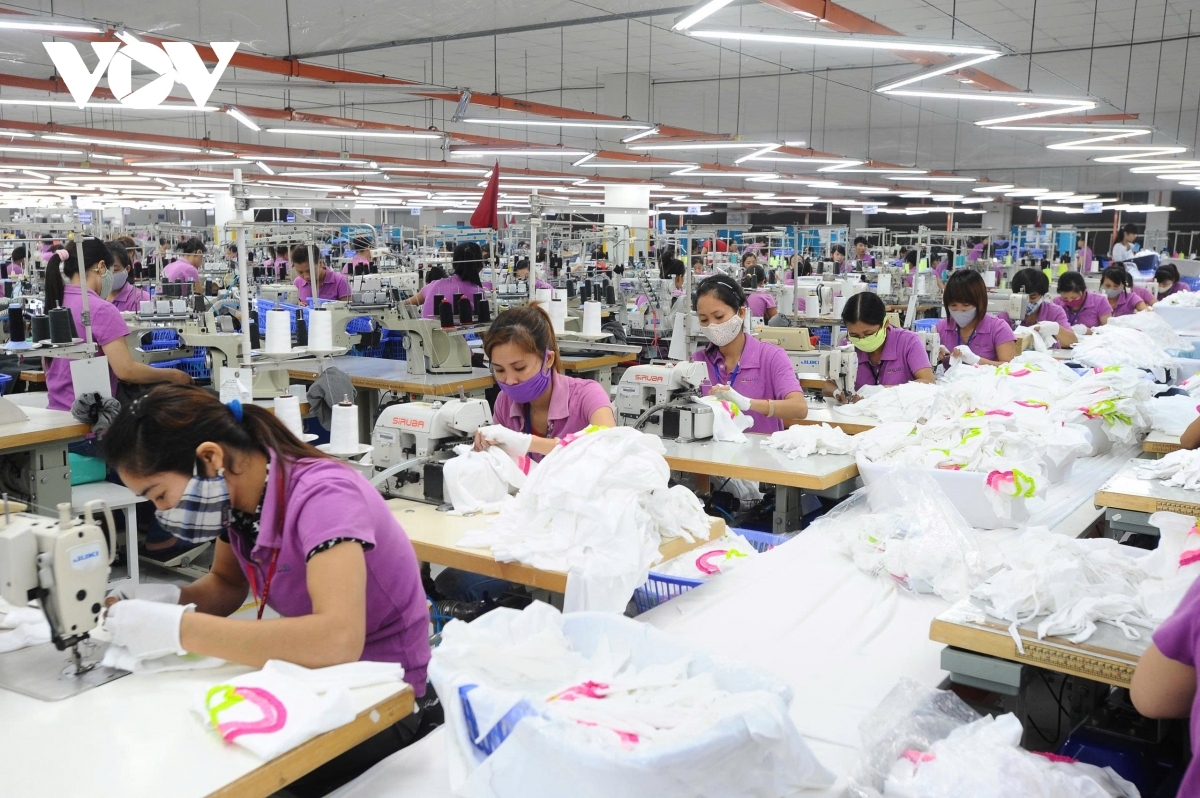
Available data shows the local labour force reached about 53.2 million people in 2025, with a participation rate of over 68%. Average monthly income rose to around VND8.3 million, while the unemployment rate stood low at about 2.22%. However, skills shortages persist, especially in high-demand sectors such as information technology, semiconductors and artificial intelligence.
Vu Quang Thanh, Deputy Director of the Hanoi Employment Service Centre, said Vietnam’s labour market in 2026 would undergo a significant qualitative shift, driven by the government’s high-growth economic targets, including an ambition to achieve double-digit GDP growth.
The pressure to accelerate growth is forcing businesses to rethink their human resources strategies, moving away from headcount expansion towards efficiency, with a focus on high-quality talent and technology adoption, said Thanh.
He identified semiconductors and AI, the green economy, and logistics and e-commerce as the key sectors expected to drive hiring in the coming period. In addition, trade and services, health care and construction are likely to maintain strong recruitment demand in 2026.
“The labour market is transitioning from recovery to expansion, supported by three macroeconomic drivers: sustained inflows of high-quality foreign direct investment exceeding US$36 billion annually, particularly in semiconductors and clean energy; a recovery in export orders, reflected in PMI indicators remaining in expansion territory and an export growth target of over 6%; and increased public investment alongside a rebound in domestic consumption,” explained Thanh.
Against this backdrop, Thanh said, businesses need to shift from cautious operating strategies to more active expansion and the development of sustainable workplaces in order to stabilise their workforce after a period of volatility. Companies should first focus on providing employees with a sense of psychological security by being transparent about business conditions and long-term strategies, helping to strengthen trust and internal consensus.
Thanh added that recruitment strategies also need to be adjusted to reflect changing worker expectations, as competitive pay alone is no longer sufficient. Employees are increasingly prioritising flexible working arrangements, mental health support and clear career development pathways.
Investment in training, upskilling and reskilling is seen as a long-term retention strategy, allowing workers to align their career prospects with the growth of the business. Building a corporate culture that empowers employees and recognises individual contributions is also key to retaining talent and developing a core workforce committed to long-term engagement, he said.
Looking ahead to the demands of the labour market in 2026, Thanh stressed that workers need to adapt proactively along four pillars: mastering AI tools and data-driven thinking to improve productivity; ensuring transparent digital profiles and compliance with legal requirements; developing a “green mindset” and understanding ESG principles; and strengthening adaptability through lifelong learning and flexible thinking to keep pace with rapid market changes.
A risk of labor shortages despite rising demand

Meanwhile, Bui Sy Loi, former Deputy Chairman of the National Assembly’s Social Affairs Committee, pointed out that Vietnam’s labour market ended 2025 amid significant volatility, with the strongest impact felt in labour-intensive, low-productivity sectors such as footwear and garments, as well as in industries where Vietnam has yet to secure a firm market position.
He said persistent imbalances between labour supply and demand have resulted in pockets of unemployment, with labour surpluses in some areas and shortages in others. The root cause, according to the official, lies in the low quality of the workforce. Only about 28% of Vietnamese workers have received vocational training of three months or longer and hold recognised certificates, a level that falls short of market requirements in the context of deeper integration and rapid digital transformation.
Vietnamese workers continue to lag behind in high-skill sectors such as electronics, information technology and AI, while a large share of labour remains concentrated in agriculture, where productivity is significantly lower than in industry and services. This has slowed the structural shift of labour across sectors.
“To integrate more deeply and compete effectively, Vietnam needs to build a higher-quality workforce in terms of physical capacity, intellectual capability and skills. This is essential for boosting productivity, lowering production costs and improving the competitiveness of its products,” Loi said.
Looking ahead to 2026, Loi said Vietnam’s labour market is expected to see a sharp increase in hiring demand. After a year marked by multiple shocks, particularly natural disasters, rural workers are likely to shift increasingly towards the services sector. At the same time, the impact of the Fourth Industrial Revolution is driving stronger demand for high-quality human resources in services and key economic sectors.
He warned that without adequate preparation, Vietnam could face a labour shortage, as rising demand may not be met by supply due to skills gaps, leading to mismatches between labour supply and demand. He said the period from late 2025 to early 2026 should be seen as a critical window for preparation, especially to meet growing demand for skilled workers with strong industrial discipline.
On the corporate side, Loi said, businesses need to take proactive steps to attract and retain workers. This includes ensuring adequate wages and benefits, particularly during peak periods such as the Lunar New Year, to prevent workers from failing to return to their jobs. Companies also need to forecast production and business demand more accurately, while preparing recruitment plans, upskilling and reskilling programmes, and strategies to attract high-quality talent for 2026.
For workers, Loi stressed, mental preparedness and continuous capability-building are vital. Workers who lack discipline, commitment or willingness to improve their skills risk being pushed out in an increasingly flexible labour market with looser employment contracts. He said workers should focus on skills development, upgrading their qualifications, strengthening industrial work discipline and embracing lifelong learning to adapt to the digital economy and Industry 4.0. With good health, discipline and skills, workers can move more confidently across labour markets.
“The relationship between businesses and workers must be one of close partnership, sharing difficulties and growing together,” Loi said. “Only when this bond is strong can the labour market function effectively and fully harness the strength of Vietnam’s workforce.”

Vietnam-Germany labour forum promotes high-quality, sustainable “talent circulation"
VOV.VN - The Vietnam-Germany Labour Cooperation Forum was jointly held on December 9 by Vietnam’s Ministry of Home Affairs, the German Federal Ministry of Labour and Social Affairs (BMAS), and the authorities of Leipzig as part of activities marking the 50th anniversary of diplomatic ties between the two countries.