


Identifying fallen soldiers - The search for names in fragmented DNA

VOV.VN - Identifying fallen soldiers from remains buried for decades is a major challenge, as degraded DNA complicates forensic analysis and matching, making careful sample handling, new technologies and data integration vital to the 500-day campaign to search for, recover and identify fallen soldiers’ remains.
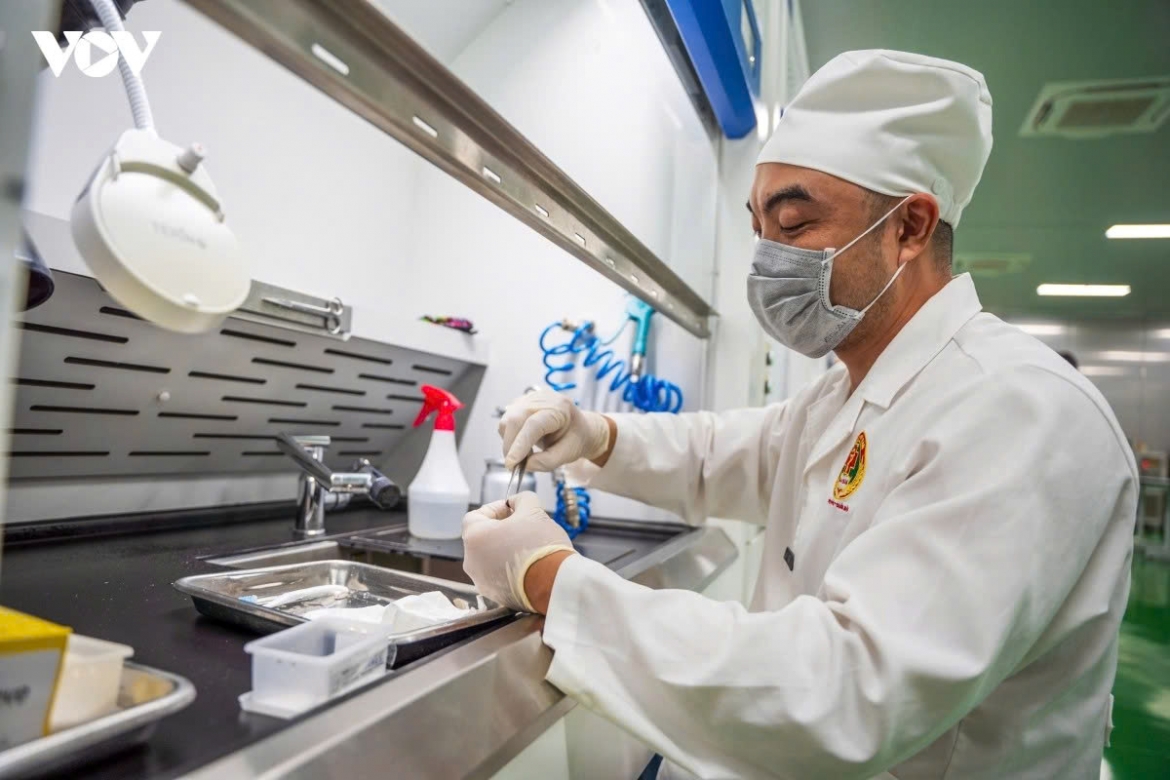
At the sample preservation room of the Military Forensic Medicine Institute under the Ministry of National Defence, Major Nguyen Hieu Nghia, a professional serviceman working in the institute’s Examination Department, carefully opens a box containing fragments of fallen soldiers’ teeth wrapped in paper. He examines each specimen before beginning the cleaning process, as its condition can determine how difficult subsequent stages of analysis will be.
“Small specimens like these are easier to process if the roots are still intact. If the roots are missing, the process becomes much more difficult because most of the DNA is found in the root area,” Nghia explains.
The bone fragments and teeth before him are more than specimens for laboratory testing. Each carries the possibility of identifying someone who died in service, helping match remains with information from relatives and bringing the search for missing soldiers one step closer to its goal.
Every sample offers a chance to restore a name
The greatest challenge lies in the condition of remains buried for decades. Exposure to climate, humidity, temperature changes and microorganisms causes DNA to deteriorate, fragment and break apart. When genetic material is no longer intact, analysing it and selecting suitable information for comparison become considerably more difficult.
During the initial phase of the 500-day campaign to search for, recover and identify fallen soldiers’ remains, the institute was assigned to receive samples from 17 provinces and cities. Since the campaign began, it has received more than 60,000 samples of fallen soldiers’ remains, around 20,000 of which have been placed in long-term storage.
Given the volume of samples, accurate management at every stage is essential. Upon receipt, each sample is assigned a unique QR code before being transferred for preservation, processing and storage according to established procedures.
Major Trinh Thanh Hiep, deputy head of the institute’s Examination Department, said the QR code accompanies each sample throughout the identification process, from initial receipt to the delivery of results. The system enables information to be traced, reduces the risk of mix-ups and helps prevent cross-contamination between samples.
In the preservation room, Nghia processes an average of 40–60 samples a day, spending around 10–15 minutes on each. Across the entire preservation unit, daily throughput can reach 600–700 samples. After cleaning and drying, the specimens undergo quality assessment and location coding before being transferred to storage, where they await testing.
The workload demands close coordination and strict adherence to procedures. For every specimen, accurate identification, reliable record-keeping and the prevention of errors are essential to preserving the possibility of establishing a fallen soldier’s identity.
When DNA is no longer intact
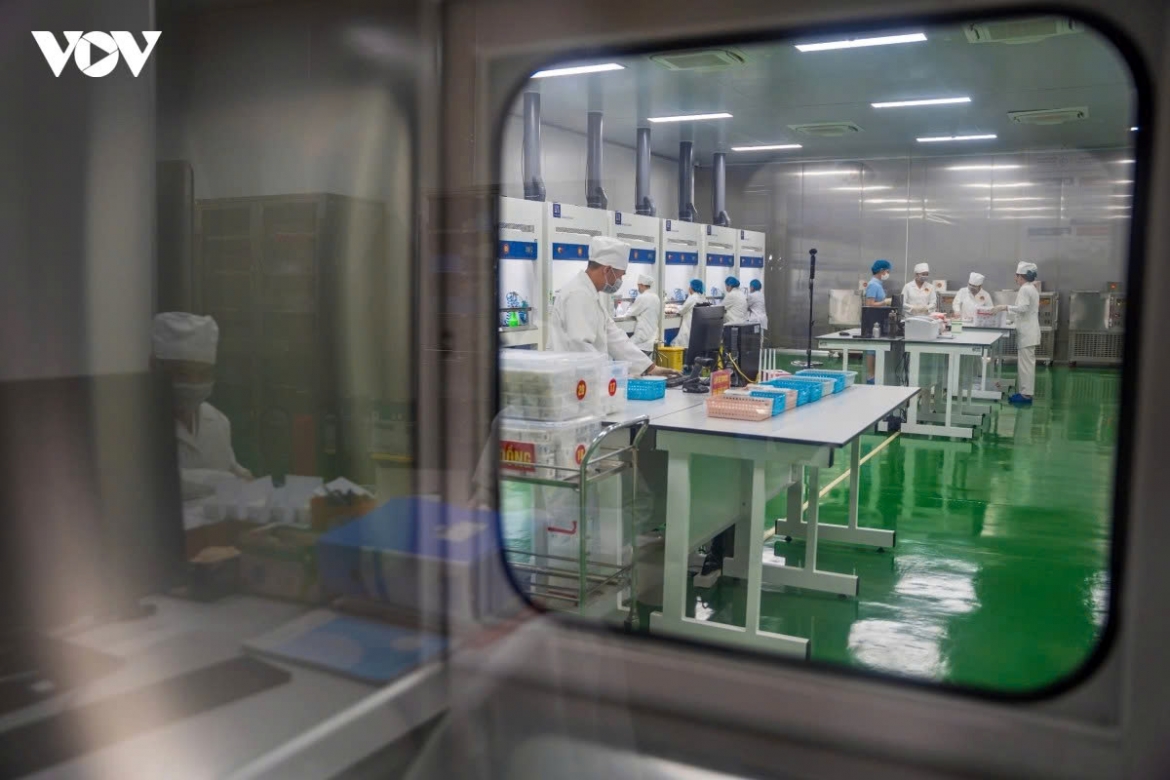
Once the specimens have been preserved, those meeting the requirements proceed to laboratory testing. According to Lieutenant Colonel Nguyen Thi Ngoc Anh, head of the institute’s Biological Testing Department, bone samples must undergo several stages of surface cleaning using physical methods and chemicals before being ground into powder for DNA extraction.
For remains buried for many years, removing contaminants from the surface is particularly important. The amount of bone powder obtained after processing may be far smaller than the original sample, depending on its condition and quality.
The DNA solution obtained through extraction may amount to only one or two drops of water. The DNA is then amplified using polymerase chain reaction (PCR) before proceeding to further analysis. The laboratory operates on a one-way workflow, with separate areas for sample processing, DNA extraction, amplification and electrophoresis.
Even with tightly controlled procedures, the quality of the genetic material is an unpredictable factor. Major Hiep compares human DNA to a very long thread, but in remains buried for decades, that thread may have broken into numerous fragments. The challenge is not simply to recover DNA, but also to identify suitable segments containing information that can be compared with samples from relatives.
Genetic markers are used to analyse specific locations carrying distinctive information within DNA for identification purposes. However, when genetic material is fragmented, selecting and analysing suitable segments for comparison becomes more difficult.
This explains why identifying fallen soldiers cannot be measured simply by the number of samples received or processed. Each specimen must undergo analysis, assessment and comparison, while the likelihood of a conclusive result depends significantly on the condition of the remaining genetic material.
New technologies and the challenge of integrating data
The Military Forensic Medicine Institute currently uses Sanger sequencing to analyse mitochondrial DNA inherited through the maternal line in examinations of fallen soldiers’ remains. In the coming period, it plans to apply next-generation sequencing technology in combination with single-nucleotide polymorphism (SNP) markers to analyse short DNA fragments and broaden the scope for genetic matching.
However, adopting new technology presents another challenge: how to connect new analytical results with data generated using earlier methods. According to Major Hiep, tens of thousands of samples of fallen soldiers’ remains have already been analysed using existing technology, while the new approach does not yet have a corresponding database.
Alongside improving the analysis of degraded DNA, making effective use of existing results and integrating them with new data will therefore be an important part of efforts to identify the remains.
During the 2021–2025 period, the institute received nearly 15,000 samples, examined nearly 4,000 and identified 558 fallen soldiers through DNA matching, according to Dr. Nguyen Tat Tho, the institute’s deputy director.
In the next phase, the institute expects to receive around 35,000 additional samples from localities that have yet to complete their collection work. Under its plan, the total number of samples of fallen soldiers’ remains received by the institute is projected to exceed 100,000 by 30 April 2027.
Behind these figures lies a demanding process, from preserving individual bone fragments to identifying DNA segments suitable for analysis and matching data to establish identities. Not every sample will yield a conclusive result, but every specimen processed correctly contributes to the broader mission.
As part of the 500-day campaign to search for, recover and identify fallen soldiers’ remains, the effort requires perseverance, precision at every stage and continued advances in science. For the personnel working daily with these remains, it is not merely a technical assignment, but also a responsibility to help restore names and reconnect those who sacrificed their lives with their families.
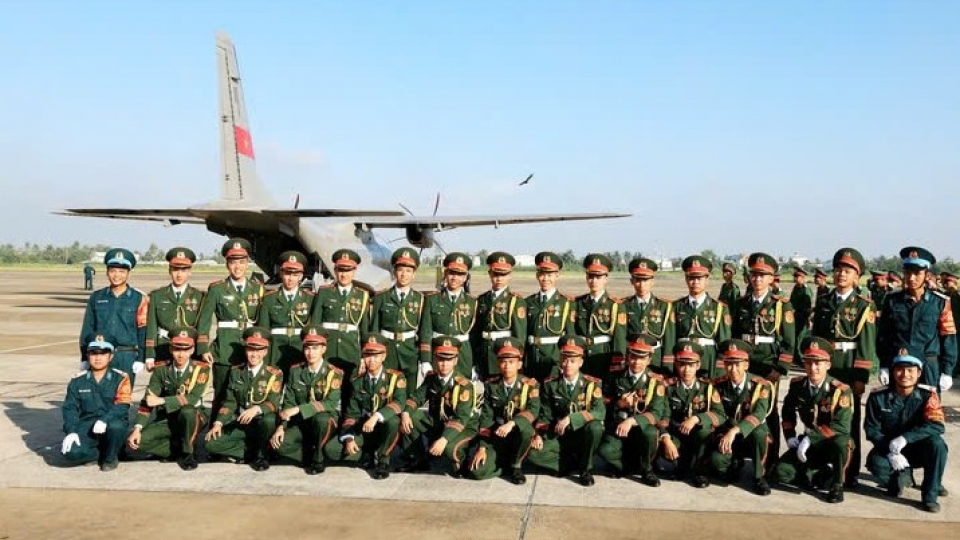
Special flight brings 8,453 fallen soldiers' biological samples to Hanoi for DNA testing
VOV.VN - Military Region 9 has carried an additional 8,453 biological samples of fallen soldiers to Hanoi for DNA identification, following 11 previous handovers comprising 23,557 samples.


