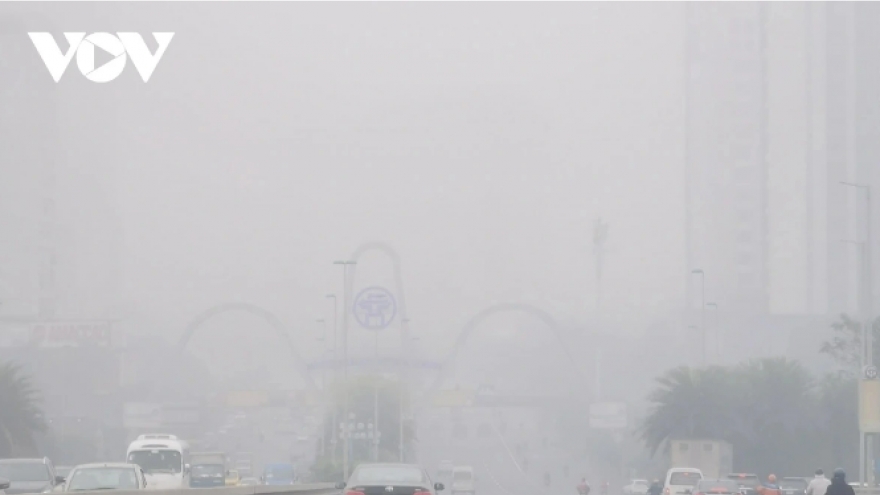
Hanoi orders urgent measures to control air pollution

VOV.VN - Hanoi has issued an official directive ordering urgent measures to curb air pollution across the city, signed by Vice Chairman of the municipal People’s Committee Nguyen Manh Quyen.
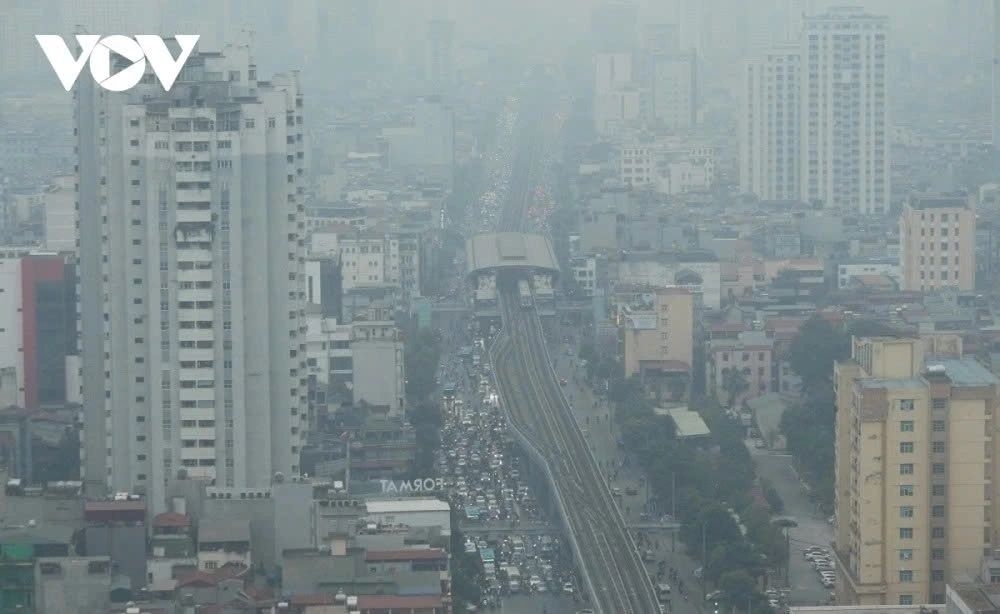
The city will coordinate with the Ministry of Agriculture and Environment to strengthen remote monitoring using satellite and drone surveillance, traffic cameras, AI-enabled systems and digital platforms to detect and strictly handle open burning, including the burning of waste, straw and agricultural by-products.
Sanitation management and waste treatment operations will be intensified, with tighter inspections of street cleaning contracts and centralized disposal facilities to prevent dust and odor emissions. Authorities will step up public communication, inspections and enforcement while regularly updating air quality information and forecasts.
The Department of Construction has been instructed to strictly supervise all construction sites, requiring full implementation of dust-control measures such as site fencing, mist spraying, vehicle washing and covering of construction waste. Large-scale projects exceeding 10,000 square meters must install dust-monitoring systems using sensors, cameras and AI technology.
The city will pilot mist-spraying technologies in residential areas, parks and major roads, and launch targeted inspection campaigns focusing on construction and transport activities with high dust-emission risks.
The Health Department will issue public advisories urging residents, particularly older people, children and those with respiratory illnesses, to limit outdoor activities when air quality is poor and to use face masks when VN_AQI levels remain high. Medical facilities are required to prepare resources to respond to potential surges in respiratory cases.
The Department of Education and Training has been directed to restrict outdoor activities at schools when air quality reaches “Unhealthy” levels or worse, and to suspend or adjust class schedules when pollution becomes severe, defined as VN_AQI at or above 301.
The Municipal Police will increase enforcement against uncovered trucks carrying construction materials, end-of-life vehicles and those emitting black smoke, and crack down on illegal waste burning, particularly in craft villages and border areas, supported by AI-integrated surveillance systems.
Ward- and commune-level authorities are tasked with controlling local dust and emission sources, ending the use of honeycomb coal stoves and reinforcing street sweeping, vacuum cleaning and road washing operations, prioritized during off-peak hours at night and early mornings.
Industrial facilities with high emissions are required to enhance equipment maintenance and consider reducing output or rescheduling emission-intensive processes on heavily polluted days. Cement and steel plants must use cleaner inputs and strictly apply dust-suppression measures at storage yards and internal transport routes.
When air pollution reaches the “Very Unhealthy” range (VN_AQI above 200), facilities should consider reducing operations. At VN_AQI levels of 301 or higher, activities must be restricted, suspended or adjusted as appropriate.
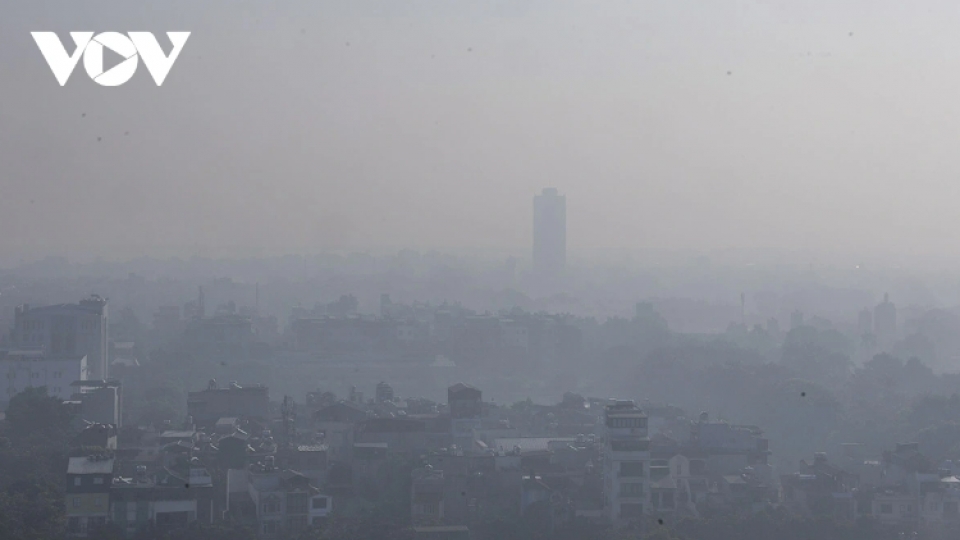
Seminar seeks to tackle air pollution in big cities
VOV.VN - Air pollution in major cities like Hanoi and Ho Chi Minh City (HCMC) has reached alarming levels, largely driven by fine particulate matter (PM2.5), which poses significant threats to public health, said experts at a seminar in Hanoi on November 25.