


Hanoi activates measures to control inter-provincial and source-level air pollution

VOV.VN - Hanoi is stepping up inter-provincial coordination with seven neighboring localities, while strengthening forecasting, and tightening dust control from traffic and construction to respond to air pollution.
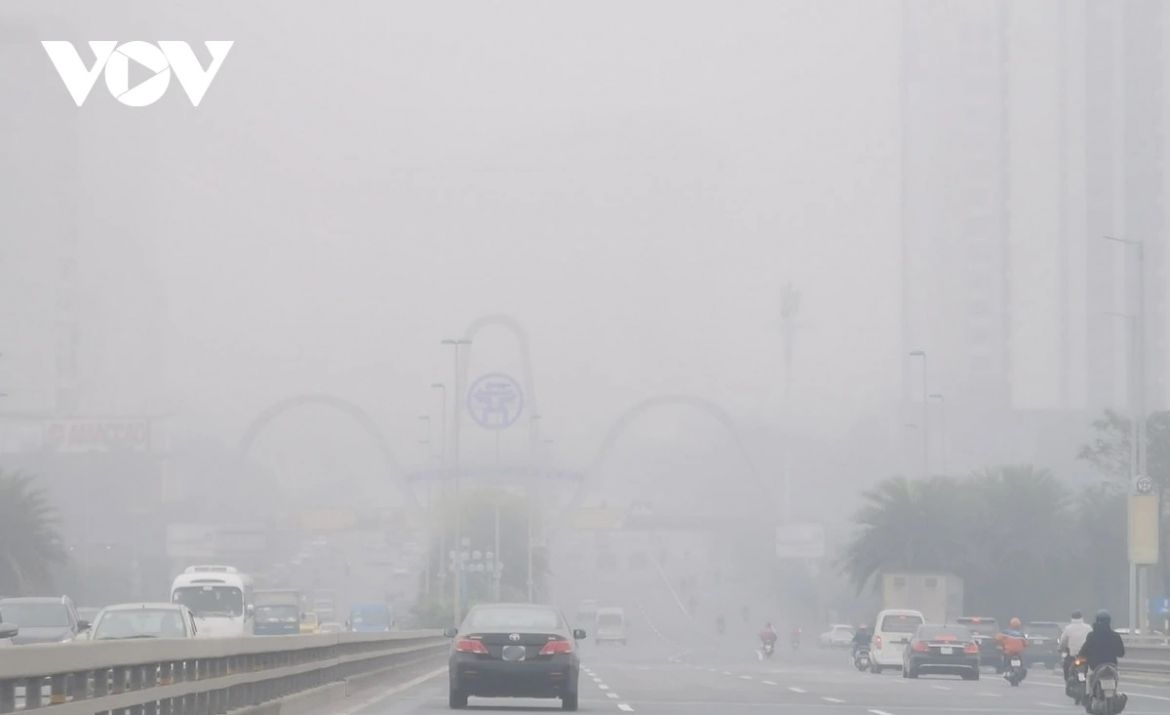
The Hanoi Department of Agriculture and Environment has sent an official dispatch requesting its counterparts in Bac Ninh, Hung Yen, Ninh Binh, Phu Tho, Thai Nguyen, Hai Phong and Quang Ninh to coordinate in controlling air pollution.
The city proposed establishing a long-term coordination mechanism with designated focal points and joint response procedures, while reviewing and sharing monitoring data, emission inventory results from previous years, and specific assessments of the locations, timing, duration, severity and frequency of pollution episodes to respond proactively across a wide area.
According to the department, during the 2023-2025 period, the capital's annual average concentration of PM2.5 fine particulate matter frequently exceeded 40 micrograms per cubic meter, reaching 48.5 micrograms per cubic meter in 2025 alone. In November 2026, data from the IQAir monitoring system recorded three days (at 8:30 a.m. on November 13, 14 and 15) when Air Quality Index (AQI) readings in many areas of Hanoi reached very unhealthy and hazardous levels. The situation raises concern because PM2.5 particles can penetrate deep into the respiratory system, directly affecting public health.
Le Thanh Thuy, Deputy Head of the Environmental Management Devision under the Hanoi Department of Agriculture and Environment, says winter-spring meteorological conditions, characterized by weak winds, high humidity and temperature inversions, prevent dust from dispersing and cause it to accumulate near the ground. These conditions combine with year-end emission pressures from road dust, vehicle exhaust, construction sites, industrial production, and open burning of waste and straw.
While unfavorable weather can worsen pollution levels, the root cause still lies in emission sources, requiring the city to control pollution proactively at the source alongside timely forecasting and warnings, she adds.
Sharing this view, Hoang Duong Tung, Chairman of the Vietnam Clean Air Network, states that production, traffic, construction and the burning of agricultural by-products in neighboring localities can all affect shared air quality under adverse meteorological conditions. Localities therefore need to identify emission sources and share monitoring networks and environmental databases for inter-provincial coordination.
On concrete measures, Nguyen Minh Tan, Deputy Director of the Hanoi Department of Agriculture and Environment, says the city issued Plan No. 400 on October 15, 2026, to strengthen air pollution control and response.
The plan gradually tightens control of vehicles, construction sites and open burning, while promoting green transport and establishing low-emission zones. In the short term, Hanoi is reviewing and classifying construction sites by dust dispersion risk, prioritizing large-scale excavation, demolition and site-leveling projects as well as works near residential areas, schools and hospitals.
Investors and contractors must strictly cover sites and materials, spray water to suppress dust, clean internal roads and install vehicle-washing systems before trucks leave construction sites.
At the same time, Hanoi continues to push for the implementation of coordination regulations across the Capital Region, aiming to detect pollution sources early and handle violations promptly.
Air pollution returns to Hanoi as capital ranks third worldwide
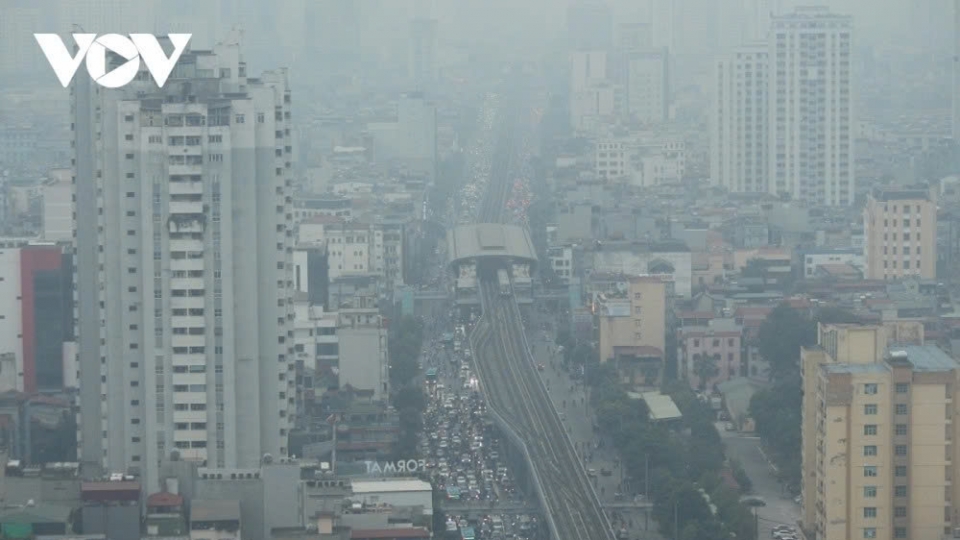
VOV.VN - Air pollution has returned to Hanoi as Vietnam’s capital ranked the world’s third most polluted major city on October 26, with its air quality index (AQI) reaching 172 on IQAir amid the onset of the annual pollution season.

