




Dr Nguyen Phuong Thao: What should patients know about laser treatment for melasma?

VOV.VN - Laser names and technical specifications can be confusing. Dr Nguyen Phuong Thao explains what they mean for melasma treatment and why clinical assessment matters as much as technology.
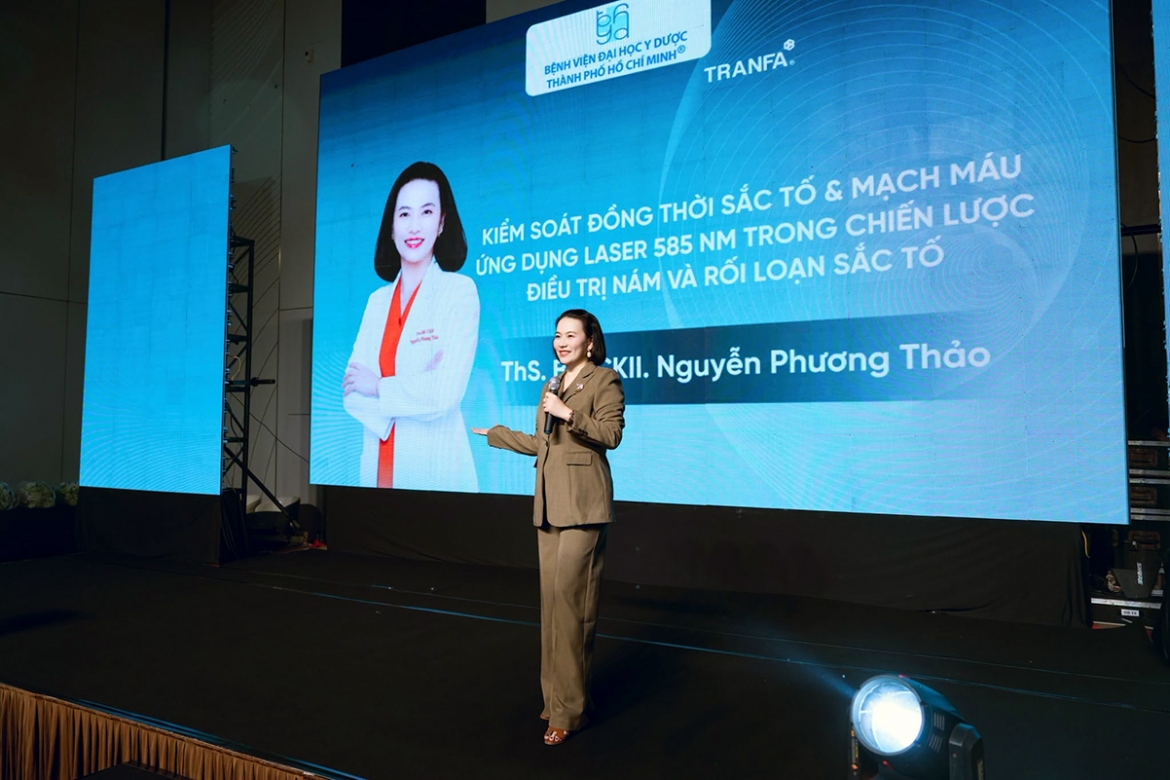
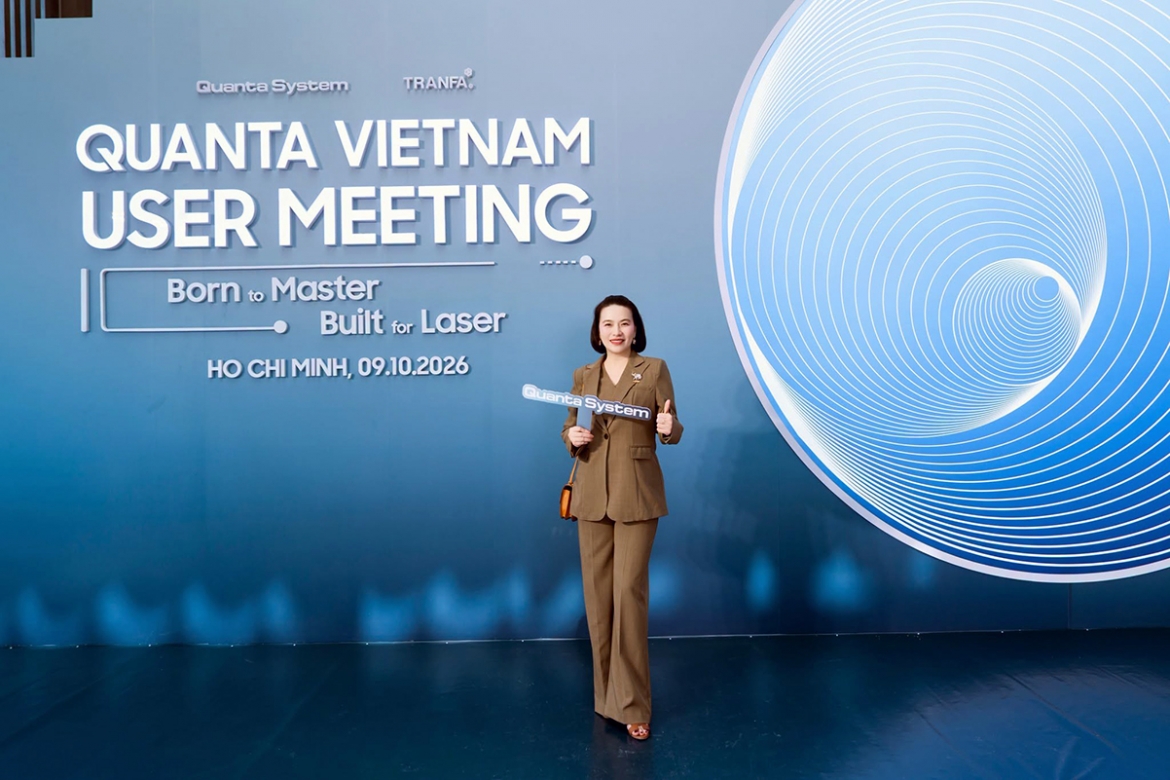
The scientific conference “Modern Aesthetic Lasers: Technological Breakthroughs and Standardisation in Clinical Practice” took place on October 9, 2026, at Thisky Hall in Ho Chi Minh City. It was organised by the Department of Dermatology and Skin Aesthetics at University Medical Center Ho Chi Minh City, together with Tranfa and Quanta System.
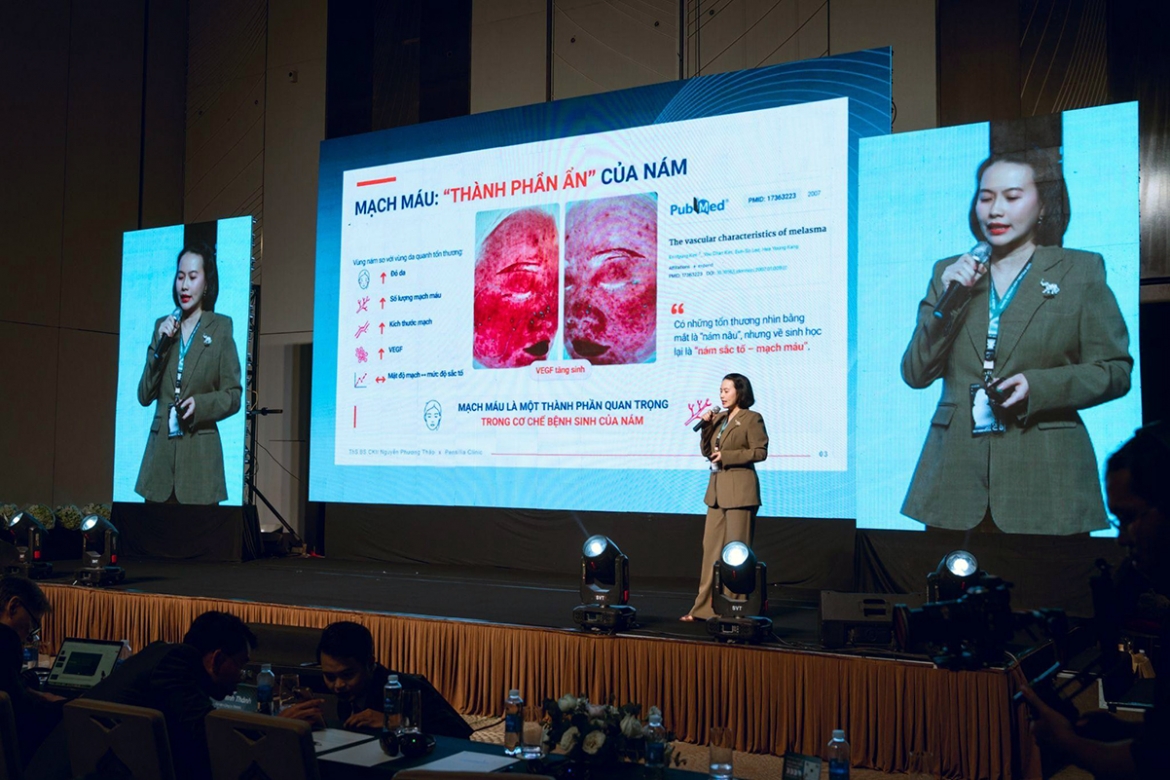
At the conference, Dr Nguyen Phuong Thao, medical director of Pensilia Beauty Clinic, discussed pigment and vascular components in melasma, including the role of 585 nm lasers and the Quanta 585 platform. She answers six questions about what these features mean for patients.
Question: What does a number such as 585 nm actually mean, and why does wavelength matter in melasma treatment?
Dr Thao: The number describes the wavelength of laser light, measured in nanometres. Different wavelengths are absorbed by different targets in the skin. Melanin and haemoglobin, found in blood, absorb light differently.
This distinction is important because melasma is not always just an excess of brown pigment. Some patients also have visible redness or dilated blood vessels. Research has identified vascular changes in melasma, although not everyone needs vascular treatment.
In my presentation, I discussed several wavelengths used in dermatology. The 1,064 nm Nd:YAG laser is used in certain pigment-related treatments, while light around 585 nm is strongly absorbed by haemoglobin and can target selected superficial vascular structures. This may matter when assessment identifies a vascular component.
Wavelength alone cannot predict the outcome. Patients should ask which problem the doctor intends to treat, why that wavelength is being considered and what benefits or limitations apply to their own skin.
Question: The Quanta 585 was described as a solid-state laser. How is that different from a dye laser, and does it mean better results?
Dr Thao: “Solid-state” describes how the equipment generates light. It differs from the technology used in traditional dye lasers, but that engineering distinction should not be mistaken for proof that one patient will respond better or recover faster.
The Quanta 585 platform discussed at the conference operates around the 585 nm wavelength and uses a solid-state source rather than a conventional dye-based source. Its design can affect maintenance and operation, not guarantee clinical outcomes.
For the patient, the more useful question is whether the device is appropriate for the condition being treated. A person presenting mainly with increased pigmentation may require a different approach from someone who also has pronounced redness or visible capillaries.
The doctor should explain the intended target and evidence. New hardware cannot replace diagnosis.
Question: What are laser pulses, and why do energy and pulse duration need to be adjusted?
Dr Thao: A pulse is the period during which the laser delivers its energy. Two treatments may use the same wavelength yet affect the skin differently because the energy, pulse duration, spot size and delivery pattern are not identical.
One important principle is selective photothermolysis: choosing light and exposure conditions that preferentially affect a target while limiting unwanted damage to nearby tissue. When the target is a blood vessel, the doctor considers how haemoglobin absorbs light and how heat is delivered over time. This involves more than simply increasing the machine’s power.
The Quanta 585 platform offers adjustable pulse durations and other settings, allowing the clinician to tailor delivery to the type and extent of the lesion being treated. However, a machine’s maximum output is not a goal to reach.
In melasma, excessive or poorly selected laser energy can provoke inflammation or post-inflammatory hyperpigmentation. The relevant question is not “How strong is the laser?” but “Why are these settings appropriate for my skin, and how will its response be assessed?”
Question: What does the scanner attached to a laser actually do?
Dr Thao: A scanner helps control where treatment points are placed across the skin. Rather than relying only on a single stationary spot, it can distribute exposures within a selected area or pattern. This controls placement, not just strength.
The Quanta system discussed at the conference includes a scanner with different selectable shapes and scanning arrangements. These features may help the clinician adapt coverage to the size and shape of a particular lesion. Different lesions may require different patterns.
A scanner does not decide which skin problem needs treatment. It follows settings chosen by the operator, who must consider the boundaries of the target, the amount of energy delivered and the skin’s response.
Patients need not memorise scan patterns. They should understand why the doctor is treating a particular area and what changes are expected.
Question: If a machine can treat a larger area or divide energy into smaller points, is that automatically safer or more effective?
Dr Thao: Not necessarily. Covering more skin does not mean achieving a better result. The aim is to deliver an appropriate amount of energy to the intended target while limiting unnecessary exposure of surrounding tissue.
In my presentation, I discussed distributing energy across selected points rather than treating an entire area uniformly. Such an approach can provide an additional way to manage coverage. But the clinical result still depends on the indication, energy settings and operator technique.
It is also important not to confuse this segmented scanning approach with every procedure described as “fractional laser”. Similar words can refer to technologies with different mechanisms and tissue effects.
In melasma, wider coverage or repeated passes may be inappropriate. Patients should ask what the selected pattern is meant to achieve and which reactions they should watch for afterwards.
Question: With so many automated features, what decisions remain the doctor’s responsibility?
Dr Thao: Technology can help deliver light according to selected parameters, but it cannot determine the best treatment plan for a person on its own.
Before using a laser, the doctor needs to assess the type of pigmentation, any associated redness or vascular changes, previous treatment and the condition of the skin barrier. These findings help identify the treatment target and whether a laser is appropriate at that stage.
The clinician must then select the wavelength and settings, monitor the skin’s response and reconsider the plan at follow-up. Sometimes the priority is pigmentation; in other cases, inflammation or vascular features require attention first. Not every concern needs to be treated in the same session.
At Pensilia, our approach is to explain these decisions to patients rather than present a machine’s list of features as a treatment plan. The goal of personalised care is not to use more technology, but to choose the right intervention for the right clinical target.
Ultimately, the most useful question is not which laser has the longest specification sheet. It is whether the patient understands what is being treated, why a particular method was chosen and how the doctor will assess the outcome.
Pensilia Dermatology and Aesthetic Clinic System
- PENSILIA NGUYỄN ĐÌNH CHIỂU: 411/2 - 413 - 415 Nguyễn Đình Chiểu, Bàn Cờ Ward, Ho Chi Minh City
Operating licence numbers: 09422 /HCM-GPHĐ - 05026 /HCM-GPHĐ
- PENSILIA VŨNG TÀU: 551 Trương Công Định, Tam Thắng Ward, Ho Chi Minh City
Operating licence number: 07646 /HCM-GPHĐ
- PENSILIA BIÊN HÒA: 1096 Phạm Văn Thuận, Tam Hiệp Ward, Đồng Nai City
Operating licence number: 2730/ĐNAI-GPHĐ
Hotline: 0938 777 885
Website: pensilia.com
Opening hours: 09:00 - 20:30
New trends in breast cancer diagnosis and treatment – highlights from GBCC 2026
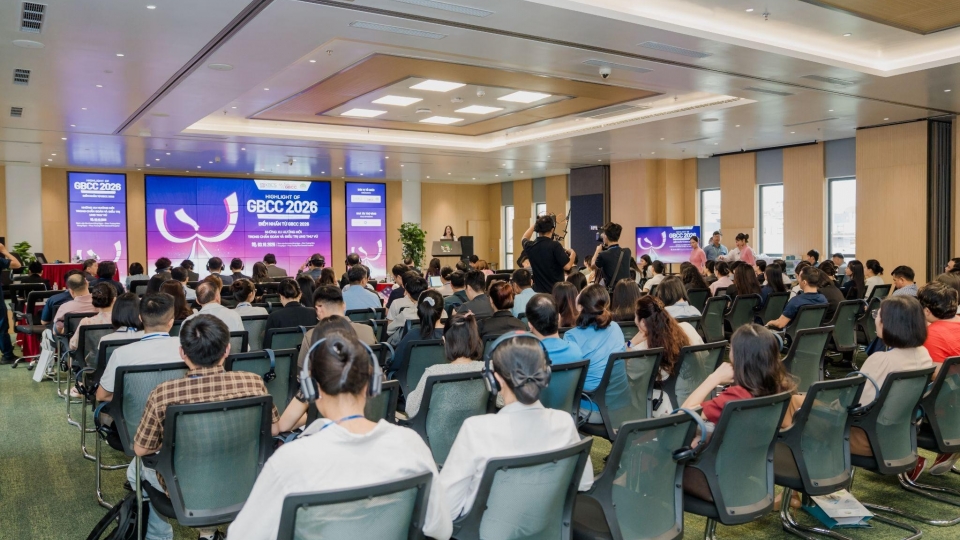
VOV.VN - The conference, organised by Hong Ngoc - Phuc Truong Minh General Hospital in collaboration with the Organising Committee of the Global Breast Cancer Conference (GBCC) and the Korean Breast Cancer Society, updated attendees on the latest trends in breast cancer treatment and attracted over 100 Vietnamese and K


