Digital capacity improvement needed for comprehensive human development

The Fourth Industrial Revolution, digital transformation and artificial intelligence (AI) are fundamentally reshaping production models, employment structures, education, communication and social governance worldwide, requiring human development strategies to place greater emphasis on digital capacity.

Integrating human development with advances in culture, education, health care, science – technology and innovation is regarded as a key prerequisite for Vietnam’s fast and sustainable development.
The Party has consistently upheld a people-centred approach to development. All policies must originate from the rights, legitimate interests and well-being of the people, with public satisfaction and trust serving as the yardstick of progress.
The documents of the 14th National Party Congress stress the need to maximise the human factor, with people as the centre, the key stakeholder, the driving force and the ultimate goal of development. Development achievements, according to the Party, should be measured not only by economic growth indicators, but also by quality of life, creativity, civility and the expansion of opportunities for all citizens to participate in and benefit from development.
Comprehensive human development today encompasses not only knowledge, physical health and morality, but also skills, adaptability and development continuity.
According to the United Nations Human Development Report 2025, titled “A matter of choice: People and possibilities in the age of AI”, Vietnam’s Human Development Index (HDI) reached 0.766, ranking 93rd among 193 countries and territories – among the group of nations with high human development.
The result reflects Vietnam’s remarkable efforts in digital transformation and AI application, as well as the Government’s commitment to promoting human development.
In the digital era, technology, data, innovation and knowledge are becoming primary drivers of growth. Alongside science – technology and innovation, the quality of institutional frameworks and human resources is emerging as a major competitive advantage for a nation.
Digital transformation and AI are opening up significant opportunities, including expanding lifelong learning, narrowing knowledge gaps and improving healthcare management and services. Technology also helps enhance fairness in healthcare access, boost labour productivity and broaden access to public services, particularly for vulnerable groups.
However, experts warned that rapid technological change also pose considerable challenges, including widening digital divides, shortages of digital skills and adaptability, concerns over ethics and cultural values in cyberspace, risks relating to personal data and privacy, and excessive dependence on technology that may weaken human autonomy.
In this context, enhancing digital capacity is seen as an effective solution.
Associate Professor and Dr. Bui Quang Tuan, former Director of the Institute of Vietnam and World Economy, said comprehensive human development should be understood as the balanced and sustainable expansion of core human capacities across physical, intellectual, skill, spiritual, social, cultural, ethical, digital and citizenship dimensions.
He stressed that in the AI era, human development should no longer be measured solely by health, education and income, but also by quality of employment, mental well-being, digital skills, resilience to shocks, data security, privacy and the ability to master AI technologies.
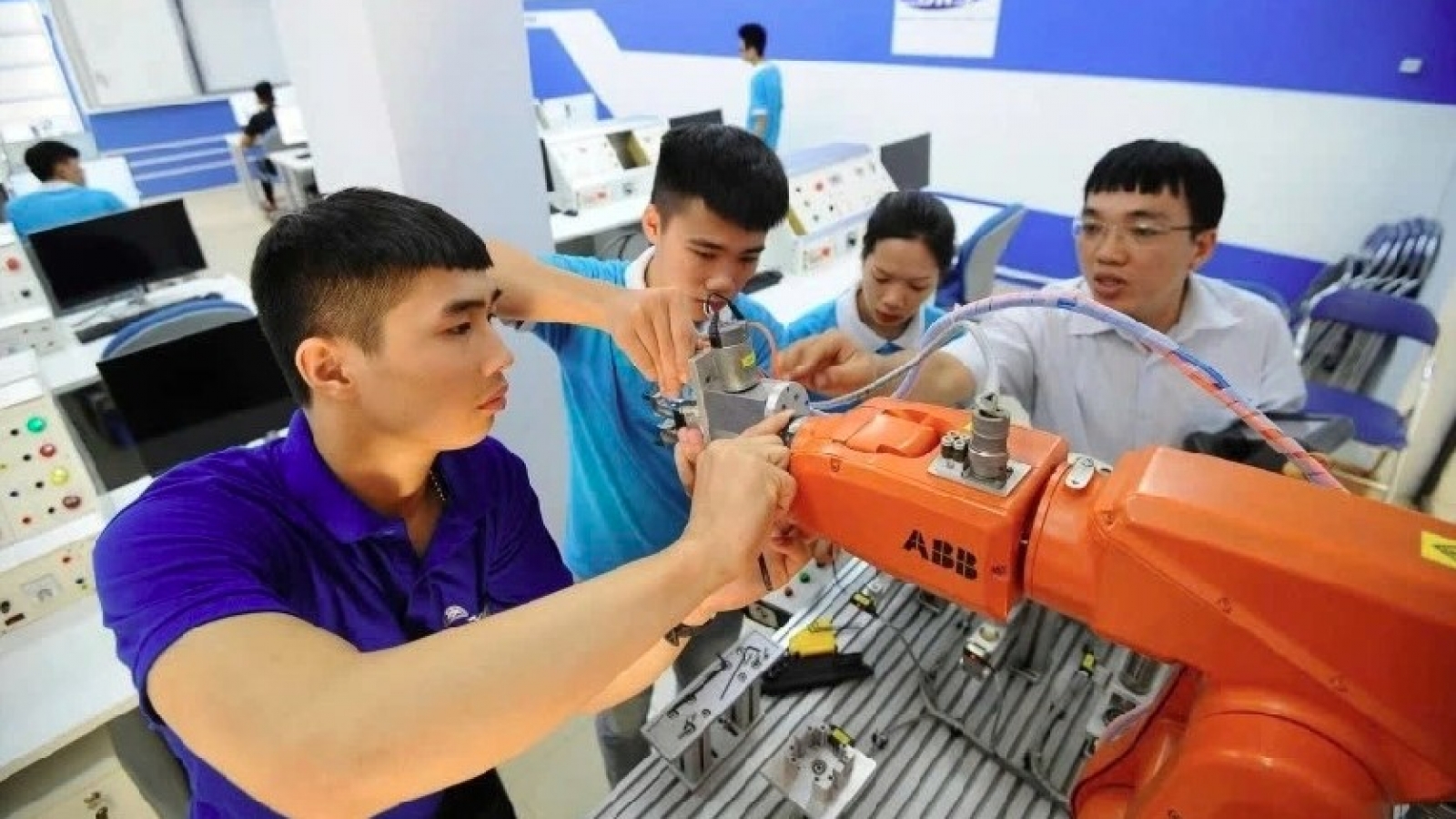
Experts emphasised that Vietnam needs to accelerate educational reform and skills development policies, shifting from rote learning to competency-based education, and increase investment in STEM, foreign languages, digital literacy, critical thinking, cooperation capabilities, and lifelong learning. Links among educational institutions, businesses and the labour market should be enhanced.
Policies on industrial development, innovation, digital transformation and green transition should also prioritise improving the quality of human resources rather than merely expanding labour quantity. Experiences from countries such as the Republic of Korea and Singapore have shown that investment in education, science – technology and high-quality human capital is essential for breakthrough development.
Specialists also underlined the need to improve Vietnam’s human development measurement system beyond the traditional HDI framework by incorporating new indicators related to digital capacity, innovation, environmental sustainability, quality of life and social participation. As AI continues to shape every aspect of modern life, integrating digital capacity into comprehensive human development strategies is becoming an inevitable requirement for sustainable and inclusive growth.

Protecting digital future in post-quantum, AI era
Artificial intelligence (AI), cloud computing and emerging quantum technologies are reshaping the global digital economy while creating unprecedented cybersecurity risks, experts warned at the Vietnam Security Summit 2026 held in Hanoi on May 22.