China's Nanning steps up all-around cooperation with Vietnamese localities

VOV.VN - Nanning, the capital of China’s Guangxi Zhuang Autonomous Region, continues to serve as a dynamic development hub in southern China and an important hub for cooperation with ASEAN, including Vietnam as a key partner.
In recent years, Nanning has achieved notable socio-economic results, maintaining stable growth and shifting its economic structure towards modernisation, with high-quality services and advanced technology industries playing a leading role.
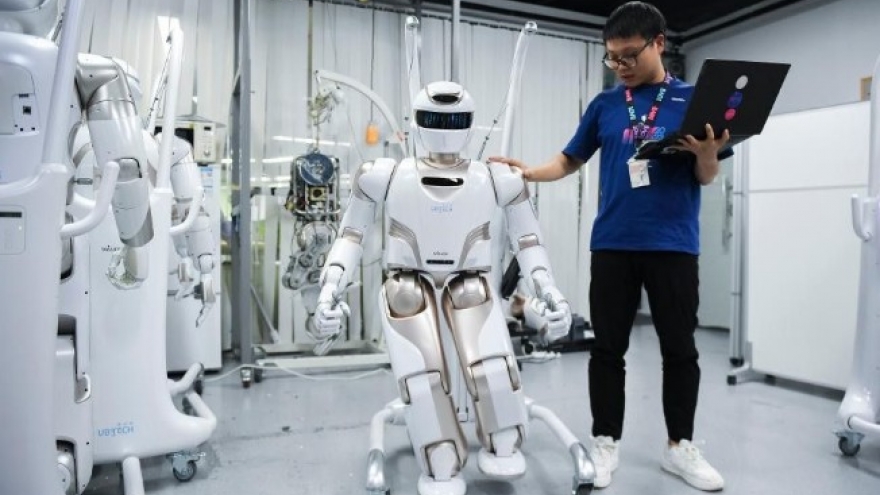
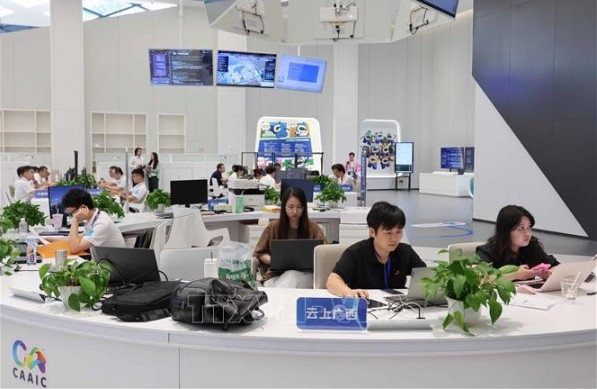
The city is also pushing up an innovation-based development strategy, with a highlight being the establishment of the China-ASEAN Artificial Intelligence Innovation Cooperation Centre.
The centre is designed to become a regional platform for cooperation in research and development (R&D), AI applications, technology transfer and high-quality human resources training. Through this centre, Nanning enhances connections among enterprises, research institutes and universities in China and ASEAN member states, including Vietnam, contributing to the formation of a regionally connected innovation ecosystem.
Alongside technological development, Nanning continues to play its role as a gateway connecting China and ASEAN through multilateral cooperation mechanisms, international forums and large-scale trade fairs. Cooperation with Vietnam is becoming more substantive.
Nanning maintains friendly and close cooperative relations with several Vietnamese localities, including Hai Phong, Bac Ninh and Bac Giang. Vietnam is also one of the city’s leading trading partners, with trade turnover accounting for a large share of Nanning’s total trade with ASEAN. Bilateral cooperation continues to expand into areas such as investment, logistics, agriculture, high technology and tourism.
One example is Nanning Yucai School, which trained many generations of Vietnamese students during the resistance period, making important contributions to Vietnam’s revolutionary cause.
In addition, sites associated with the activities of President Ho Chi Minh in Nanning have been preserved and have become places for traditional education, attracting many Vietnamese delegations, pupils and students for visits and study. These sites are not only of historical value but also are vivid symbols of Vietnam-China friendship over time.
People-to-people exchanges, delegation visits, and cooperation in education and training between Nanning and Vietnamese localities are maintained regularly, contributing to strengthening the social foundation of bilateral relations.
Speaking to the media in China, Li Qiaoping said she is “full of confidence and expectations” about the future of Vietnam-China relations as well as cooperation between Guangxi and Vietnam.
According to Li Qiaoping, both sides should continue to strengthen the guiding role of high-level leaders, enhance political trust and maintain the principles of mutual respect, equality and mutual benefit, and accelerate the building of a Vietnam-China community with a shared future in a more substantive manner.
At the same time, she laid stress on the need to make use of geographical advantages and promote practical cooperation in economic and trade activities, logistics, cross-border industries, modern agriculture and tourism, while shifting from a “border-gate economy” to an “industry- and value chain-based economy” to improve the quality of cooperation.
In emerging fields, she said there is still strong potential for cooperation between Guangxi and Vietnam, particularly in cross-border healthcare, hydrology, meteorology, education and training, and science and technology. Among these, cooperation in education and human resources training is considered strategic, including strengthening language training, expanding joint training programmes, promoting joint research and developing vocational education.
Artificial intelligence and the digital economy are seen as breakthrough areas for cooperation. The two sides can bolster cooperation in language AI, machine translation, digital education, high-tech workforce training, as well as smart city models, digital logistics and cross-border e-commerce.
In digital trade, she said the model combining short videos or livestreaming with e-commerce is opening up significant prospects. Using digital platforms together with increasingly improved logistics systems in border areas will help promote two-way goods flows between China and Vietnam, while reducing language barriers through AI applications.
Li Qiaoping also expressed hope that youth exchanges will continue to be strengthened, contributing to preserving and promoting the tradition of Vietnam-China friendship across generations.
With its favourable geographical location, improving infrastructure and an innovation-based development direction, Nanning is expected to continue playing a central role in promoting China–ASEAN cooperation, while serving as an important bridge contributing to deeper comprehensive cooperation between Vietnam and China in the new period.
Vietnam, China expand exchanges and cooperation in science, technology and innovation
VOV.VN - Nguyen Duy Ngoc, Politburo member, Secretary of the Party Central Committee, Head of the Party Central Committee’s Organisation Commission, and Deputy Head of the Central Steering Committee for science, technology, innovation and digital transformation, paid a working visit to the management board of Zhongguancun High-Tech Park in Beijing on April 15.