Canada’s energy security experience offers lessons for Vietnam

VOV.VN - Canada’s response to geopolitical shocks and disruptions in global energy supply chains offers important lessons for Vietnam as it implements Politburo Resolution 70 on national energy security through 2030, with a vision to 2045.
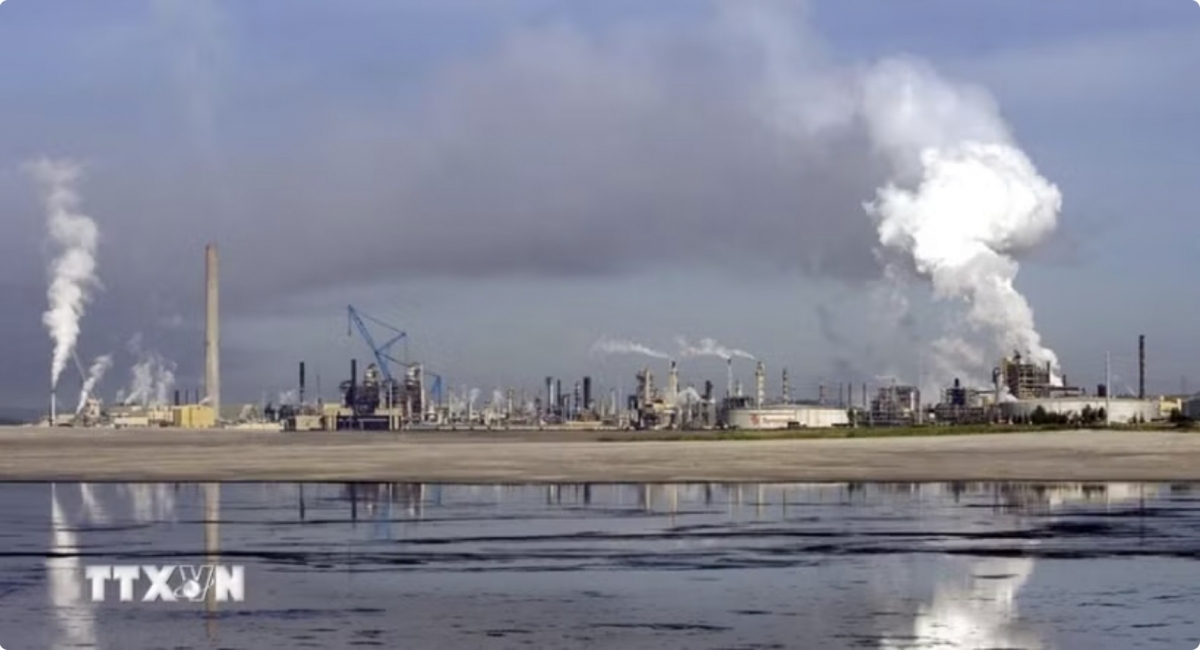
Hoang Xuan Bach, President of the Vietnam-Canada Information Technology Professional Association (VICAIT), said Canada’s rapid response to recent geopolitical crises and supply chain disruptions had been necessary and appropriate. Measures such as increasing strategic reserves, expanding liquefied natural gas (LNG) infrastructure, diversifying export markets and providing energy subsidies to consumers helped ease immediate pressure on the economy and avoid social shocks caused by rising energy prices, he said.
According to Bach, energy security today should no longer be understood simply as having sufficient supply, but also as the ability to maintain stable supply, reasonable prices, low dependence and resilience against global uncertainties.
He said this way of thinking shares many similarities with the spirit of Resolution 70, which places energy security in direct connection with economic security, technological capacity and sustainable national development.
A notable point in Canada’s case, he said, is that the country has not simply dealt with crises as short-term challenges, but has also tried to turn them into an opportunity to restructure its energy system.
Alongside efforts to secure traditional energy supplies, Canada has continued pursuing its goal of becoming a “clean energy superpower” through major investments in hydrogen, battery storage, federal-level clean electricity initiatives and low-carbon technologies.
Bach stated that this offers an important lesson for developing countries, including Vietnam: short-term solutions are necessary to stabilize society and the economy, but they must be placed within a long-term strategy for sustainable energy security. Focusing only on immediate responses without a long-term vision could distort energy policy, slow the transition process or increase future costs.
On balancing energy security, costs and the green transition, Bach noted that no country can fully achieve all goals at the same time, and Canada is no exception. During the recent crisis period, Canada had to place greater priority on energy security and economic stability, even when this slowed the green transition at certain points or pushed investment costs higher than expected. However, he stressed that this should not be seen as a failure of the energy transition.
Rather, it shows that energy transition in practice must follow a balanced roadmap instead of overly idealistic expectations. Green transition cannot be separated from technological capacity, financial resources and infrastructure readiness. If the transition moves too quickly before electricity storage, transmission systems and backup power sources are fully developed, society could face sharp increases in energy prices and risks of supply shortages.
From this perspective, Bach described Canada’s model as a “managed transition” — continuing to pursue low-emission goals while allowing different energy sources to coexist during the transition period. He said this experience also offers useful lessons for Vietnam in implementing Resolution 70.
Energy transition, in his view, is not a sprint but a decades-long process of economic and technological restructuring that requires close coordination between planning, investment, technological innovation and governance capacity.
Drawing from Canada’s experience, Bach said the biggest mistake developing economies could make is to view energy security as only a short-term issue or simply a matter of supply. Many countries, he noted, focus on securing additional fuel sources or imports while underinvesting in transmission infrastructure, strategic reserves, storage technology, data management capacity and system risk management.
When global disruptions occur, vulnerabilities may not stem from a specific energy source, but from the overall resilience of the economy. An energy system lacking backup capacity, data, coordination capability and policy stability remains vulnerable even when additional supply is available.
For Vietnam, Bach highlighted two “strategic levers” that should be prioritized in carrying out Resolution 70. The first is diversifying the energy mix alongside developing domestic technological capacity. Vietnam, he said, should avoid overdependence on any single energy source or import market.
At the same time, Vietnam should develop a domestic energy technology ecosystem, including smart grids, artificial intelligence applications in energy management and distribution, battery storage, power demand forecasting data and energy-saving technologies.
The second strategic lever, according to Bach, is long-term energy planning and stable environmental policies. Investors in the sector require long-term policy visibility, he said, warning that constantly changing or inconsistent policies could raise transition costs, weaken investor confidence and undermine the mobilization of social resources for energy infrastructure development.
Amid intensifying geopolitical competition, volatile global supply chains and rising pressure for green transition, Resolution 70 is significant because it places energy security within a broader strategic framework, Bach added.
Under this broader framework, energy security is not limited to ensuring electricity, petroleum product or gas supplies, but also involves protecting the foundations of growth, strengthening technological capacity, reducing external dependence and strengthening the economy’s resilience.
Overall, ensuring energy security in the coming period will require a balance between rapid responses to crises and long-term reforms. For Vietnam, the challenge is not only to meet energy demand for high economic growth, but also to build an energy system that is flexible, green, competitive and secure enough to adapt to increasingly unpredictable global uncertainties through 2030 and with a vision to 2045.
Vietnam steps up supply diversification to safeguard energy security
VOV.VN - Vietnam is proactively diversifying energy supply sources and strengthening international cooperation to ensure stable fuel availability and safeguard national energy security amid growing global uncertainties.