




ASEAN shares VNU-HCM’s quality assurance framework as best practice

The Vietnam National University, Ho Chi Minh City (VNU-HCM) has established itself as a regional pioneer in educational governance, with its newly updated quality assurance framework formally recognised and shared as a good practice across Southeast Asia.
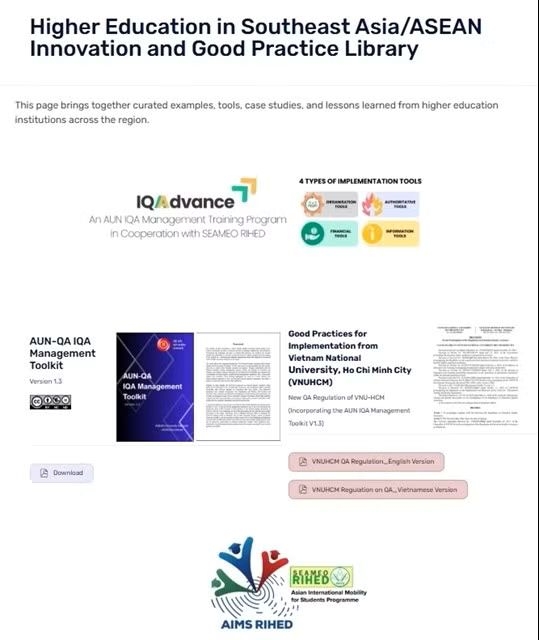
The Southeast Asian Ministers of Education Organisation Regional Centre for Higher Education and Development (SEAMEO RIHED) published and shared VNU-HCM’s Regulation on Education Quality Assurance on its website on May 22. It is a milestone in Vietnam’s active integration into regional academic networks.
The regulation was amended on May 18 to replace the previous 2017 version, reflecting a major shift in the university system’s governance philosophy towards modernisation, transparency, and sustainability.
It systematically integrates core principles from the ASEAN University Network-Quality Assurance Internal Quality Assurance (AUN-QA IQA) Management Toolkit Version 1.3.
By aligning with these regional guidelines, VNU-HCM is moving away from a compliance-driven external audit approach towards building an intrinsic quality culture rooted in continuous self-improvement.
The framework was developed by incorporating provisions from the Law on Higher Education, and Ministry of Education and Training circulars on institutional standards and operational transparency.
It mandates strict compliance with personal data protection regulations, clear data security policies for learners, contingency plans for data breaches, and explicit guidelines on the ethical use of artificial intelligence to protect academic integrity.
Knowledge sharing across ASEAN
Beyond internal restructuring, VNU-HCM has also taken a leading role in regional knowledge sharing.
It translated the AUN-QA IQA Management Toolkit into Vietnamese for a standardised reference for educational managers and quality assurance experts across Việt Nam, helping institutions establish robust internal quality control systems suited to the domestic higher education context.
Its contributions have gained considerable regional attention.
The Vietnamese version has been featured in the AUN E-newsletter and website, while SEAMEO RIHED has promoted it as a valuable reference resource for the broader ASEAN higher education sector.
The joint promotion of VNU-HCM’s academic and governance initiatives by two of the region’s leading educational organisations highlights the university’s professional capacity and proactive role in advancing regional educational standards.
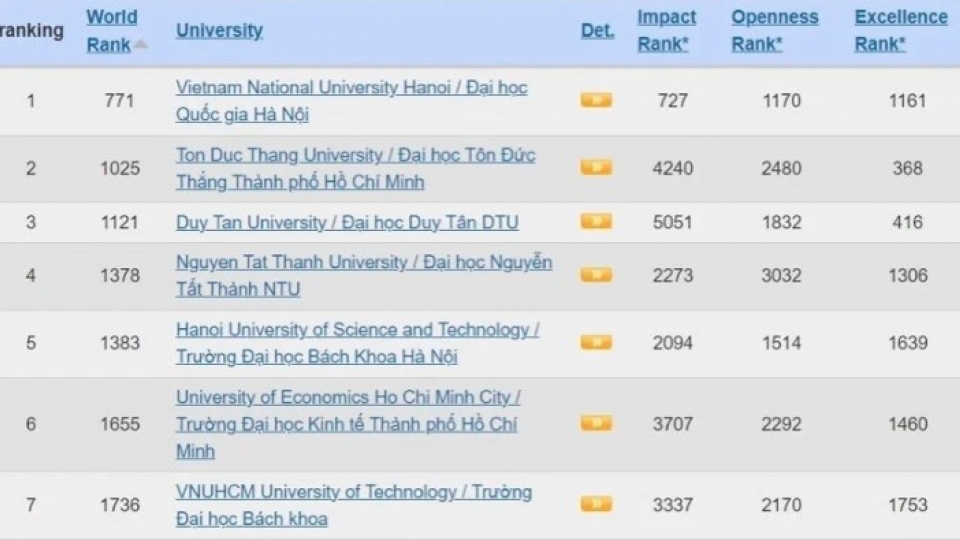
VNU-Hanoi maintains top spot in Vietnam, ranks among Asia's best
The Vietnam National University – Hanoi (VNU-Hanoi) has once again solidified its position as the country's top university and a regional academic powerhouse, ranking 15th in Southeast Asia.

