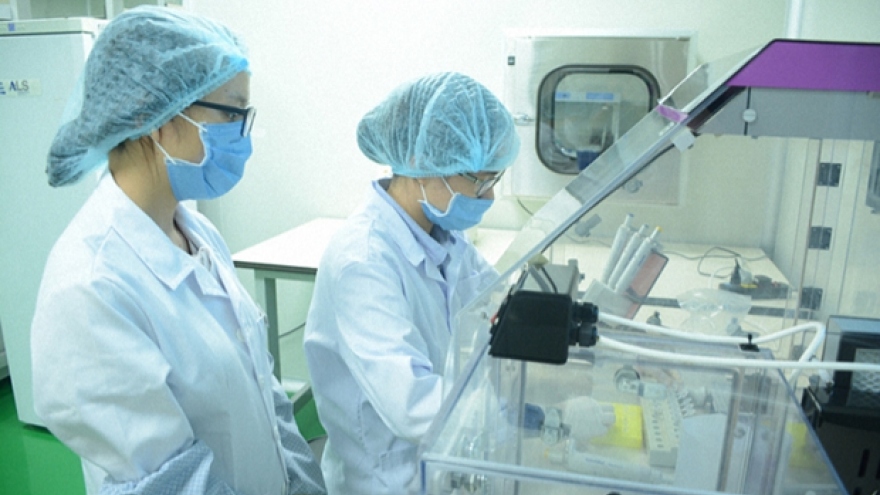
Advanced DNA profiling offers new progress in identifying fallen soldiers

The Vietnam Academy of Science and Technology (VAST) organised a ceremony in Hanoi on December 11 to announce DNA identification results of the remains of fallen soldiers, using a newly developed genomic analysis process (NGS–SNP).
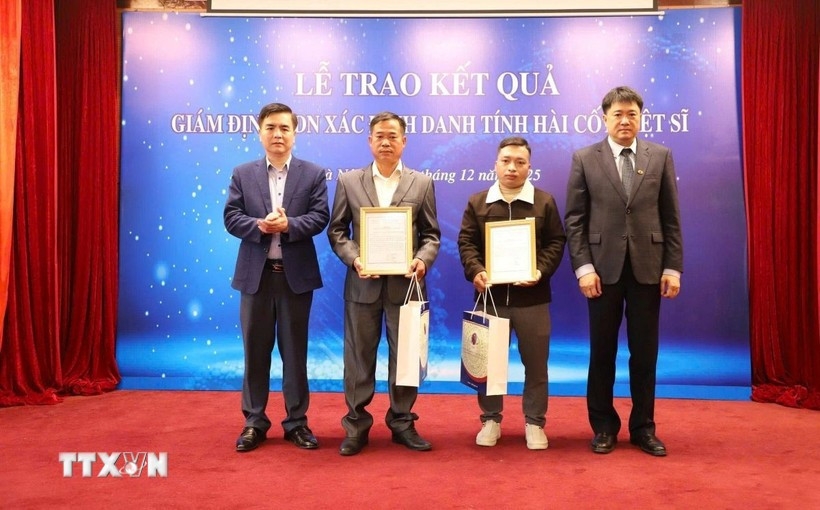
In his remarks, Prof. Dr. Chu Hoang Ha, Vice President of VAST, said the DNA Testing Centre under the Institute of Biotechnology had collaborated with international genetic and forensic specialists from the International Commission on Missing Persons (ICMP) to research, select and refine a DNA identification method suited to Vietnam’s specific conditions.
The new technology integrates optimised DNA extraction techniques, the use of single nucleotide polymorphism (SNP) markers of the nuclear genome, next-generation sequencing (NGS), and specialised software for data management and comparison. This process enables precise kinship analysis through both paternal and maternal lines up to four or five generations, and is particularly effective for remains buried for decades, where DNA is badly degraded and fragmented, conditions under which traditional methods often fail.
The technique was piloted on 58 sets of remains at the Tra Linh Martyrs’ Cemetery in Cao Bang province. Nearly 90% of the samples generated SNP data of sufficient quality for comparison. In the first round of matching, the identities of two fallen soldiers, Hoang Van Hoa and Tran Van Can, were successfully established.
Ha emphasised that the significance of these cases goes beyond the individual confirmations. They represent a scientific breakthrough, demonstrating that Vietnam has overcome long-standing technical obstacles in identifying the remains of fallen soldiers. This progress opens the door to addressing a large backlog of cases that could not be resolved with previous technologies.
US Ambassador to Vietnam Marc E. Knapper underscored the importance of bilateral cooperation in identifying fallen soldiers, stressing the central role of DNA analysis. He said the US Embassy is working with the ICMP to bring comfort to Vietnamese families seeking closure, just as Vietnam has supported American families over the years.
Tran Van Trung, younger brother of martyr Tran Van Can, said his family had waited for many years to learn the exact resting place of their loved one. Scientific identification, he said, brought profound relief and peace of mind, signalling the end of a long and difficult search.
According to the National Steering Committee for the Search, Collection and Identification of Martyrs’ Remains (Steering Committee 515), more than 300,000 sets of remains nationwide are still unidentified, and nearly 200,000 martyrs have yet to be located. Vietnam aims to complete DNA analysis for around 20,000 sets of remains by 2030.
The VAST continues to work closely with ministries and relevant agencies to expand the use of this new technology at cemeteries across the country, contributing to the Party and Government’s goals of identifying fallen soldiers whose information remains incomplete.
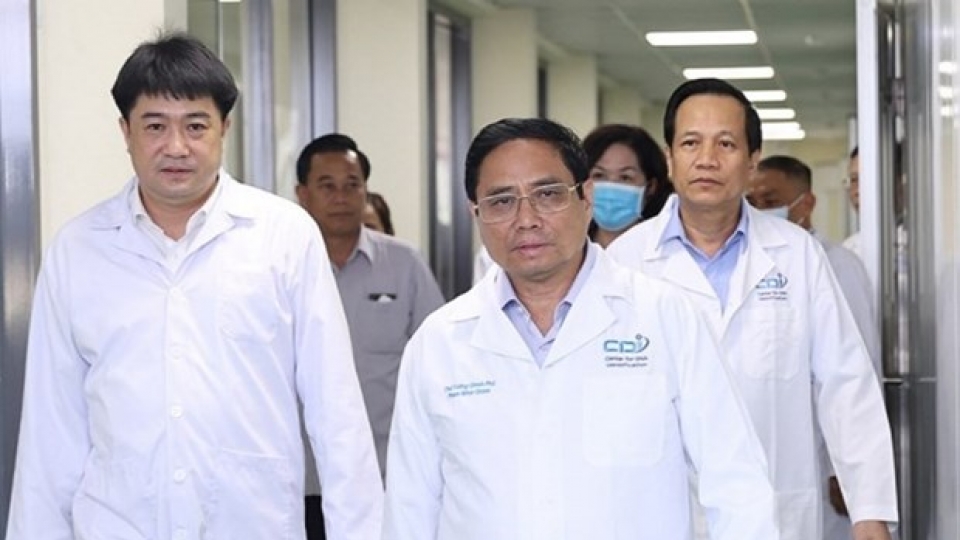
PM highlights significance of DNA testing for martyrs
Prime Minister Pham Minh Chinh had a working session in Hanoi on July 25 with units that analyse DNA samples of the remains of martyrs.