


Strengthening partnerships for substantive international integration

VOV.VN - The 14th National Party Congress identifies foreign affairs and international integration as a "crucial and regular" task, contributing to creating a peaceful, stable, and favorable environment for national development.
In line with that orientation, diplomatic activities in recent times have continued to be implemented proactively, comprehensively, and synchronously, ranging from expanding and deepening relations with partners, promoting economic cooperation, and attracting high-quality investment to fine-tuning institutions and enhancing the efficiency of realizing international commitments, toward turning cooperation opportunities into substantive development resources.
Deepening all-around cooperation
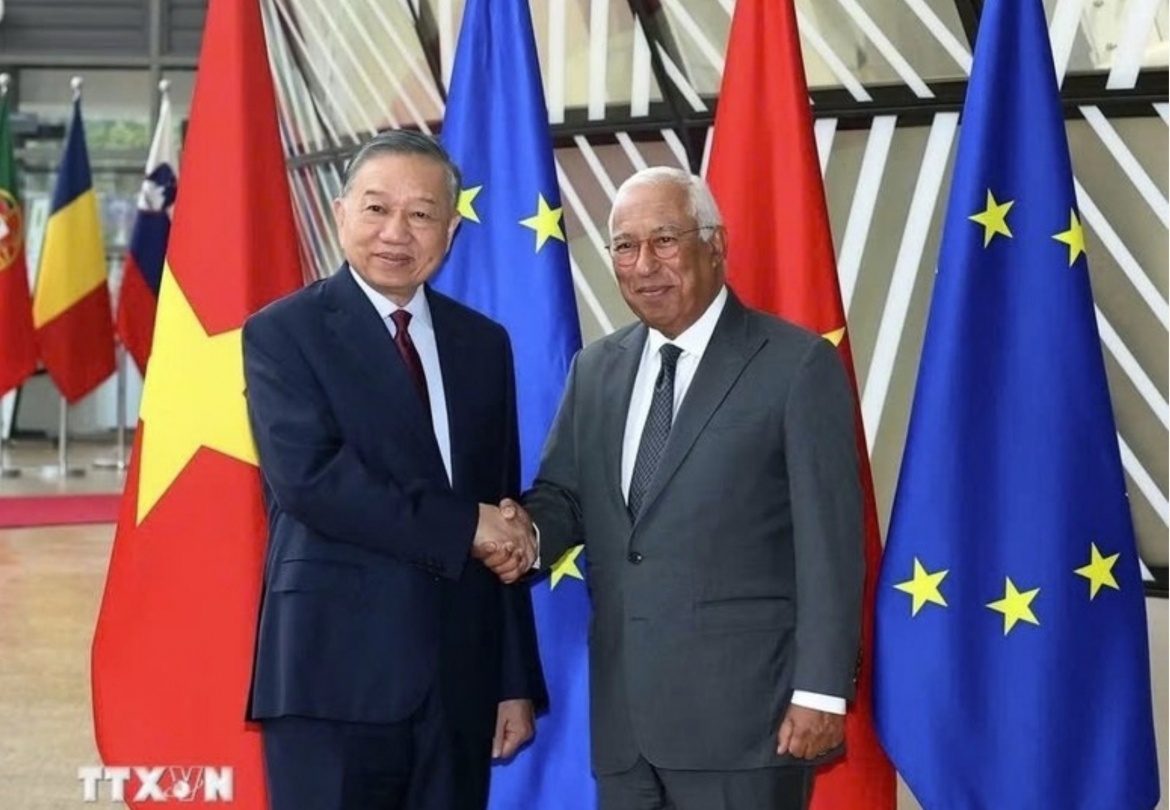
The State visit to the Kingdom of Denmark and official visits to the European Union (EU) and the Kingdom of Belgium by General Secretary of the Communist Party of Vietnam Central Committee and President To Lam from October 19 to 24 represent one of the prominent high-level diplomatic activities, contributing to concrete action on the foreign policy guideline of the 14th National Party Congress. The working trip not only consolidated political trust and deepened relations with key European partners, but also expanded opportunities for cooperation in economics, trade, investment, science and technology, innovation, and green transition, serving national development goals.
One of the major outcomes was that Vietnam and Denmark agreed to elevate their ties to a Comprehensive Strategic Partnership on the occasion of the 55th anniversary of diplomatic relations. This marks a new milestone built upon the Comprehensive Partnership established in 2013 and the Green Strategic Partnership in 2023, creating a framework for both countries to further deepen cooperation across various fields, particularly those with complementary strengths and needs.
During the official visit to the EU, Vietnam and the EU reaffirmed their commitment to deepening the Comprehensive Strategic Partnership established in January 2026, accelerating the full implementation of the EU-Vietnam Free Trade Agreement (EVFTA), and pushing for early ratification of the EU-Vietnam Investment Protection Agreement (EVIPA). Both sides also consented to strengthen cooperation in technology, innovation, education and training, green transition, and strategic infrastructure, while encouraging investment under the Global Gateway initiative and the Just Energy Transition Partnership.
During the official visit to the Kingdom of Belgium, the two countries agreed to continue deepening bilateral cooperation across all fields, working towards elevating Vietnam-Belgium relations to a Strategic Partnership at an appropriate time. Both sides emphasized expanding economic, trade, investment, and scientific-technological cooperation, especially in seaports, logistics, clean energy, high technology, and agriculture.
Notably, the Belgian Federal House of Representatives officially voted to ratify EVIPA on the night of October 22, right before the meeting between Party General Secretary and President To Lam and Belgian parliamentary leaders. This represents a concrete step forward in the agreement's ratification process, offering further favorable conditions to boost economic and investment cooperation between Vietnam and Belgium as well as the EU.
Another milestone was the signing of the Vietnam-EFTA Free Trade Agreement (VEFTA) between Vietnam and the European Free Trade Association (EFTA) on October 18, following 14 years of negotiations. The signing of the agreement marks a major milestone in relations between Vietnam and EFTA, which comprises world-leading countries in innovation, while demonstrating the determination of both sides to strengthen economic cooperation, promote free trade, and reinforce the rules-based trading system amidst global economic volatility.
Along with expanding international economic cooperation frameworks, activities to promote and attract selective foreign investment continue to be intensified in localities.
Recently, leaders of Ho Chi Minh City met with a US business delegation to discuss cooperation opportunities in semiconductors, artificial intelligence, the digital economy, and clean energy. Hue City announced its focused direction for foreign investment attraction for the 2026-2030 period, prioritizing high technology, innovation, green industry, and high-spillover projects.
Linking international cooperation with growth model renovation
Alongside diplomatic results and economic cooperation promotion, institutional refinement and international integration coordination have focused on enhancing the implementation efficiency of signed commitments.
At the National Assembly group discussion session on October 20 regarding the draft Law on International Agreements (amended), Permanent Deputy Prime Minister Pham Gia Tuc emphasized that foreign affairs constitute a vital resource for national development. Therefore, amending the law needs to facilitate international cooperation through pushing decentralization and delegation of authority, simplifying administrative procedures, and boosting technology application and digital transformation, while ensuring unified management of external activities.
The Deputy Prime Minister noted that in addition to reviewing the implementation of signed commitments, it is necessary to clearly define orientations, content, and areas of cooperation moving forward, linking international cooperation with growth model renovation based on science, technology, data, and the knowledge economy. The issue is not only increasing the number of agreements or expanding cooperation scopes, but also execution capacity, progress tracking, and resolving obstacles arising during implementation. This is the decisive factor for transforming diplomatic results into concrete programs, projects, and cooperative activities.
This requirement was further emphasized at the first meeting of the Inter-agency Working Group on Foreign Affairs and International Integration in Culture, Society, Education, and Training. Deputy Prime Minister Pham Thi Thanh Tra requested agencies to enhance inter-agency coordination, review international commitments, and draft cooperation plans aligned with specific tasks, objectives, and concrete outputs. She also highlighted the need to clearly delineate inter-agency activities from the specific diplomatic tasks of each agency to avoid overlap.
For the 2027-2030 period, the Deputy Prime Minister stressed the need to perfect institutions, improve coordination capacity, review international treaties and agreements, and proactively propose initiatives at multilateral forums. In culture, education, and training, these directions also aim to effectively tap knowledge resources, develop human capabilities, promote Vietnam's image, and leverage the role of the overseas Vietnamese community.
At the APEC Finance Ministers' Meeting 2026, held on October 20-21 in Hong Kong (China), Vietnam assumed the host role for the APEC Finance Ministers' Process 2027 and announced four proposed priority themes: capital market development, data-based finance, financial resource diversification, and enhancing high-quality young human resources in finance.
Assuming the host role for this process marks an important milestone in Vietnam's proactive and deep international integration. The proposed priorities demonstrate the link between participating in shaping regional cooperation agendas and domestic development requirements, especially in mobilizing financial resources, supporting innovation, and improving human resource quality.
The implementation of directions on foreign affairs, international integration, and foreign investment economic development is being concretized across various aspects, from expanding cooperation frameworks and business connections to refining implementation mechanisms.
The core requirement is to link foreign affairs and international integration with specific development targets, effectively mobilizing external resources on the basis of promoting internal strength and enhancing the economy's autonomy.
This forms the basis for opportunities generated by foreign affairs and international integration to continue turning into practical development outcomes in the period ahead.
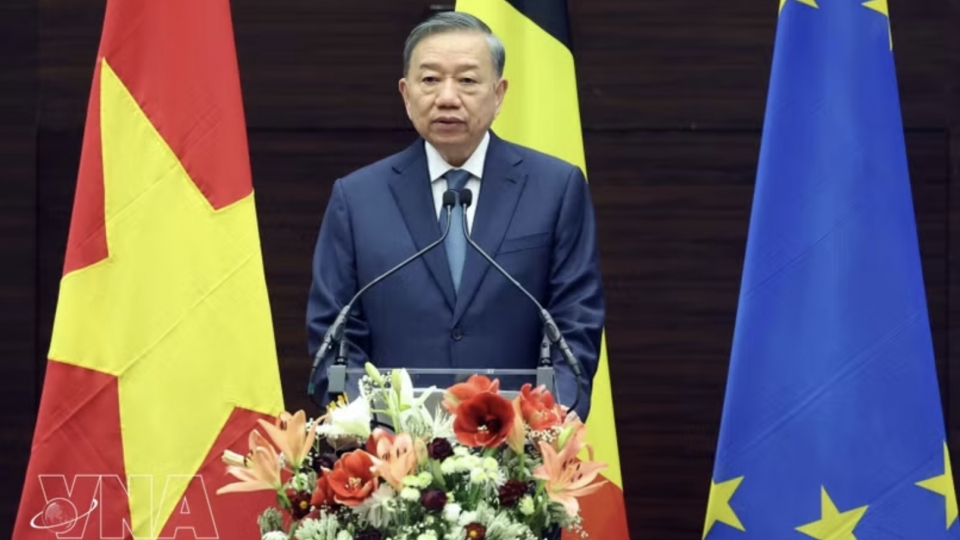
Top leader gives policy speech in Brussels, sharing vision for Vietnam-EU ties
General Secretary of the Communist Party of Vietnam Central Committee and President To Lam delivered a policy speech at Egmont – The Royal Institute for International Relations in Brussels on the afternoon of October 23 (local time).
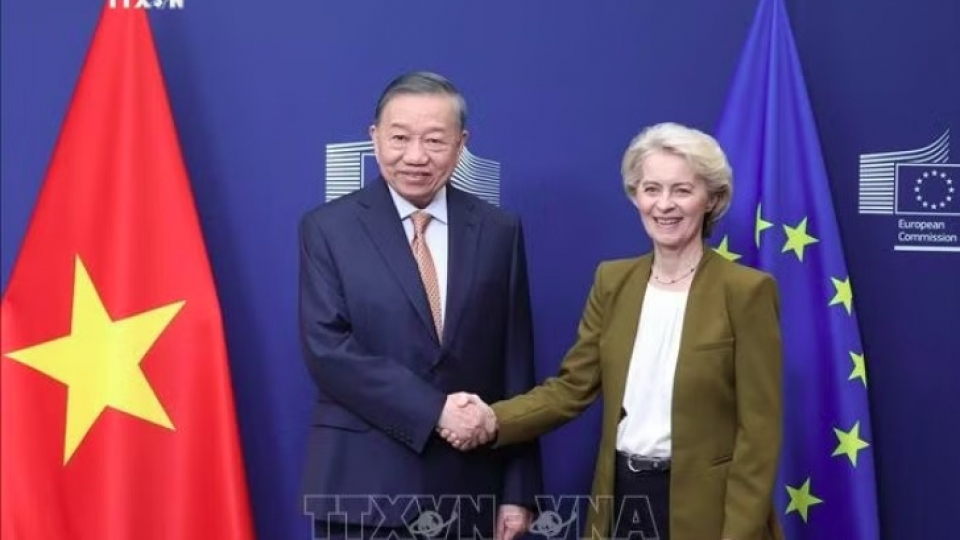
European media highlights substantive progress in Vietnam-EU relations
VOV.VN - The October 22 talks in Brussels between General Secretary of the Communist Party of Vietnam Central Committee and President of Vietnam To Lam, European Council President Antonio Costa, and European Commission President Ursula von der Leyen marked substantive progress in Vietnam-EU relations following the upgrade of bilateral ties to a Comprehensive Strategic Partnership in January 2026.
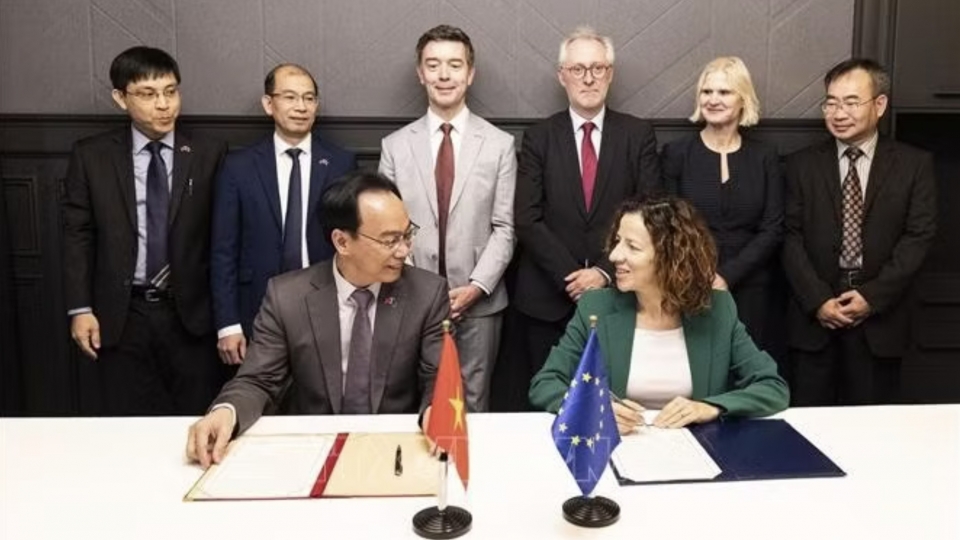
Vietnam, EU sign Letter of Intent on education, training cooperation
VOV.VN - Vietnamese Minister of Education and Training Hoang Minh Son and Executive Vice President of the European Commission Roxana Minzatu signed a Letter of Intent on education and training cooperation in Brussels on October 22.


