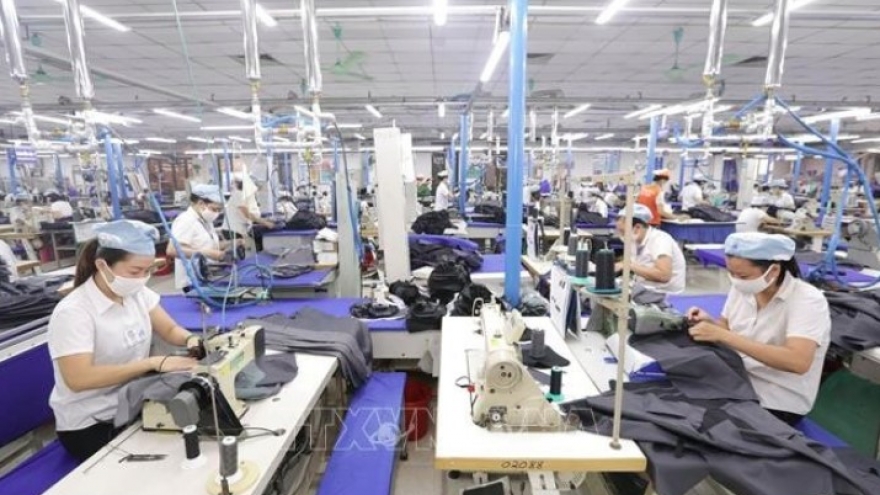
Party Congress XIV: 10% GDP growth challenging but within reach

VOV.VN - The target of average GDP growth of 10% a year for the 2026-2030 period, set by the 14th National Party Congress, is seen as a fundamental foundation for the country to enter a new era of the nation’s rise.
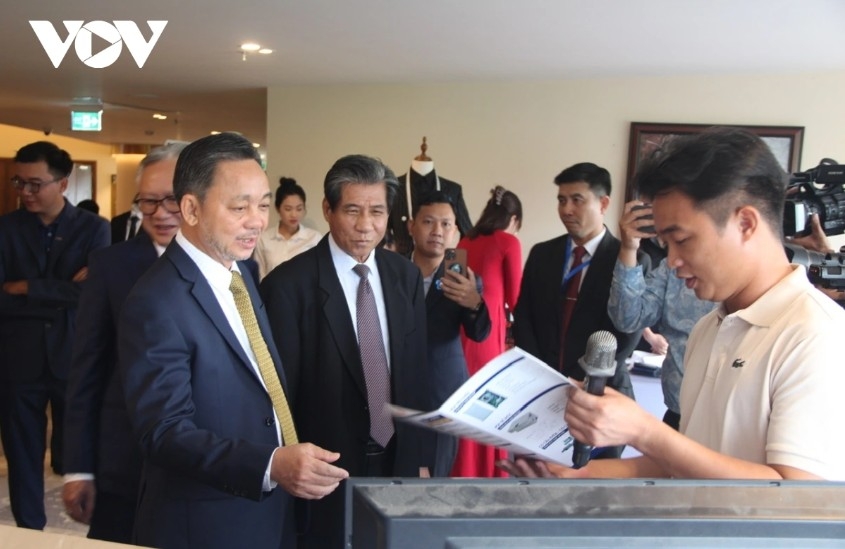
The business community in Ho Chi Minh City has welcomed the message with strong confidence, while also expressing expectations for breakthroughs in institutions, infrastructure and the principle that commitments must be followed by action.
Sound laws, smooth implementation
According to the business community, the GDP growth target of 10% or higher for the 2026-2030 period, as outlined in the report of the 13th Party Central Committee submitted to the 14th Party Congress, is a major challenge, but one that is firmly grounded.
The first source of momentum comes from institutions and policy frameworks. Thematic resolutions such as Resolution 68 on the private sector, Resolution 79 on the state sector, and Resolution 57 on science and technology, innovation and national digital transformation are seen as important policy tools in ensuring that macroeconomic policy closely reflects practical realities.
A case in point is the Government’s move to put the International Financial Centre into operation in Ho Chi Minh City and Da Nang, which has gone beyond a stated objective to become a practical mechanism supporting businesses.
Nguyen Ngoc Hoa, Acting Chairman of the Ho Chi Minh City Business Association (HUBA), said that achieving the targeted growth rate ultimately depends on translating Party resolutions into concrete action programmes.
According to Hoa, businesses are calling for rapid reforms in governance, particularly during the transition period following provincial mergers and the operation of a two-tier local government model.
“Procedures that businesses previously had to seek approval for at the district level may now move to city-level departments, or in some cases be handled at the ward or commune level. This needs to be clarified and done quickly. At the same time, officials must be confident and willing to exercise the authority delegated to them in order to support businesses. If the system operates in a coordinated way, I believe double-digit growth is well grounded and businesses have confidence in that prospect,” Hoa said.
Analysing the target of GDP growth of 10% or more for the 2026-2030 period, businesses acknowledge that it is a difficult task amid volatility both internationally and domestically.

However, Party Congress XIV documents emphasise the spirit of “strategic autonomy, self-reliance and self-confidence”, while establishing a new growth model based on the knowledge economy, digital economy, green economy and circular economy. These are viewed as core internal strengths that make growth of 10% or more achievable.
The business community expects that following the 14th Party Congress, the administrative apparatus from the central level down to localities will operate more smoothly, guided by the principles of linking responsibility with outcomes, pairing breakthroughs with sustainability, and ensuring that commitments are matched by action.
Offering proposals for achieving the 10% growth target, Dinh Hong Ky, Chairman of the Board of Secoin JSC, said the key lies in resolving policy and administrative delays.
Alongside institutional reform, 2026 is expected to be a pivotal year as major infrastructure projects launched in 2025 continue, with public investment remaining a major policy instrument for steering the economy.
“I believe this will mark a breakthrough and become a major bright spot for Vietnam’s economy in 2026. With strong infrastructure momentum that year, it could generate wide spillover effects across the economy, including both the public and private sectors,” Ky said.
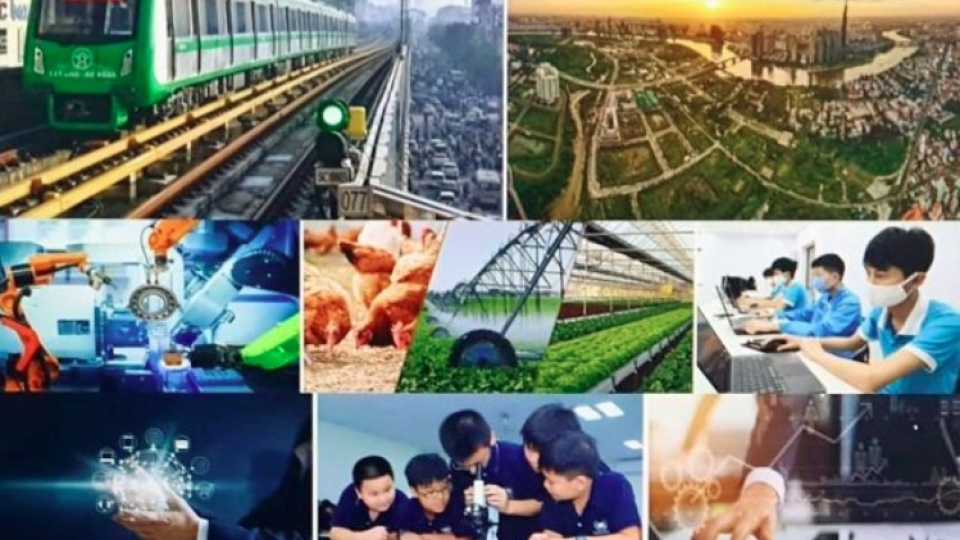
Vietnam posts 8.02% GDP growth in 2025, seen as a bright spot internationally
VOV.VN - Vietnam’s economy expanded by 8.02% in 2025 amid wide fluctuations in the global economy, a performance that international organizations and investors describe as one of the few bright spots in global growth.
Draft documents of the Party Congress reaffirm the private sector as “one of the most important driving forces” of the national economy. This has been given concrete form through the Politburo’s issuance and implementation of Resolution 68 on private sector development in the final year of the 13th Party Congress term.
Pham Van Triem, Chairman of the Ho Chi Minh City Small and Medium Enterprises Association (SMEs), said that if Resolution 68 and the resolutions of Party Congress XIV are implemented in a coordinated manner, the SME sector could become a major engine of growth.
In reality, SMEs remain at a disadvantage when competing with large corporations and foreign-invested enterprises. In line with the principle that “the people are at the centre”, the sector requires active state support to enable deeper participation in global supply chains.
“I hope that after Party Congress XIV, the entire political system, from the central level to localities and across ministries and sectors, will immediately and synchronously implement Resolution 68, so that support for enterprise development translates into real outcomes for the SME community,” Triem said.
Ho Chi Minh City accounts for nearly half of the country’s start-ups and more than one-third of all enterprises nationwide. During the previous term, the National Assembly issued Resolution 98/2023/QH15 and, more recently, Resolution 260/2025 on special mechanisms and policies for the city.
In his article ‘Ho Chi Minh City harnesses intellect, unity and innovation for a new development phase’, Tran Luu Quang, a member of the Party Central Committee Secretariat and Secretary of the Ho Chi Minh City Party Committee, described the two resolutions as “major hallmarks of the 2020-2025 term”.
This underscores the view that the city is not merely a large locality, but a national growth pole, seeking not privileges or preferential treatment, but mechanisms that allow it to contribute more.
That spirit is in line with the frank assessment in the report of the 13th Party Central Committee on documents submitted to Party Congress XIV, which identifies institutions as the “breakthrough of breakthroughs”.
Following its merger with Ba Ria-Vung Tau and Binh Duong, Ho Chi Minh City’s urban space has greatly expanded.
In 2025, its contribution to the state budget reached nearly VND 900 trillion, accounting for more than one-third of total national revenue. With a target of 10% GDP growth for the 2025-2030 term, the city’s momentum is expected to make a substantial contribution to national growth.
To realise this target and support overall economic expansion, Tran Viet Anh, Chairman and Chief Executive of Nam Thai Son Import-Export JSC, said the city needs transparent policies and detailed planning. Businesses need clarity on where high-tech industries, port logistics and real estate development are to be located within the overall master plan of the emerging “mega-city”.
In particular, he stressed the need for clearly defined operational space for service enterprises supporting the International Financial Centre. Once these bottlenecks are removed, double-digit growth will be highly feasible.
“I believe the solution lies in the determination of the business community, along with government support and policy frameworks, especially policies that build on the strengths of Vietnamese enterprises,” Anh said.
The business community has placed strong confidence in the decisions emerging from Party Congress XIV, viewing them as a launch pad for enterprise development and a key driver in achieving the growth target of 10% or higher set out in the Congress resolution.
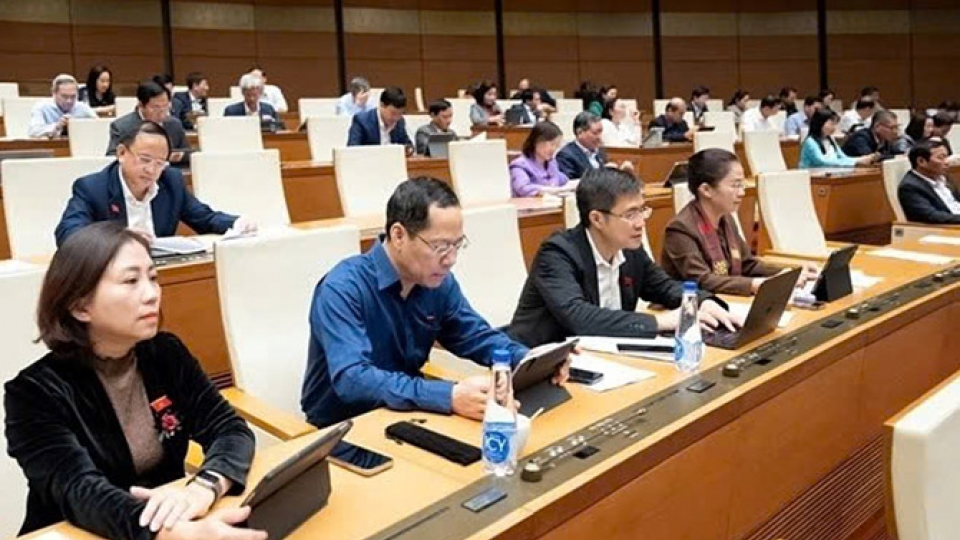
National Assembly sets 2026 GDP growth target at no less than 10%
VOV.VN - With an overwhelming majority of votes in favour, the National Assembly passed the Resolution on the 2026 Socio-Economic Development Plan on November 13, setting an ambitious goal for GDP growth of 10% or more.