No delay in action: Modern national governance under Party leadership

VOV.VN - Immediately after the 14th National Party Congress, the spirit of “not wasting a single day, not delaying a single week” was widely conveyed, demonstrating a modern national governance mindset- resolute, swift and effective- under the example and direct guidance of Party General Secretary To Lam, with the aim of bringing the congress’ resolutions rapidly into life.
The Party chief’s example
Following the 14th Congress, the Secretariat organized consecutive conferences to disseminate the resolutions, consistently emphasizing the message of “not wasting a single day, not delaying a single week.”
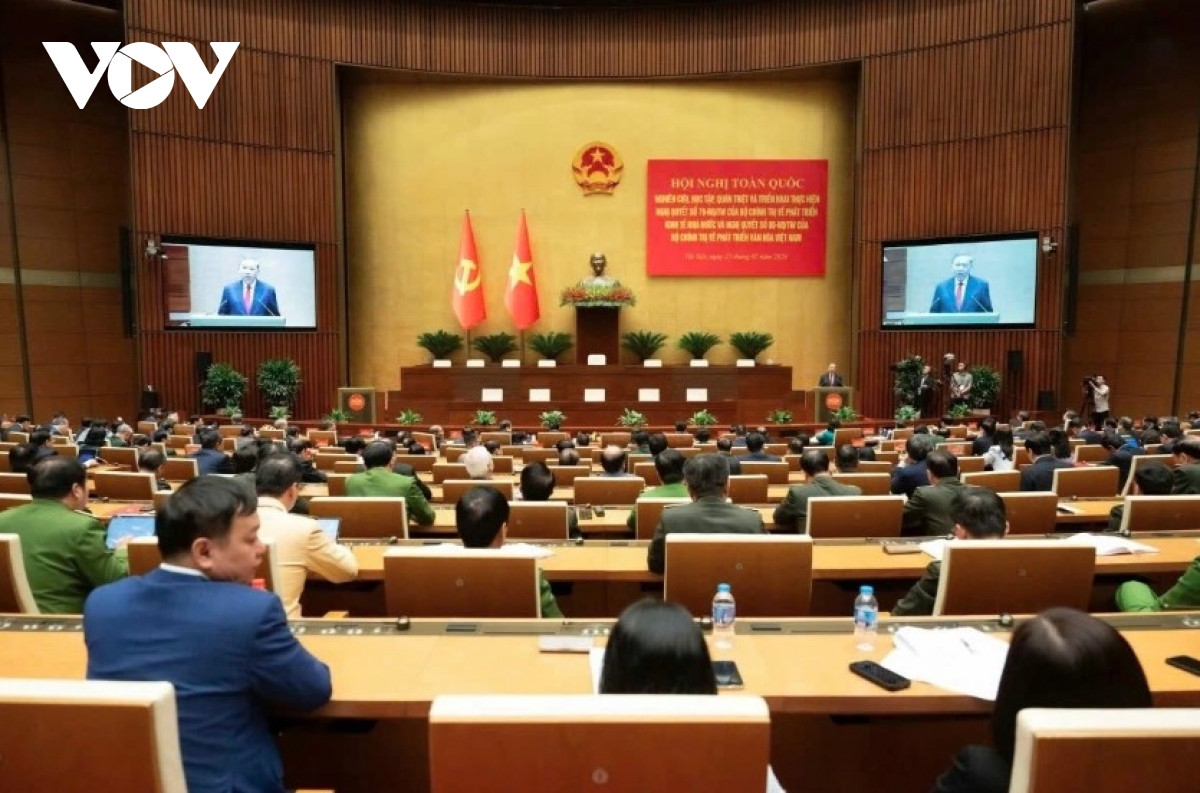
On February 25, a national conference to disseminate Resolution No. 79 on the development of the State economy and Resolution No. 80 on the development of Vietnamese culture was convened, showing strong political determination and decisive leadership in the new period.
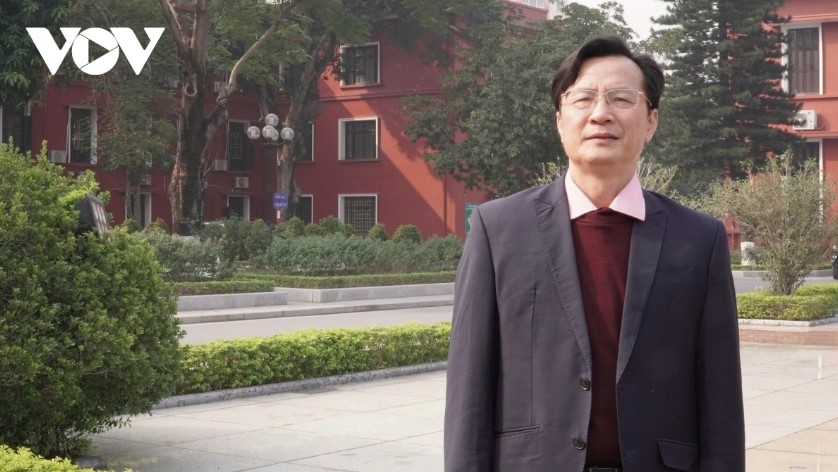
Assoc. Prof., Dr. Trinh Van Tung, senior lecturer at Institute of Leadership Studies and Public Administration, Ho Chi Minh National Academy of Politics, said the action message issued immediately after the Congress is not merely a slogan but an imperative arising from reality, reflecting a modern governance mindset defined by determination, speed and effectiveness.
According to Trinh Van Tung, the early issuance and implementation of Resolutions 79 and 80, right after the Lunar New Year holiday, carry particular significance.
First, it affirms the importance and urgency of major policy decisions for the country’s development path. Vietnam is entering a new stage that requires addressing two foundational tasks simultaneously: strengthening “material internal strength” through economic development and reinforcing “spiritual internal strength” through cultural development.
Resolution 79 aims to consolidate the leading role of the State economy, ensuring control of strategic commanding heights in key sectors such as energy, infrastructure, economic security and innovation. Resolution 80 places culture in a guiding position, building a national value system and fostering the character of the Vietnamese people amid deep international integration and rapid digital transformation.
The two resolutions together form a unified development structure: the economy enables the country to move fast, while culture enables the nation to go far. Delays in implementation could mean missing strategic opportunities and facing the risk of falling behind or becoming dependent in an increasingly competitive global environment.
Trinh Van Tung highlighted a shift in leadership methods, from emphasizing “studying the resolutions” to requiring “acting on the resolutions.”
The message of “not wasting a single day, not delaying a single week” sets not only a timeline but also a standard of implementation discipline. The high frequency of dissemination conferences immediately after the Congress aims to unify awareness and action across the political system, overcoming the long-standing gap between well-crafted resolutions and slow implementation.
He said modern national governance requires that every action program have specific objectives, measurable indicators, clear deadlines, monitoring mechanisms and defined accountability. This reflects a governance approach grounded in substantive results rather than formality or report-based performance.
A warning against inertia and avoidance of responsibility
The message of decisive action also serves as a warning against inertia, avoidance and shifting responsibility, as well as short-term, tenure-based thinking.
The spirit of “not delaying a single week” obliges Party committees, Party organizations and leaders at all levels to act from the very beginning of the year, leaving no room for hesitation. Issuing resolutions immediately after the Lunar New Year- a period often associated with a slower working rhythm, demonstrates the highest level of political determination and example-setting from the highest Party leadership.
This marks a move from leadership through general orientations to leadership through concrete targets. The key pillars of the State economy and cultural development priorities are clearly defined, focused and selective, avoiding dispersion.
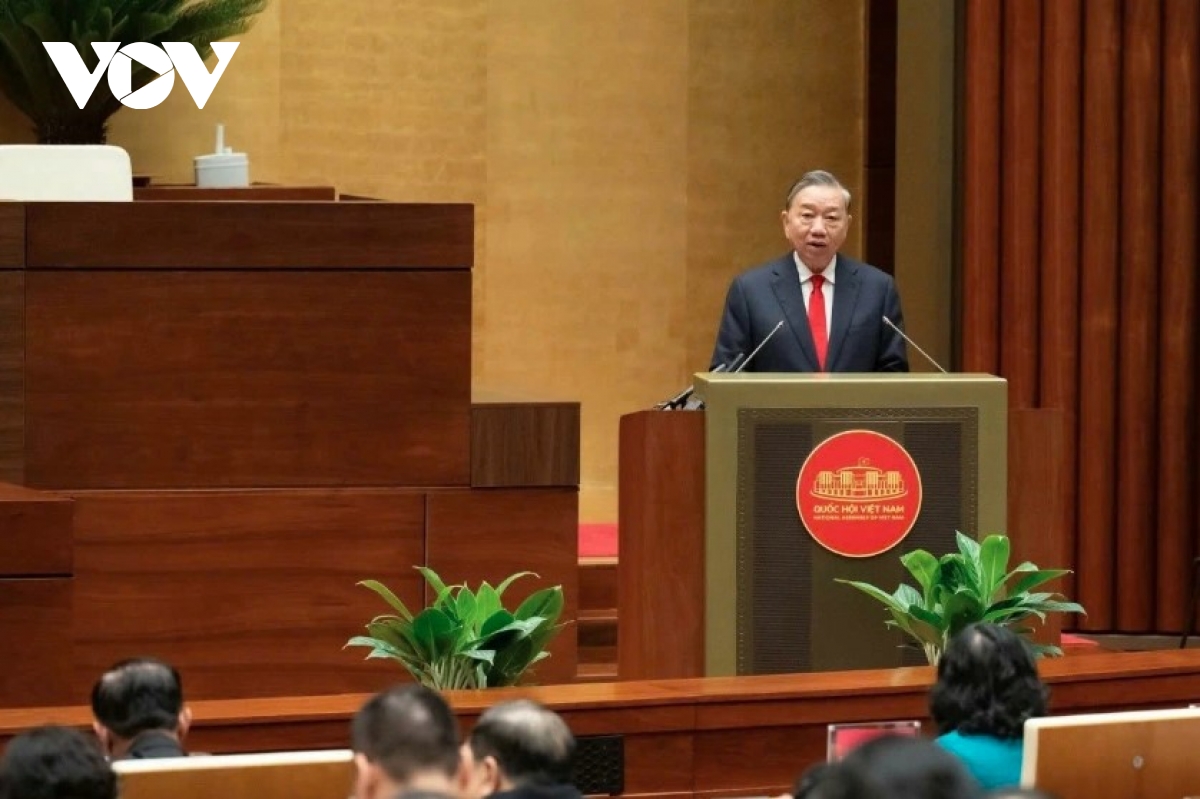
Trinh Van Tung noted that the direct presence and close guidance of Party General Secretary To Lam at dissemination conferences carry strategic significance.
First, it underscores the importance of the resolutions. When the head of the Party directly presides, the message is conveyed clearly, minimizing misunderstandings or distortions during implementation from central to local levels.
Second, it represents the highest embodiment of the spirit of example-setting. The leadership style of matching words with action is demonstrated through concrete steps: no wasted time and no delay in implementation. When the top leader acts decisively, subordinates cannot avoid responsibility.
Third, direct guidance helps promptly remove bottlenecks in mindset and methods. Systemic risks, potential erosion of cultural values and limitations in the governance of State-owned enterprises are recognized candidly, enabling early remedial measures.
Finally, it represents a strong political commitment to the people: all resolutions are aimed at improving living standards, ensuring energy security and essential infrastructure, and building a healthy cultural environment, including safety in cyberspace.
Conditions for effective implementation
According to Trinh Van Tung, for dissemination of the resolutions to lead to real change rather than remain theoretical, several key conditions must be met.
First, there must be strong unity in awareness and determination to act. Studying the resolutions must focus on core content, clearly identifying new elements and urgent practical requirements, avoiding formality.
Second, the resolutions must be operationalized through modern governance instruments. They should be turned into action programs with quantified targets, clear timelines and strict monitoring mechanisms. Without clear metrics and enforcement mechanisms, implementation will struggle to produce substantive results.
Third, personal responsibility and the role of leaders must be emphasized. Implementation discipline and example-setting are decisive in transforming political will into concrete action.
Fourth, speed must go hand in hand with quality. Work must be carried out swiftly but carefully, ensuring that group interests, vested interests or policy profiteering do not distort the original objectives.
Fifth, the people’s actual benefit must serve as the ultimate yardstick. No matter how quickly a resolution is implemented, if people do not see and experience its benefits, it has not met its purpose.
Clear direction, resolute implementation
From the perspective of modern governance, translating the spirit of the resolutions into concrete policies requires a clear roadmap. Strategic orientations must be specified in projects and programs with measurable indicators.
For example, if energy security is strengthened, electricity prices should remain stable; if digital infrastructure is developed, online administrative procedures should become more convenient and transparent; if a healthy cultural environment is promoted, cyberspace should be safer from misinformation and harmful content.
Responsibilities at each level and in each sector must be clearly defined, with stronger inspection and supervision and responsiveness to feedback from practice. Power control mechanisms and anti-corruption and anti-waste measures must be enforced to ensure national resources serve the public interest.
At the same time, digital technology should be more widely applied in governance to monitor implementation in real time, enhancing transparency and accountability.
Assessing the current leadership style, Trinh Van Tung said it represents not only a governance method but also a philosophy of action, defined by three core values: clear strategic direction; resolute implementation; and responsibility through example. When direction is clear, targets are specific, supervision mechanisms are strict and responsibilities are transparent, the system can operate at high speed while maintaining quality.
The combination of material internal strength (the economy) and spiritual internal strength (culture), high political determination and modern governance tools, close leadership and public oversight provides the foundation for resolutions to quickly take effect.
The message of “not wasting a single day, not delaying a single week” goes beyond work pace. It affirms the highest level of political determination to move the country forward in the new period.
Swift implementation with quality, resolute action in the right direction, and renewed leadership methods while upholding discipline are consistent requirements in carrying out Resolutions 79 and 80 after the 14th National Party Congress.
“When the Party’s will is translated into concrete action, and when people can truly see and benefit from development achievements, social trust will be strengthened.
That is the foundation for Vietnam to develop rapidly and sustainably, while maintaining independence and self-reliance in the new era.

Strategic priorities for national infrastructure under 14th National Party Congress
VOV.VN - Identifying infrastructure development, particularly multimodal transport, as one of the strategic breakthroughs, the Resolution of the 14th National Party Congress sets out to build a solid foundation for rapid and sustainable socio-economic growth, strengthen national competitiveness and improve people’s quality of life.
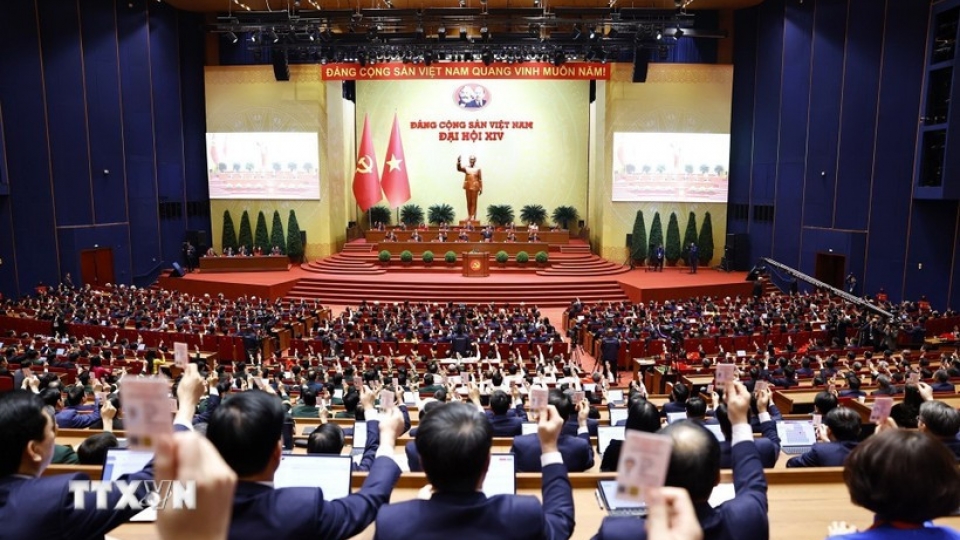
14th National Party Congress brings new vitality to international community
At a time when the world is grappling with unprecedented challenges ranging from armed conflicts and geopolitical instability to economic uncertainty and severe climate and environmental pressures, the 14th National Party Congress has brought a wave of new vitality to the international community.