Vietnam-Russia academic dialogue highlights notable milestones in 2026

VOV.VN - The Vietnam and ASEAN Research Centre under the Russian Academy of Sciences, in coordination with the Embassy of Vietnam in Russia, held an international conference titled “Vietnam: Notable Milestones in 2026” in a hybrid format combining in-person and online participation on February 12-13.
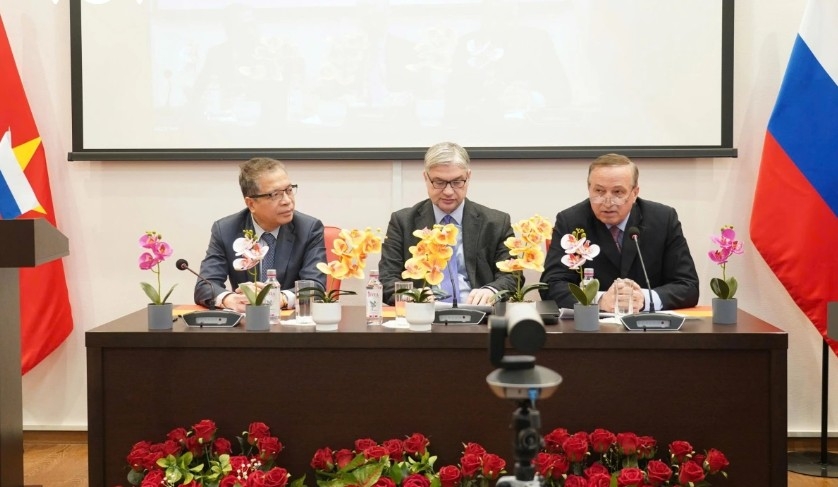
The event featured the participation of a large number of researchers, experts, and scholars from Russia, Vietnam, and several other countries, forming a broad and constructive academic forum.
In his speech, Vietnamese Ambassador to Russia Dang Minh Khoi said he was confident that within the framework of the forum, scholars from the two countries would conduct in-depth and comprehensive analyses of the historic decisions adopted at the 14th National Congress of the Communist Party of Vietnam, as well as Vietnam’s key development milestones in 2026.
In this context, the scientific community is expected to continue developing concrete policy recommendations to consolidate and advance the Vietnam-Russia comprehensive strategic partnership, contributing to the shared development and prosperity of both countries.
Representing the Russian side, Sergey Uyanaev, Deputy Director of the Institute of China and Contemporary Asia under the Russian Academy of Sciences, highlighted the scale and international profile of the event, with participation from reputable research centers in Russia, Vietnam, Laos, and Belarus.
Uyanaev said the discussions closely reflected current realities, particularly those linked to the outcomes of the 14th National Congress of the Communist Party of Vietnam. He said Russia-Vietnam relations are being strengthened on the basis of expanding substantive cooperation.
On the first working day, presentations focused on reform of the state governance system, renewal of Party work in line with the 14th National Party Congress, and Vietnam’s priorities in foreign and economic policy.
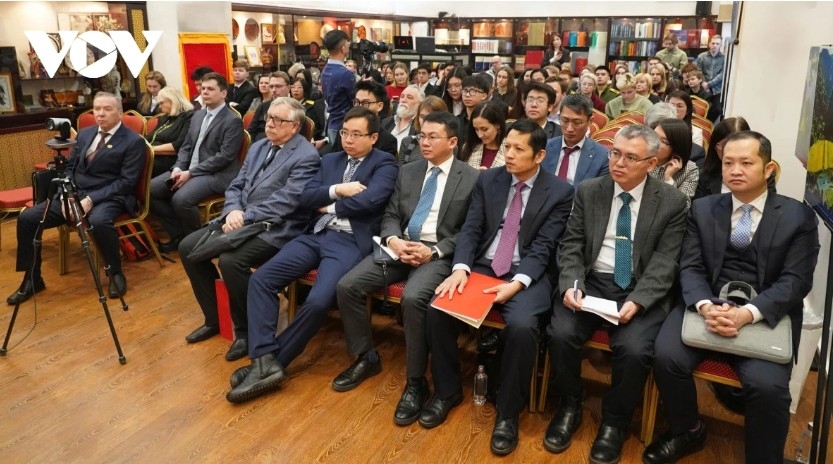
The foreign policy session drew particular attention, with topics including Vietnam’s strategic balancing among major powers, relations with the Eurasian Economic Union (EAEU), the role of the East Sea in Vietnam-China relations, and Vietnam’s position in the United States’ national security strategy in the new phase.
Notably, a thematic session on Russia-Vietnam cooperation examined prospects ranging from traditional areas such as energy and defense to emerging fields including high technology, artificial intelligence, and digital transformation.
Anton Tamarovich, Head of the Laboratory for International AI Development Trends at the Higher School of Economics (HSE), said Russia and Vietnam boasts great potential for cooperation in artificial intelligence. In 2025, the two countries signed a cooperation plan through 2030 and established a joint artificial intelligence center at Vietnam National University, Hanoi, he said.
“Each year, Russia awards up to 1,000 scholarships to Vietnamese students. I believe these scholarships will help meet Vietnam’s demand for training specialists in artificial intelligence. Building on this foundation, the two countries can further expand cooperation, develop mechanisms for data exchange, share experience in AI deployment, and strengthen governance in this field,” Anton Tamarovich said.
On the second working day, presentations focused on Vietnam’s economic reform process, the evolution of political thought and the political system since the Doi Moi (renewal) process in 1986, and analysis of emerging challenges related to security, sustainable development, and international integration.
The conference served as an academic forum reviewing Vietnam’s achievements and development orientations, while strengthening professional exchanges between scholars from the two countries and reinforcing the knowledge base underpinning the Vietnam-Russia comprehensive strategic partnership.
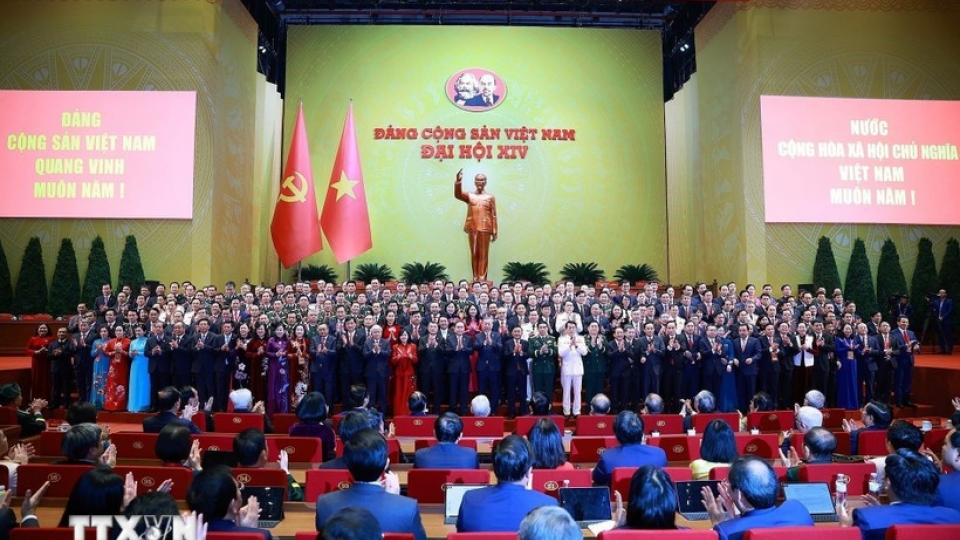
Russian media praises development orientations of Vietnam’s 14th Party Congress
The international digital library platform libmonster.net on January 28 published an article by Vyacheslav Ivanovich Grachev, head of the information department at the Institute of Economics under the Russian Academy of Sciences, reviewing the most significant outcomes of the 14th Party Congress.
Russia–Vietnam relations continue to be strengthened across multiple areas
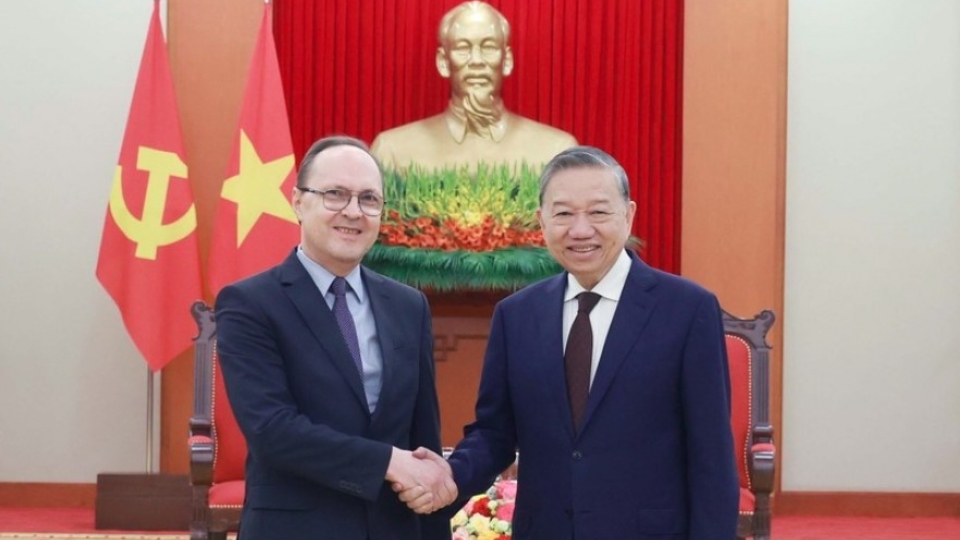
Russian Ambassador to Vietnam Gennady Bezdetko on February 9 affirmed that Russia and Vietnam maintain regular, substantive dialogue at various levels, contributing to enhancing bilateral ties across multiple fields while granting an interview with the Russian News Agency TASS ahead of Russia’s Diplomatic Worker’s Day.