Vietnam – “Architect” of regional peace, security

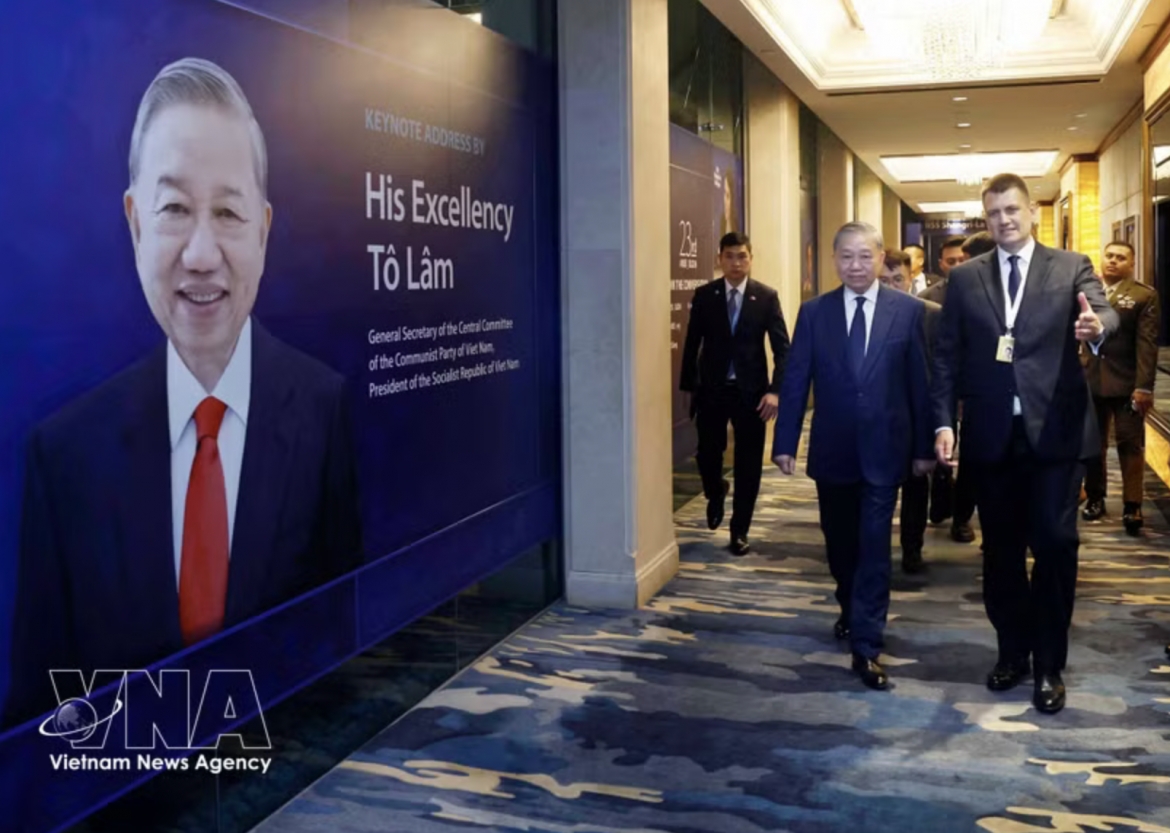
Amid geopolitical shifts across the globe, the keynote address delivered by Party General Secretary and State President To Lam at the Shangri-La Dialogue has marked an important milestone, redefining the Southeast Asian country’s position and diplomatic thinking on the international stage.
Dr Julia Roknifard, a senior lecturer in international relations at Taylor’s University in Malaysia made the statement in an interview with Vietnam News Agency correspondents in Malaysia.
Roknifard said the message presented at the dialogue established a timely and subtle diplomatic framework for modern multilateral relations, going far beyond ceremonial statements.
She noted that the speech directly identifies and addresses three simultaneous crises confronting the global order: the fragmentation of the international order, challenges to development models, and the serious erosion of strategic trust. Rather than offering a passive analysis, the address represents a proactive effort to redefine the concept of security in a new era.
The scholar praised Vietnam’s approach of shifting the focus from purely military deterrence towards a more comprehensive and sustainable security framework based on three core pillars: human security, social stability, and economic resilience. By moving from crisis response to proactive risk reduction, Vietnam has positioned itself as a responsible and mature “architect” of regional peace.
This demonstrates that the country’s leadership is not confined to narrow national interests but links its vision to the broader stability and prosperity of the international community, she said.
One of the most significant aspects of Vietnam’s strategy, Roknifard noted, is its emphasis on strong international cooperation. She argued that Vietnam is right in asserting that no single country can tackle today’s global disruptions alone.
According to her, in this context, the role of the Association of Southeast Asian Nations (ASEAN) remains central. The region possesses abundant natural resources, including oil and gas, rare earth and fisheries resources, while also representing a vast consumer market undergoing rapid technological and industrial development. Maintaining the bloc’s centrality and neutrality, together with strengthening its economic and defence self-reliance, serves as the most effective safeguard against being drawn into geopolitical rivalries or forced to choose sides between competing blocs.
Addressing major-power competition, Roknifard highlighted the practical value of the principles of dialogue and respect for international law advocated by Vietnam. At a time when major powers increasingly resort to unilateralism, the weaponisation of trade and the creation of faits accomplis, adherence to the Charter of the United Nations and the 1982 United Nations Convention on the Law of the Sea is vital for protecting the interests of small- and medium-sized states.
These legal frameworks help ensure that strategic competition remains manageable and predictable, while preventing arterial trade routes, particularly maritime corridors, from becoming theatres of conflict, she said.
She also described Vietnam’s emphasis on building strategic trust as highly pragmatic. The speech, she observed, does not assume that trust can completely eliminate national differences or inevitable geopolitical competition. Instead, Vietnam advocates managing such differences through clear rules of conduct, rapid communication channels and verifiable actions.
Prioritising preventive diplomacy over grand rhetoric, she said, offers a realistic path to preventing dangerous escalatory spirals, particularly in flashpoints such as the East Sea.
Furthermore, Vietnam’s proposals contribute to the development of an inclusive and sustainable regional security architecture. By calling for external initiatives to complement rather than undermine existing ASEAN-led mechanisms, Vietnam is helping to protect Southeast Asia from fragmenting into rival blocs.
The expert further noted that the nation’s integration of non-traditional security issues, including cyber security, food security and technology governance, into the regional agenda broadens the conventional definition of security. This approach enables the regional security structure to address the socio-economic root causes of instability.
Overall, the international relations scholar said the keynote speech reflects an independent, principled and proactive foreign policy. Vietnam has closely aligned its long-term national interests with regional stability.
According to Roknifard, Vietnam has rejected the role of a passive bystander or a “pawn” in great-power competition. Instead, it is positioning itself as a law-based mediator and a responsible international partner open to transparent cooperation while firmly safeguarding its sovereignty and maritime rights.
This strategic vision serves not only as a guiding principle for Vietnam’s diplomacy, but also as a meaningful contribution to efforts to build a peaceful and prosperous world order, she concluded.
Vietnam chairs international discussion on peaceful use of nuclear energy
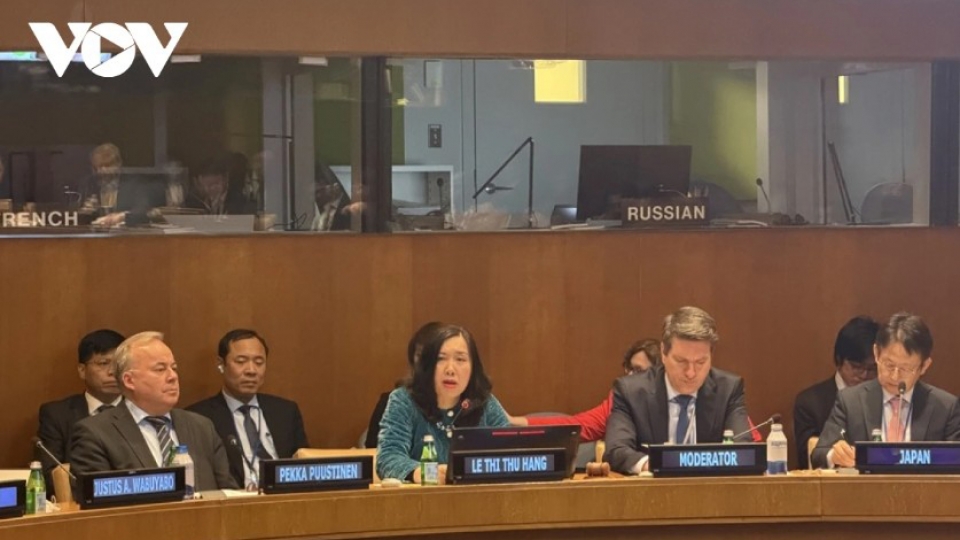
VOV.VN - On April 29, at the United Nations Headquarters in New York, during the 11th Review Conference of the Treaty on the Non-Proliferation of Nuclear Weapons (NPT), Vietnam chaired an international discussion on the use of nuclear energy to advance the Sustainable Development Goals, focusing on technology, capacity and financing for nuclear applications.