


Upgrading strategic partnership creates fresh impetus for Vietnam-Poland cooperation

VOV.VN - Polish Prime Minister Donald Tusk and a high-ranking delegation successfully concluded their official visit to Vietnam from October 24 to 26 at the invitation of Prime Minister Le Minh Huong. On this occasion, Deputy Minister of Foreign Affairs Ngo Le Van shared his views on the significance and prominent outcomes of the Polish government leader's visit.
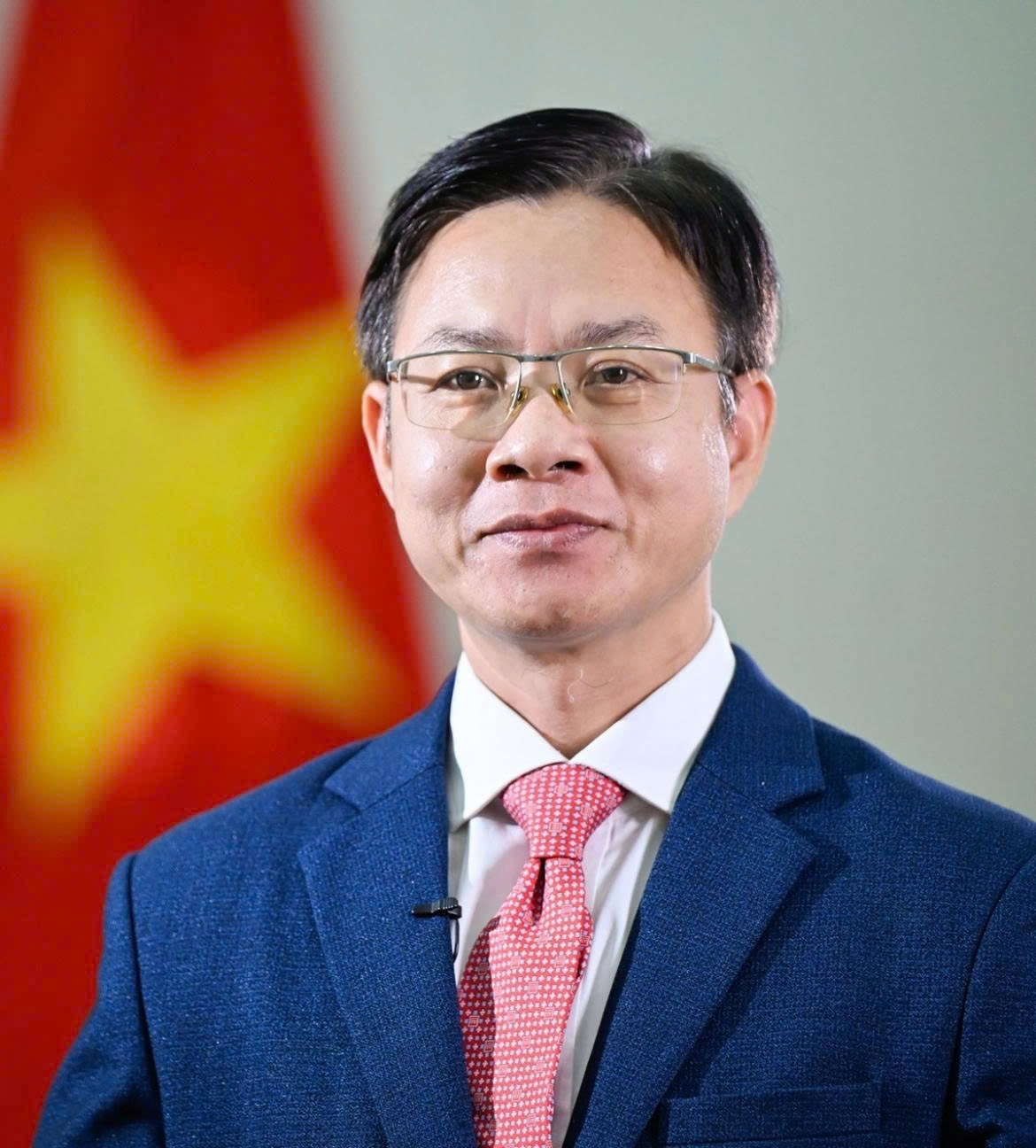
Deputy FM Ngo Le Van emphasized that Prime Minister Donald Tusk’s official visit to Vietnam is an important milestone in the 76-year journey of diplomatic relations between the two countries. Returning to Vietnam after 16 years, PM Donald Tusk and Vietnamese leaders decided to upgrade relations to a Strategic Partnership, opening a new phase of cooperation based on the foundation of traditional friendship and political trust nurtured by many generations.
The significance of the visit is comprehensively demonstrated across four dimensions:
First, the visit elevates relations between the two traditional friends, creating a cooperation framework with a long-term vision. The establishment of the Strategic Partnership during the visit demonstrates the importance and determination of both countries to deepen political trust, align interests, and expand cooperation, with Vietnam considering Poland a top priority partner in Central and Eastern Europe, and Poland affirming that Vietnam is a top partner in Southeast Asia and one of its most important partners in Asia.
Second, it expands development space for both countries. Poland’s strengths in industry, science, technology, education, and the marine economy is in line with Vietnam's development needs; combining these strengths with Vietnam's market, production capacity, and position in the regional supply chain creates further opportunities for businesses of both countries while enhancing connectivity between ASEAN and the European Union.
Third, the visit creates momentum to turn friendship into practical cooperation outcomes through the adoption of the Action Plan for the 2026-2030 period to realize the Joint Statement on establishing the Strategic Partnership, while concretizing Vietnam's independent, self-reliant, multilateralized, and diversified foreign policy, which always attaches importance to traditional partners and friends.
Fourth, it consolidates Vietnam’s network of partners in Europe, creating further momentum for Vietnam-EU relations. The visit took place right after General Secretary and State President To Lam's visits to Denmark, the European Union (EU), and Belgium, amidst Vietnam and the EU upgrading relations to a Comprehensive Strategic Partnership; thereby continuing this positive development momentum, contributing to deepening Vietnam's relations with key partners in Europe and promoting increasingly substantive and effective Vietnam-EU cooperation.
The new stature of relations is expected to be demonstrated by higher cooperation quality, more effective joint projects, and more concrete benefits for the people and enterprises of both countries.
In addition to the prominent outcome of establishing the Vietnam-Poland Strategic Partnership and adopting the Action Plan for 2026-2030, the two sides reached high consensus on five key cooperation directions to develop more substantive relations:
First, consolidating political trust and coordination mechanisms. Through exchanges with high-ranking Vietnamese leaders, the two sides affirmed their determination to maintain regular contacts at all levels and channels, especially at the high level; enhance the efficiency of cooperation mechanisms, including resuming the meeting mechanism of the Intergovernmental Committee on Economic Cooperation and maintaining Political Consultations at the Deputy Foreign Minister level; alongside parliamentary cooperation contributing to completing the legal framework and supervising the implementation of agreements.
Second, defining specific targets for economic, trade, and investment cooperation. The two sides agreed to strive to bring bilateral trade turnover to US$6 billion by 2030 in a balanced, sustainable, and mutually beneficial direction; effectively utilize the Vietnam-EU Free Trade Agreement (EVFTA), reduce barriers, and facilitate goods access to each other's markets; and encourage flagship investment projects in complementary strong sectors such as processing and manufacturing, information technology, pharmaceuticals, energy, and logistics to promote each country's role as a gateway to the ASEAN and EU markets.
Third, expanding cooperation to directly serve development priorities and ensure security. The two sides consented to bolster cooperation in science, technology, innovation, and digital transformation; promote connectivity among universities, research institutes, and enterprises; link training with research, technology transfer, and production needs; along with orientations in marine economy, clean energy, high technology, and defense-security cooperation (training, defense industry, prevention and control of transnational crime and high-tech crime).
Fourth, enhancing engagement between the peoples of both countries. The two Prime Ministers witnessed the exchange of two cooperation documents in higher education and tourism; welcomed the resumption of direct flights by LOT Polish Airlines, offering favorable conditions for tourism, business, and people-to-people exchanges; and concurred to continue facilitating the residence, work, and study of citizens of both countries, enhancing the bridging role of the Vietnamese community in Poland.
Fifth, boosting coordination on regional and international issues. The two sides affirmed the central role of the United Nations, upheld international law and the peaceful settlement of disputes; emphasized the importance of peace, stability, and security in each region and the world; ensured the safety and freedom of navigation and aviation in the East Sea in accordance with international law, particularly UNCLOS 1982; and stepped up cooperation within the frameworks of Vietnam-EU, Poland-ASEAN, and ASEAN-EU.
To realize these outcomes, the primary focus is to concretize the Action Plan for the 2026-2030 period into tasks, programs, and projects, clearly defining focal agencies, resources, timelines, and expected outcomes.
Both sides need to soon operate cooperation mechanisms effectively, select priority projects with feasibility and spillover effects, regularly review progress, and promptly remove difficulties. The measure of success of the Strategic Partnership framework is the commitments implemented, projects deployed, and practical benefits truly enjoyed by the people and enterprises.
With the solid foundation of friendship and the determination of both nations’ leaders, Vietnam-Poland relations have every basis to enter a new stage of development commensurate with their potential and stature.
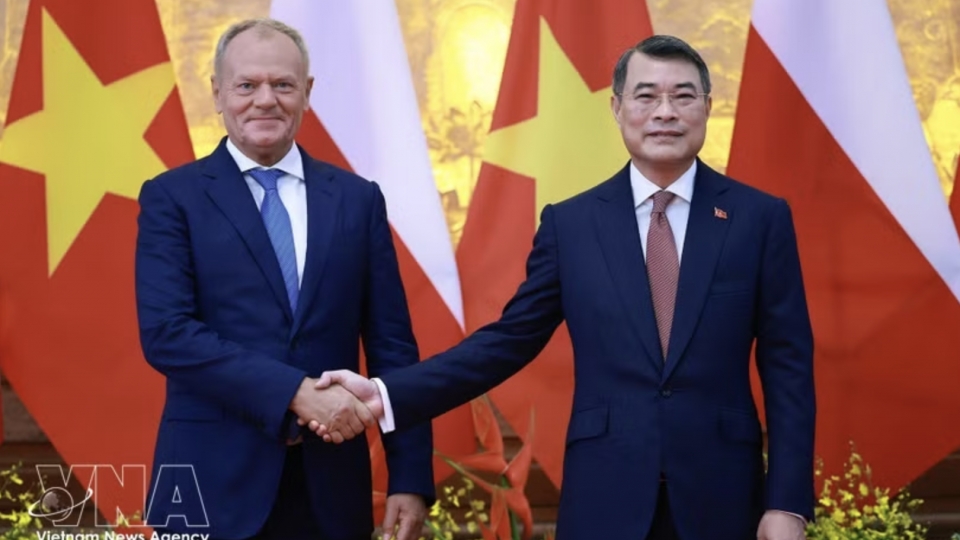
Vietnam, Poland issue joint statement on establishment of strategic partnership
Vietnam and Poland on October 26 issued a joint statement on the establishment of a strategic parntership on the occasion of Polish Prime Minister Donald Tusk’s official visit to Vietnam.
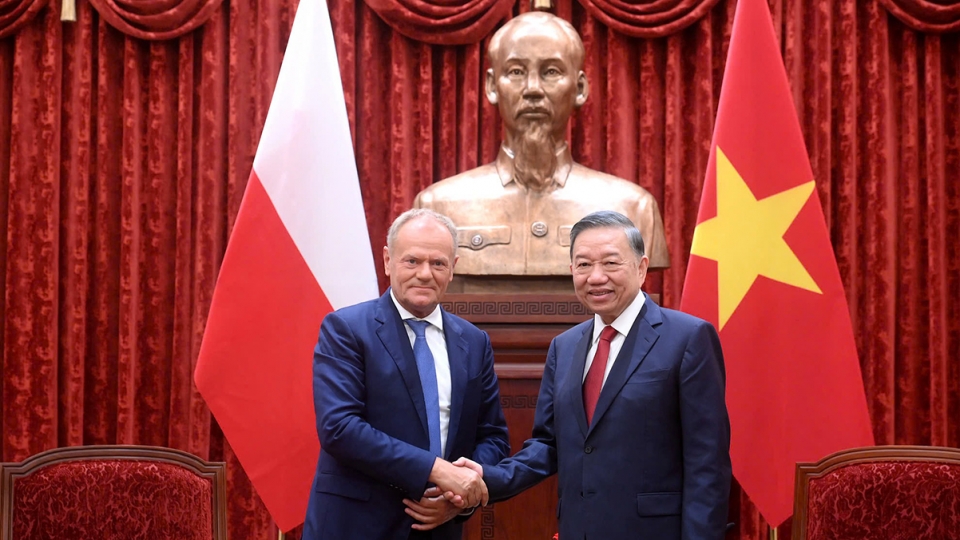
Top leader urges concrete action to advance Vietnam – Poland strategic partnership
VOV.VN - General Secretary of the Communist Party of Vietnam Central Committee and State President To Lam has called on Vietnam and Poland to translate their newly established Strategic Partnership into substantive cooperation, with priorities including trade, investment, science and technology, and defence.
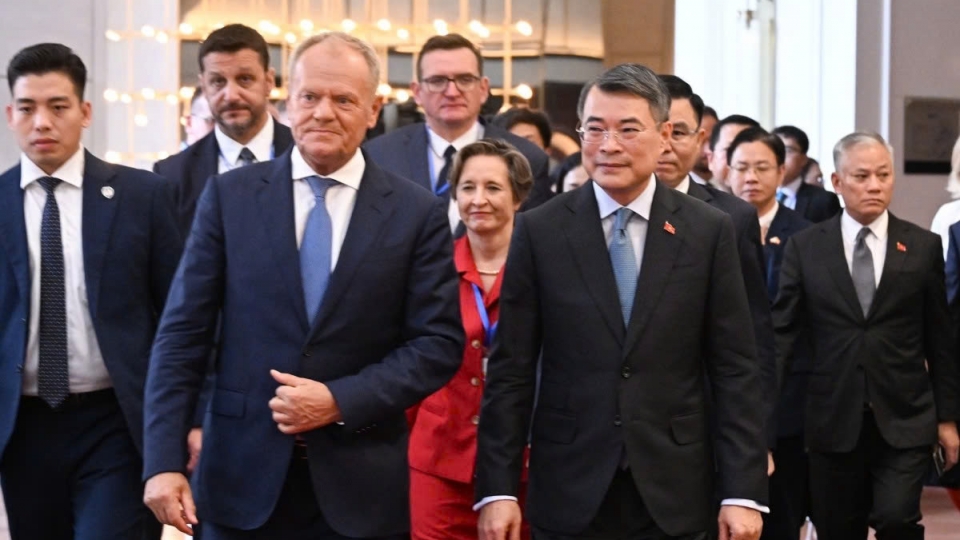
Vietnam, Poland to expand trade and investment under strategic partnership
VOV.VN - Vietnam and Poland are looking to turn their newly established Strategic Partnership into stronger business ties, with both governments encouraging investment, technology transfer and cooperation in high-value industries.


