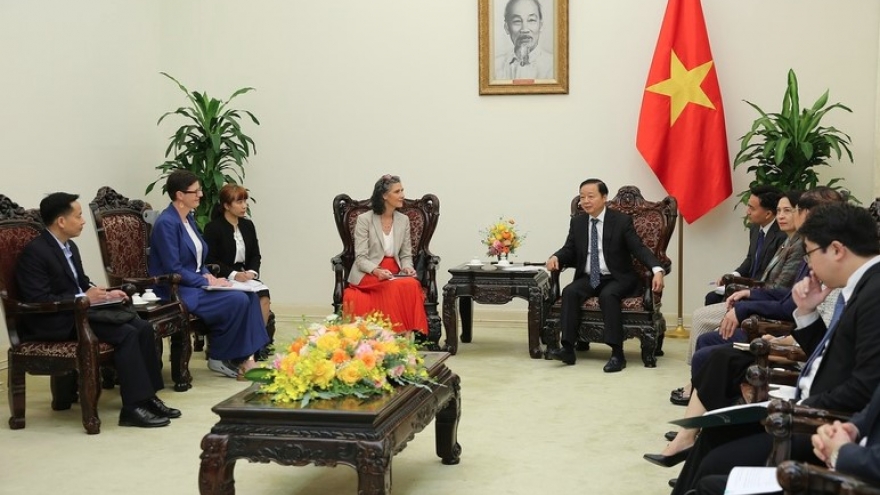
UNDP backs Vietnam in its new development period

VOV.VN - The completion of the country’s senior leadership structure for the new term is seen as an important milestone, opening a new development period for Vietnam with ambitious goals in economic growth, transformation of the development model and improvement of people’s living standards.
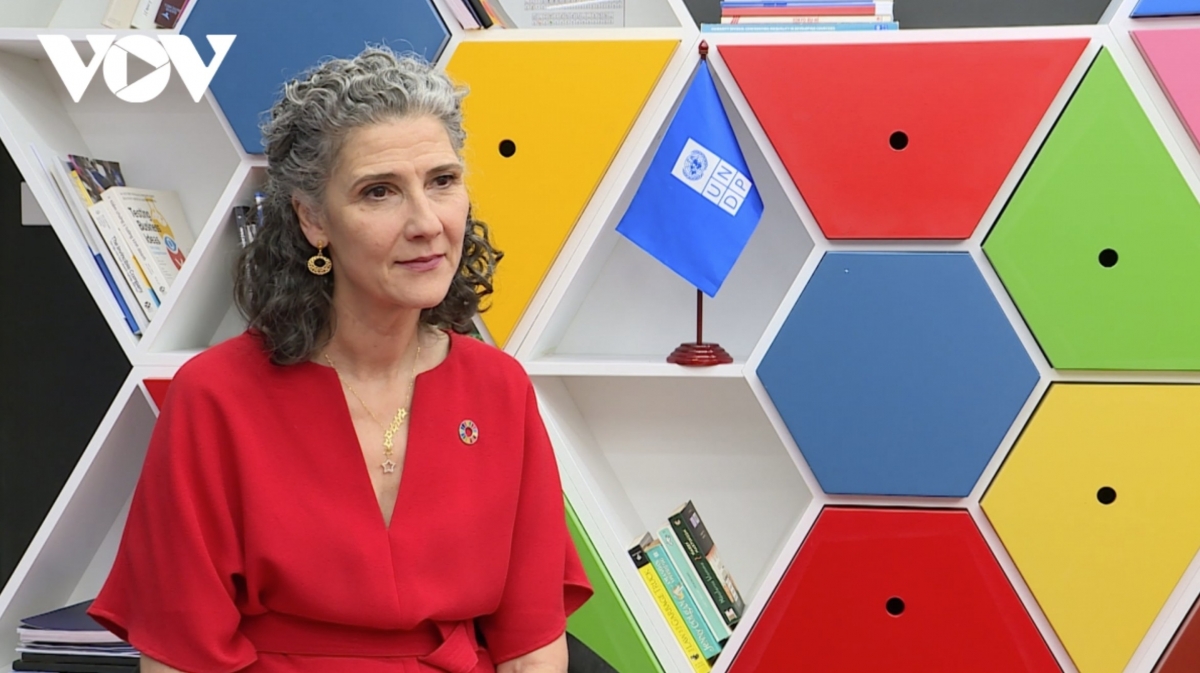
In this context, support from international partners is expected to continue to play an important role in helping Vietnam realise its development goals.
Speaking to VOV on the matter, Ramla Khalidi, Resident Representative of the United Nations Development Programme (UNDP) in Vietnam, said Vietnam has gradually shaped a clear development path, from promoting science, technology and innovation to reforming the state apparatus, improving the quality of education and healthcare, and strengthening international integration.
She stressed that in recent inaugural speeches by Vietnamese leaders, one consistent message has been highlighted: the ultimate goal of all development efforts is people. Citizens must be at the centre and be the beneficiaries of development outcomes.
On development prospects, the UNDP Resident Representative said Vietnam is setting very ambitious targets, not only for economic growth but also for a long-term vision of becoming an upper-middle-income country by 2030 and a high-income country by 2045.
At the same time, the country aims to build a green economy, achieve net-zero emissions, and develop on the basis of innovation and higher productivity. She said UNDP fully supports Vietnam’s directions.
In practice, through a series of resolutions and policies issued in recent years, Vietnam has gradually defined its development direction across multiple areas.
In the coming period, UNDP will develop and discuss a new Country Programme, with cooperation priorities defined based on Vietnam’s development orientations, while remaining consistent with UNDP’s global strategy and the United Nations Sustainable Development Cooperation Framework. Four priority areas are set out.
The first priority is stronger institutional capacity, building capable agencies and organisations to implement policies effectively and deliver services for sustainable development. The second is climate change response and environmental protection, enabling people and ecosystems to develop sustainably. The third is economic transformation through support for innovation, the development of small and medium-sized enterprises, and the creation of green jobs. The fourth is inclusive and human development, with a focus on ensuring essential services, particularly healthcare, are delivered comprehensively and equitably.
Ramla Khalidi said that in all its activities, UNDP takes the priorities set out in Vietnam’s socio-economic development plans as a guide for its work.
Amid complex regional and global developments, including conflicts that are pushing up prices from food to energy, disruptions in global trade and increasingly evident risks from climate change, she said Vietnam is facing multiple direct challenges.
However, she noted that Vietnam continues to uphold a strong commitment to multilateralism and cooperation at both regional and global levels, based on partnerships. This is noteworthy and can be seen as a model.
She also said Vietnam has demonstrated a clear role in promoting multilateral cooperation and South–South cooperation, while creating opportunities to share its development experience with other countries. Many countries are interested in how Vietnam has reduced poverty rapidly over a short period.
In practice, Vietnam has implemented a number of effective models, such as integrating climate adaptation into local development plans, building climate-resilient housing, and restoring ecosystems, including mangrove forests.
The nation is also a clear example of combining mine action with sustainable rural development, not only clearing unexploded ordnance left after the war but also linking this work with programmes that support livelihoods for local people.
In addition, Vietnam has seen positive results in promoting women’s roles in leadership positions, with around 30% of National Assembly deputies in the current term being women.
According to the UNDP Resident Representative, Vietnam has valuable experience to share with the world and continues to learn from other countries in its development process.
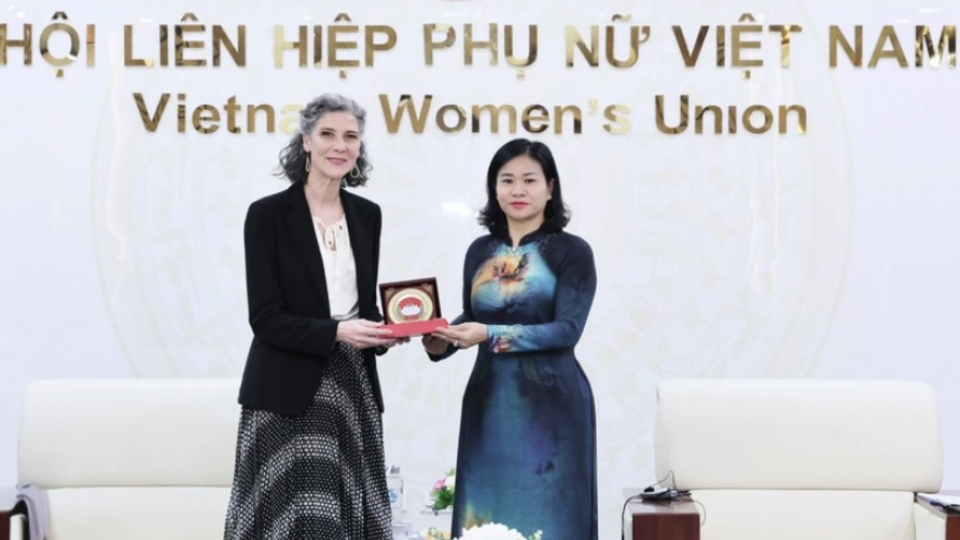
UNDP seeks cooperation with Vietnam to advance women's participation in leadership
The United Nations Development Programme (UNDP) has expressed its desire to continue working with Vietnam to promote women’s participation in leadership and management roles, with a particular focus on enhancing the engagement of female elected representatives in the National Assembly (NA).
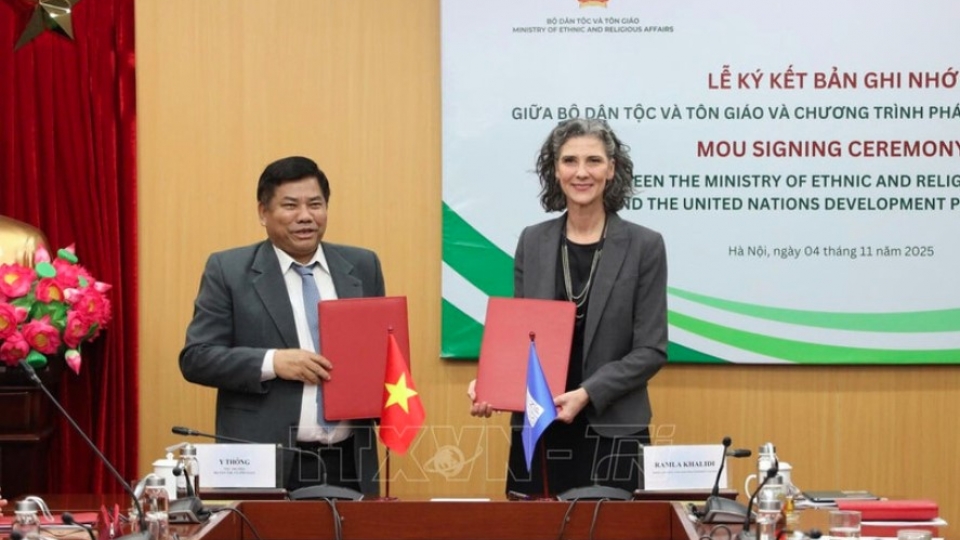
Vietnam, UNDP boost international cooperation on ethnic affairs
The Ministry of Ethnic and Religious Affairs and the United Nations Development Programme (UNDP) on November 4 signed a Memorandum of Understanding (MoU) on cooperation in sustainable, equitable development and international integration in the field of ethnic affairs.