


Top Vietnamese leader calls for clearer national development model

VOV.VN - Party General Secretary and State President To Lam has called for further clarification of Vietnam’s development model, saying the review of the Communist Party of Vietnam’s 100 years of leadership and 40 years of implementing the national development platform must carry historical depth, theoretical vision and practical relevance for the country’s future development.
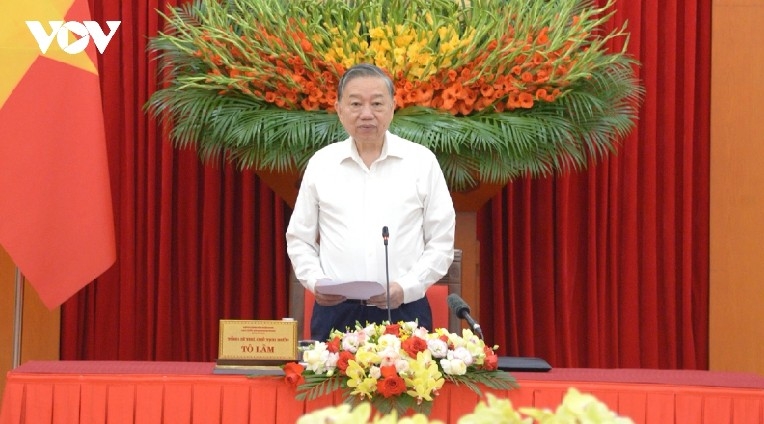
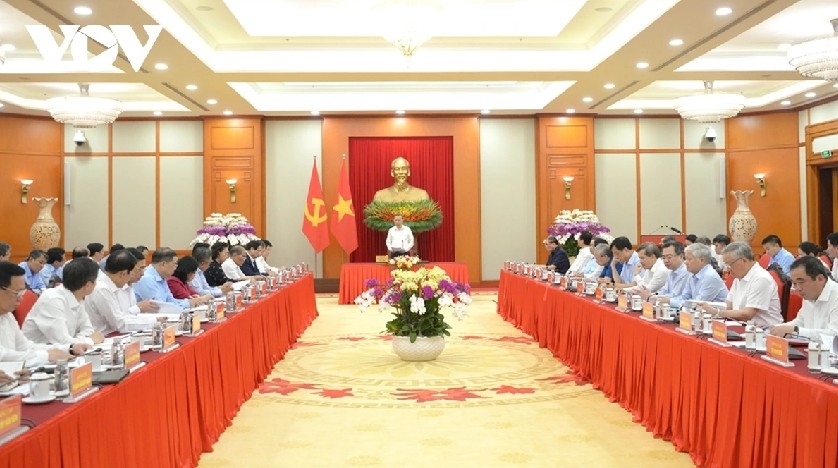
The top leader chaired the first meeting of the steering committee tasked with reviewing the Party’s century-long leadership and the implementation of the Platform for National Development during the Transition to Socialism in Hanoi on May 14.
The meeting was attended by current and former senior Party and State leaders, including former Party General Secretary Nong Duc Manh, former State President Luong Cuong, Prime Minister Le Minh Hung, National Assembly Chairman Tran Thanh Man, along with other senior current and former officials.
In his speech, To Lam emphasized the platform implementation process should help build a theoretical foundation for drafting a new national development platform and safeguarding the country in “a new era of national development.”
According to him, the review should clarify Vietnam’s development model, the country’s socialist model and its path toward socialism, as well as major relationships and underlying principles in the process of building socialism in Vietnam.
He said the draft orientations proposed by the editorial team had initially dealt with several core issues, including the Party’s first political platform, national independence associated with socialism, the principle that “the people are the root,” national unity, and the combination of national strength with the strength of the era.
The top leader said the final review should become more than a summary document, elevating the review report into a strategic development platform for the Party in the new era. He added that each conclusion should help guide action and future development.
To Lam also set out three methodological requirements for the review process, underscoring the need to closely combine theory with practice and ensure that future proposals are grounded in scientific evidence, development trends and the country’s practical needs.
He called for a historical and logical approach that highlights major turning points, strategic choices and the contributions and sacrifices made by the Party and the Vietnamese people throughout different historical periods.
To Lam also stressed the importance of drawing lessons from international experience, including studies on the history and development of the Communist Party of China, the Communist International, the Communist Party of the Soviet Union and ruling communist parties in former socialist countries, while ensuring that research remains independent, objective and suited to Vietnam’s conditions.
He added that the review must help reinforce national pride and public confidence in the Party, Vietnam’s path toward socialism and the country’s future development, while countering false and hostile views that deny the Party’s leadership role or seek to undermine national unity.

Vietnam’s development model continues to inspire progressive forces
Entering a period of peace and development, Vietnam continues to inspire many countries through its distinctive development path, according to Benjamin Pestieau, Deputy General Secretary of the Workers’ Party of Belgium (PTB).
