Theory of renewal guides Vietnam into new era: Chinese scholar

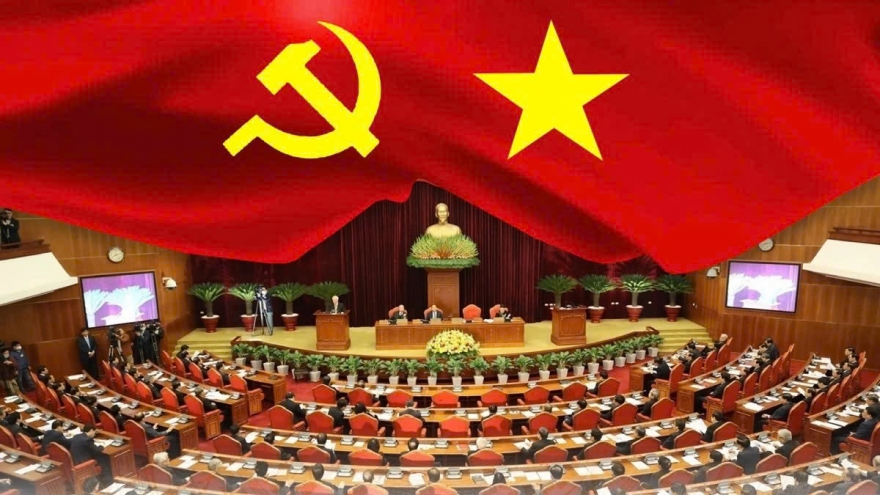
The 14th National Party Congress marks the beginning of a “new era” for Vietnam, and the theory underpinning the Doi Moi (renewal) policy serves as the ideological foundation guiding the country into this new phase, according to Wei Wei, a Vietnam studies expert in an interview with the VNA ahead of the the congress.
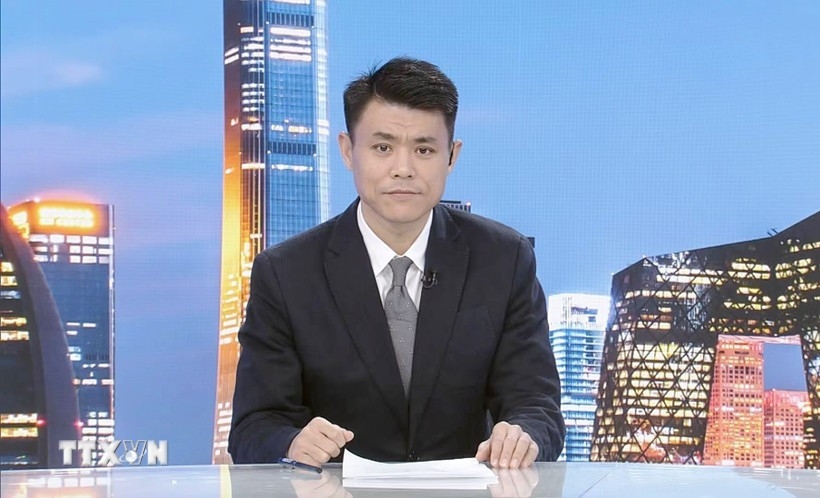
Wei, who is also head of the Vietnamese-language service at China Media Group (CMG), noted that nearly four decades after the launch of Doi Moi and opening-up, renewal thinking has become a key guiding principle for Vietnam’s comprehensive development across politics, the economy, society, foreign affairs and national security. The Doi Moi theory has also evolved into an important ideological pillar of Vietnam, alongside Marxism–Leninism and Ho Chi Minh Thought.
According to the expert, Vietnam’s reform drive has continued to gather pace in recent years. In terms of the political system, the Government apparatus was streamlined from 30 agencies to 21; the country’s 63 provinces and centrally run cities were reorganised into 34 administrative units; and a two-tier local government model has been implemented, contributing to improved administrative effectiveness and efficiency. Economically, deep and wide-ranging reforms have helped maintain strong economic dynamism. For 2025 as a whole, Vietnam’s GDP is estimated to reach 510 billion USD, ranking 32nd globally and fourth in ASEAN.
Concerning international trade, despite a global environment marked by rising tariff barriers and growing protectionism, Vietnam’s trade has continued to demonstrate resilient growth. Total import-export turnover for the year is expected to surpass the historic US$900 billion mark, placing it among the world’s 15 largest trading nations. These achievements have significantly consolidated the ruling position of the Communist Party of Vietnam (CPV), laying a solid foundation for the Party to lead the country towards achieving its two “centenary goals”.
Assessing the Party’s determination to continue the renewal, Wei stressed that this represents an important development in the related theory. In the new era, the central task is to fulfil the strategic goals set for 2030, turning Vietnam into a developing country with modern industry and upper-middle income status, and by 2045 into a developed, high-income nation where all people have opportunities for comprehensive development and enjoy prosperity, freedom, happiness and a civilised society. The key pathway to realising these goals is steadfastly advancing the Doi Moi process, he said.
The expert also observed that Vietnam and China share similar political systems and have many parallels in their economic development trajectories. Throughout their development processes, the two countries have continuously accumulated experience, strengthened mutual learning and deepened cooperation.
China has been Vietnam’s largest trading partner for 21 consecutive years. Chinese investment in Vietnam has continued to rise, and people-to-people exchanges and locality-to-locality cooperation between the two countries have grown increasingly vibrant. The building of a Vietnam-China community with a shared future has become a model example of South–South cooperation.
At present, the CPV, under the leadership of General Secretary To Lam, is entering a phase of accelerating into a new era of national development. Along this journey, Vietnam still faces numerous challenges, which serve as a test of the wisdom of the Party, State and people, he noted.
Wei expressed confidence that as long as Vietnam remains steadfast on the correct path of Doi Moi and opening-up, it will certainly achieve its two centenary goals and successfully build a modern, developed nation by the middle of the 21st century.

Vietnamese, Australian scholars discuss 40-year renewal in Vietnam
The Ho Chi Minh National Academy of Politics (HCMA) and the Australian Embassy in Vietnam jointly held a roundtable themed “Vietnam: 40 years of Doi Moi and 2045 vision” in Hanoi on March 21 to serve the building of a report summarising the implementation of the “Doi Moi” (Renewal) scheme in Vietnam so far.