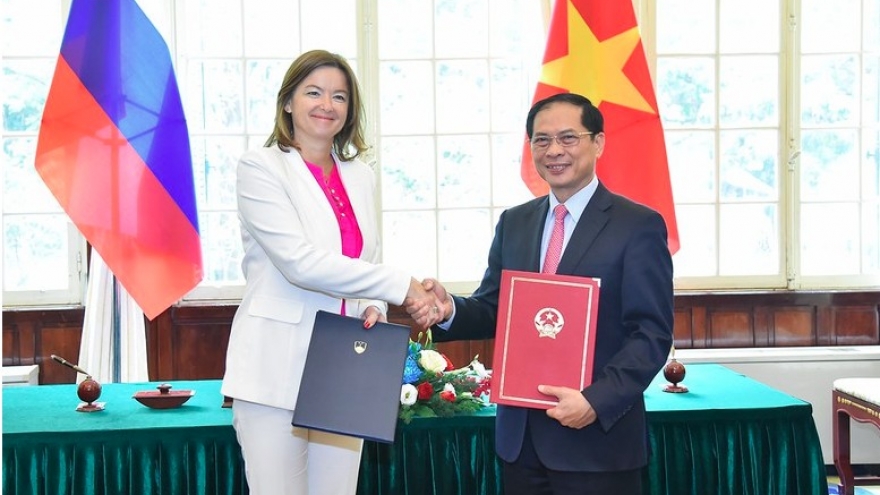
Slovenia ready to share experience in safe nuclear power development with Vietnam

VOV.VN - Slovenia stands ready to share experience with Vietnam in developing nuclear power safely and efficiently, Minister for the Environment, Climate and Energy Bojan Kumer said during a recent meeting with Vietnamese Ambassador to Austria and Slovenia Vu Le Thai Hoang.
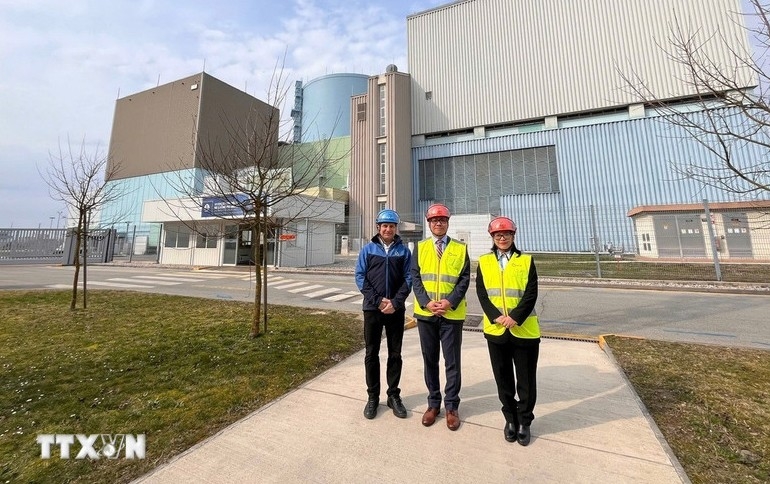
Ambassador Hoang recently met Slovenian Minister of Environment, Climate and Energy Bojan Kumer and Minister of Labour, Family, Social Affairs and Equal Opportunities Luka Mesec, and visited the Krško Nuclear Power Plant.
During a meeting with Minister Kumer and Director of the Krško Nuclear Power Plant Gorazd Pfeifer, Hoang said nuclear energy and energy infrastructure are among Vietnam’s strategic priorities to boost green and sustainable development, in line with the orientation set out in the resolution of the 14th National Congress of the Communist Party of Vietnam.
Since late 2024, Vietnam has approved the policy to restart the Ninh Thuan nuclear power project, now part of Khanh Hoa province, with a planned total capacity of more than 4,000 MW. The Government has established a steering committee for nuclear power plant construction and assigned 11 domestic training institutions to implement programmes to train around 4,000 personnel to operate two future plants.
Hoang called on Slovenia to share experience in management, safe operation, environmental standards and human resource development at the Krško Nuclear Power Plant, considered one of Europe’s safest and most efficient nuclear facilities since it began operation in 1983. Vietnam also proposed expanding training cooperation, expert exchanges and technical coordination between the two countries in this field.
Minister Kumer spoke highly of Vietnam’s socio-economic development achievements as well as its energy transition strategy and goal of achieving carbon neutrality by 2050. He said Slovenia is ready to cooperate and share experience in clean energy, renewable energy, nuclear power, the green economy and the circular economy, and suggested relevant agencies of the two countries strengthen contacts and work toward cooperation agreements in priority areas.
During the visit, Ambassador Hoang reviewed the management model, safety systems, waste treatment procedures, equipment maintenance and upgrade work, and personnel training at the Krško Nuclear Power Plant.
The facility is a joint venture between Slovenia and Croatia and uses a two-loop pressurised water reactor designed by Westinghouse with a capacity of 737 MW. It produces about 35% of Slovenia’s electricity and employs nearly 700 staff. The plant’s operating licence has been extended until 2043. Slovenia has also approved plans to build a second nuclear power plant with a projected capacity of up to 2,400 MW.
Hoang later met Minister Luka Mesec to discuss labour cooperation and vocational training.
Both sides discussed potential cooperation in sectors where Slovenia has demand and Vietnam has strengths, including healthcare (doctors, nurses and caregivers), construction, industry and agriculture.
The Vietnamese diplomat noted that Vietnam is currently in a “golden population structure” period, with about 68% of its population of working age and around one million people joining the labour force each year.
The country views overseas employment not only as an economic and social policy but also as an important channel of “human resource diplomacy,” helping workers improve skills, professional capacity and industrial work discipline while contributing to the country’s industrialisation and modernisation.
Slovenia, meanwhile, faces an ageing population and shortages of skilled labour. Vietnam’s young workforce and Slovenia’s labour demand offer clear potential for cooperation.
Minister Mesec welcomed the proposals and supported an initiative to organise a Vietnam-Slovenia labour and vocational training cooperation forum in 2026, with a view to studying a bilateral labour agreement to create a favourable legal framework in the coming period.
The forum is expected to help businesses and training institutions in the two countries strengthen connections and expand cooperation in sectors requiring high skills and the ability to adapt to different languages and cultures.
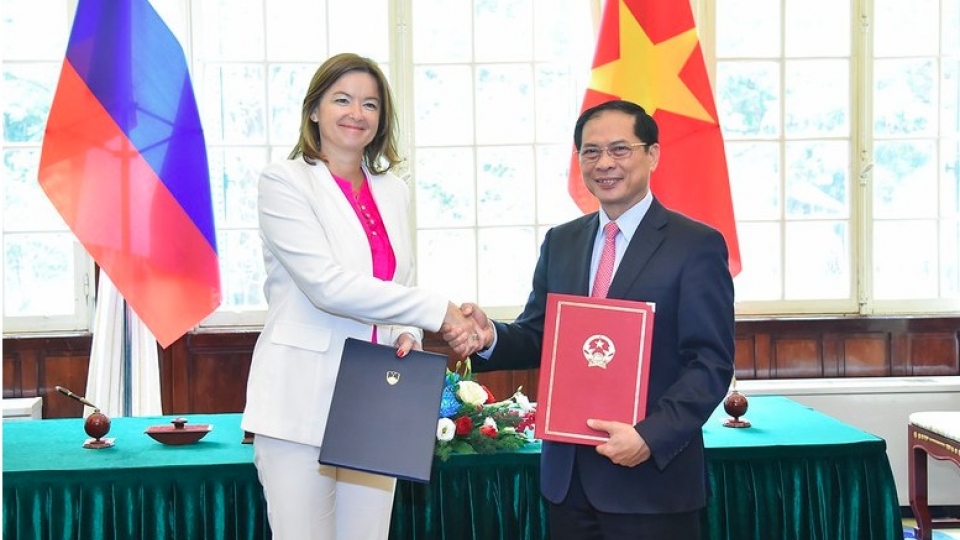
Slovenia looks to deepen comprehensive cooperation with Vietnam
VOV.VN - Slovenian President Natasa Pirc Musar has affirmed her country’s desire to enhance friendship and all-around cooperation with Vietnam during a credential presentation ceremony for Vietnamese Ambassador Vu Le Thai Hoang.
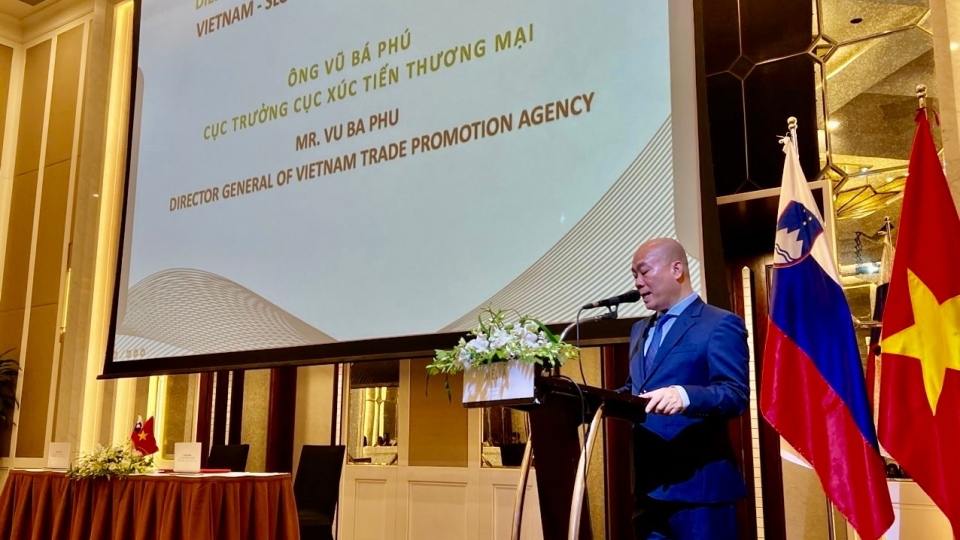
Vietnam and Slovenia enhance trade connectivity
VOV.VN - There remains plenty of opportunities to expand trade and cooperation between Vietnam and Slovenia as the import and export structure between the two sides is not only non-competitive, but also complementary, heard the Vietnam - Slovenia Trade Forum held in Hanoi on September 26.