Japanese scholar hails Vietnam’s strategic autonomy, people-centred development

Professor Toshiro Nishizawa of the University of Tokyo has hailed Vietnam’s people-centred development approach, reflected in social security policies such as tuition fee reductions and healthcare support for disadvantaged groups.
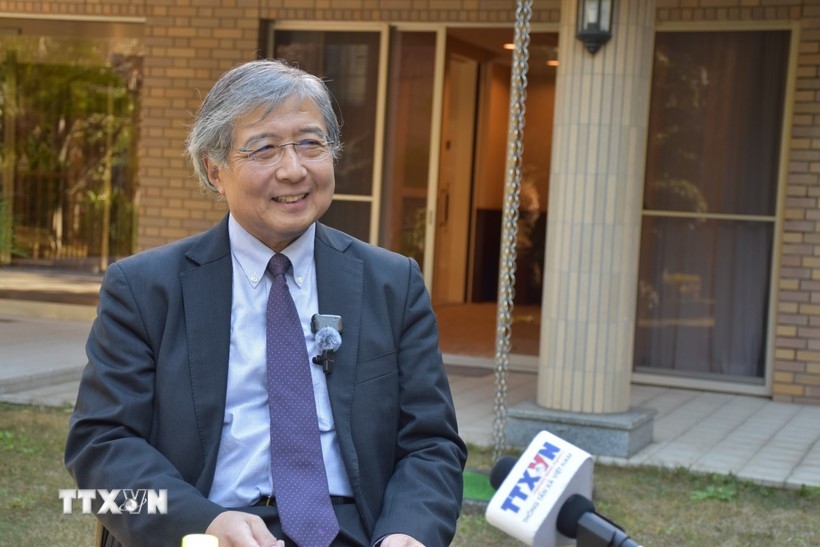
He stressed that sustainable development should go beyond economic growth to ensure inclusiveness and equity, while Vietnam also needs to carefully balance long-term fiscal sustainability amid population ageing and rising welfare demands.
Speaking to Vietnam News Agency (VNA) correspondents in Japan on the occasion of the 14th National Congress of the Communist Party of Vietnam (CPV), Professor Nishizawa also shared his assessments of Vietnam’s development strategy and its growing international standing, particularly in the fields of foreign policy, development and social security.
He said that in an increasingly fragmented international environment, Vietnam stands out as a model for maintaining strategic autonomy, national independence and self-reliance. The country's independent and self-reliant foreign policy is not merely rhetorical, but has been consistently implemented through concrete actions.
In particular, Vietnam’s establishment of comprehensive strategic partnerships with 14 countries has helped diversify its external relations, reduce dependence on any single partner, enhance its negotiating position, and expand cooperation space amid intensifying strategic competition, the scholar said.
Professor Nishizawa highlighted Vietnam’s active and constructive role in multilateral mechanisms, especially the Association of Southeast Asian Nations (ASEAN) and the United Nations. According to him, Vietnam demonstrates how a middle-ranking nation, which shares several similarities with Japan, can make meaningful contributions to shaping regional norms and strengthening a rules-based international order. He added that Japan would benefit from closer coordination with and stronger support for Vietnam’s multilateral orientation, thereby helping to foster stability and predictability in a complex geopolitical landscape.
The professor also praised cultural diplomacy and people-to-people exchanges as a bright spot in Vietnam’s foreign policy. With a growing number of international students, tourists and cultural exchange activities, Vietnam is increasingly perceived as a dynamic, peaceful country with a rich cultural identity. Drawing on nearly 30 years of personal engagement with Vietnam, he said bilateral relations between Vietnam and Japan, particularly in education and people-to-people exchanges, have continued to deepen and should be further strengthened.
Commenting on the Vietnamese community of around 600,000 people in Japan, Professor Nishizawa expressed his admiration for the diligence, independent mindset, humility and openness of Vietnamese students and workers. He described them as an important bridge promoting mutual understanding and trust between the two countries.
On infrastructure development, the professor highlighted Vietnam’s strong commitment to enhancing national connectivity and laying the foundation for long-term growth, including the goal of building more than 3,000 kilometres of expressways by 2025. He compared this process to Japan in the 1960s, when infrastructure played a pivotal role in the country’s economic take-off, while stressing that project quality and long-term efficiency would be decisive factors.
Regarding digital transformation and science and technology development, Professor Nishizawa noted that Vietnam is “leapfrogging” in several areas, such as online public services, cashless payments and the development of high-tech industrial parks. However, he cautioned that digitalisation must go hand in hand with social protection policies to prevent widening inequalities, especially among vulnerable groups.
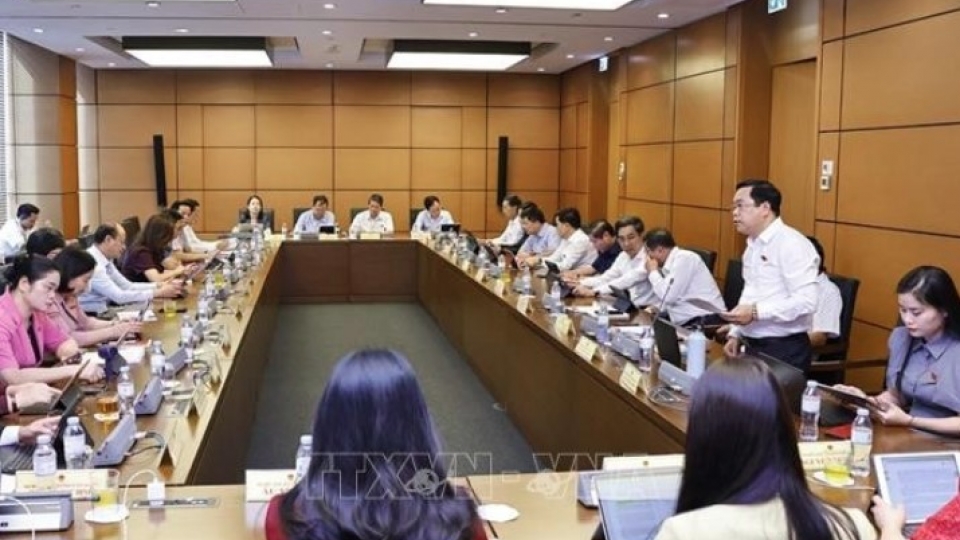
NA reviews major education law reforms to boost autonomy, modernisation
The 15th National Assembly, in its ongoing 10th session, held group discussions on October 22 afternoon to review the draft Law on amendments and supplements to several articles of the Law on Education, the revised Law on Higher Education, and the amended Law on Vocational Education.