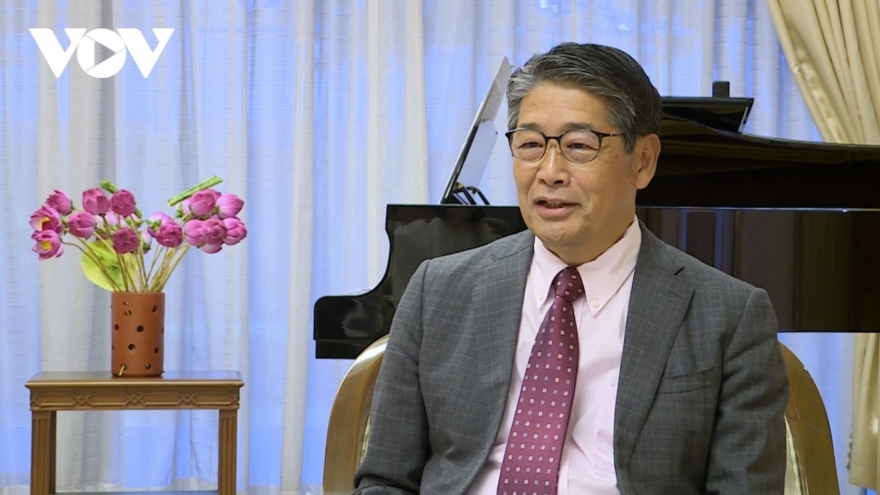
Japan greatly values Comprehensive Strategic Partnership with Vietnam

VOV.VN - As the security environment in the Asia-Pacific grows more complex, developing the Comprehensive Strategic Partnership between Japan and Vietnam for peace and prosperity in Asia and the world is becoming increasingly important.

This assessment was made by Wakana Kanikawa, First Secretary and Director of the Information and Culture Centre at the Embassy of Japan in Vietnam, in remarks on the foreign policy of Japanese Prime Minister Takaichi Sanae, with a focus on Japan-Vietnam relations.
According to Kanikawa, at the 14th National Party Congress of the Communist Party of Vietnam, Vietnam emphasised “strategic autonomy” in its foreign policy and promoted deeper international integration. As chair of the Comprehensive and Progressive Agreement for Trans-Pacific Partnership (CPTPP) and the Review Conference of the Treaty on the Non-Proliferation of Nuclear Weapons (NPT), and as host of the Asia-Pacific Economic Cooperation (APEC) forum next year, Vietnam is increasing its presence in the international arena. Japan supports Vietnam in ensuring peace, stability and prosperity for the international community.
In the security field, the two sides held their first deputy ministerial-level “2+2” foreign affairs defence dialogue in Tokyo late last year. Around the same time, the frigate 015-Tran Hung Dao (Brigade 162, Region 4 of the Vietnam People’s Navy), along with a delegation from the navy, visited Japan.
In March this year, the destroyer Onami of the Japan Maritime Self-Defense Force docked at Vung Tau, and the destroyer Asahi is expected to pay a friendship visit to Da Nang city this month. These developments show that cooperation between the two countries in diplomacy and security is being strengthened.
In economic terms, cooperation under the Comprehensive Strategic Partnership continues to develop steadily. In 2025, Japan’s investment in Vietnam hit US$3.1 billion, up 20% from the previous year, bringing cumulative investment to US$80 billion. Bilateral trade over the past decade has increased 1.8-fold to around US$50 billion annually.
Kanikawa said that under the leadership of Party General Secretary and President To Lam, reforms are gradually being carried out and the investment environment continues to improve, thus creating more opportunities for Japanese businesses in Vietnam.
She noted that to achieve double-digit growth in the coming years, Vietnam has identified key sectors including semiconductors, digital transformation, green transformation, and disaster prevention and control. These areas are expected to become new pillars of bilateral cooperation.
In the semiconductor sector, Vietnam aims to train 500 PhD students by 2030. Japan has committed to receiving around 250 of them through joint international research programmes.
Collaborative research projects between Vietnamese and Japanese universities have already begun, with five projects approved in the first round and 63 PhD students expected to be admitted. At the Vietnam-Japan University (VJU), 106 students are studying in the semiconductor technology programme, which started in October 2025.
Amid recent tensions in the Middle East, clean energy has become essential. Kanikawa said Japan’s capital and technology can be effectively utilised. Under the Asia Zero Emission Community (AZEC) initiative proposed by Japan, the two countries have agreed to implement around 15 pilot investment projects with a total value of about US$20 billion, including renewable energy such as offshore wind and liquefied natural gas (LNG) power. She stressed that these projects are of great importance to both sides.
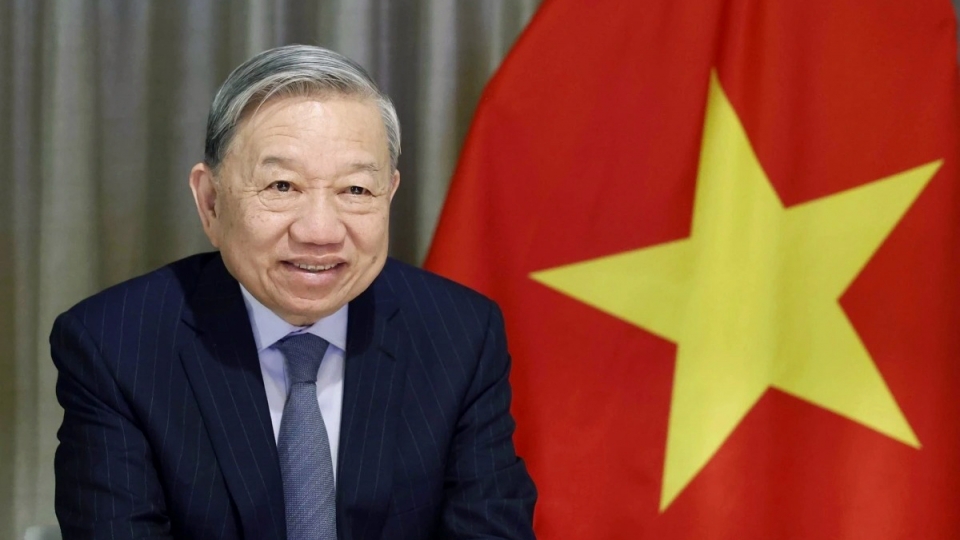
Vietnam, Japan leaders hold phone call to advance strategic partnership
VOV.VN - Vietnam’s Party General Secretary and President To Lam and Japanese Prime Minister Sanae Takaichi, President of the Liberal Democratic Party (LDP), held phone talks on April 13 to enhance cooperation in economy, security, energy and regional stability under their Comprehensive Strategic Partnership.