Vietnam National University must be a hub of national intelligence: top leader

VOV.VN - Vietnam National University Hanoi (VNU) must not only remain the country’s leading university but also evolve into a major center for innovation, bringing together top scientists, technology experts and talents to solve Vietnam’s strategic national challenges.

The vision was emphasised by Party General Secretary and President To Lam during the university’s 120th anniversary ceremony on May 16.
Speaking at the event, he noted Vietnam is entering a new stage of development where competition in science, technology and innovation is becoming increasingly intense. According to him, the country’s greatest risk of falling behind lies not only in economics, but also in knowledge, technology and national creative capacity.
In that context, VNU Hanoi is expected to become a modern elite university capable of leading the country in education, research and strategic technology development.
“Vietnam National University Hanoi must become a gathering place for the nation’s brightest minds, opening new frontiers of knowledge and contributing solutions to major development challenges,” the top leader said.
In his view, the “elite” status of a university should not be measured solely by rankings or enrollment scale, but by its ability to generate new knowledge, nurture talent, develop core technologies and make substantive contributions to national development.
He voiced support for VNU Hanoi’s target of entering Asia’s top 100 universities by 2030 and the world’s top 300 universities by 2035, while several key disciplines are expected to reach the global top 100.
To achieve these goals, the leader urged the university to accelerate the development of the Hoa Lac University Town into a green and smart innovation ecosystem connected with the Hoa Lac Hi-Tech Park.
One of the key highlights of his speech was the call for VNU Hanoi to take the lead in strategic technologies such as artificial intelligence, semiconductors, biotechnology, advanced materials, renewable energy and big data.
According to the leader, university knowledge should not be confined to lecture halls or academic publications but must be transformed into technology, policy solutions and practical value for society.
“Vietnam National University Hanoi must become a ‘brain trust’ that the State can turn to for scientific foundations behind strategic policymaking,” he said.
The Vietnamese leader also called on the university to strengthen commercialisation of research outcomes, establish science and technology enterprises emerging from laboratories, and deepen cooperation with businesses, local authorities and international expert networks.
Founded in 1906 as the Indochina University, VNU Hanoi is currently one of Vietnam’s largest education and research institutions, with more than 80,000 students, nearly 500 academic programmes and over 3,000 scientific staff members.
According to the QS World University Rankings 2026, VNU Hanoi is currently ranked in the 761-770 group globally and 158th in Asia. In recent years, the university has launched new training programmes in strategic fields such as semiconductors, chip design, robotics and aerospace technology.
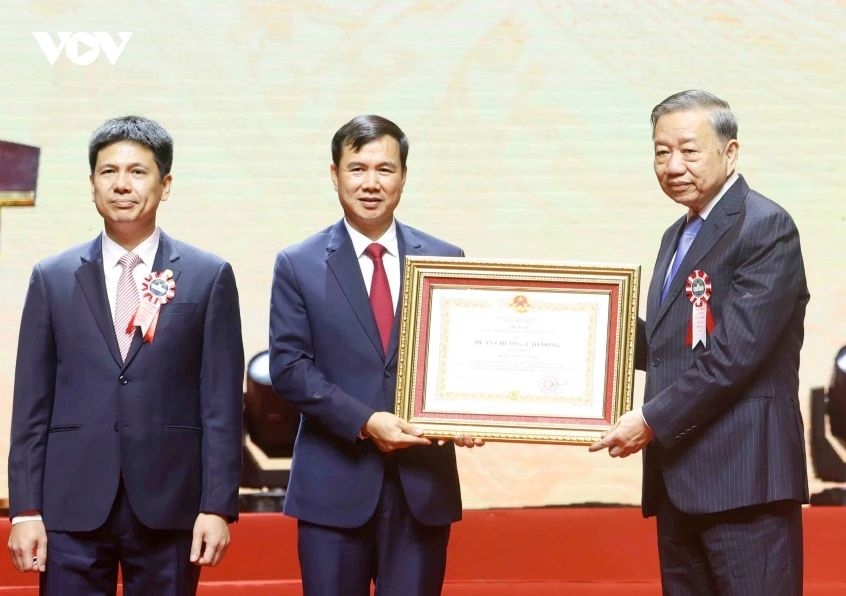
At the anniversary ceremony, VNU Hanoi was awarded the First-Class Labour Order in recognition of its contributions to high-quality human resource training and the development of science and technology in Vietnam.
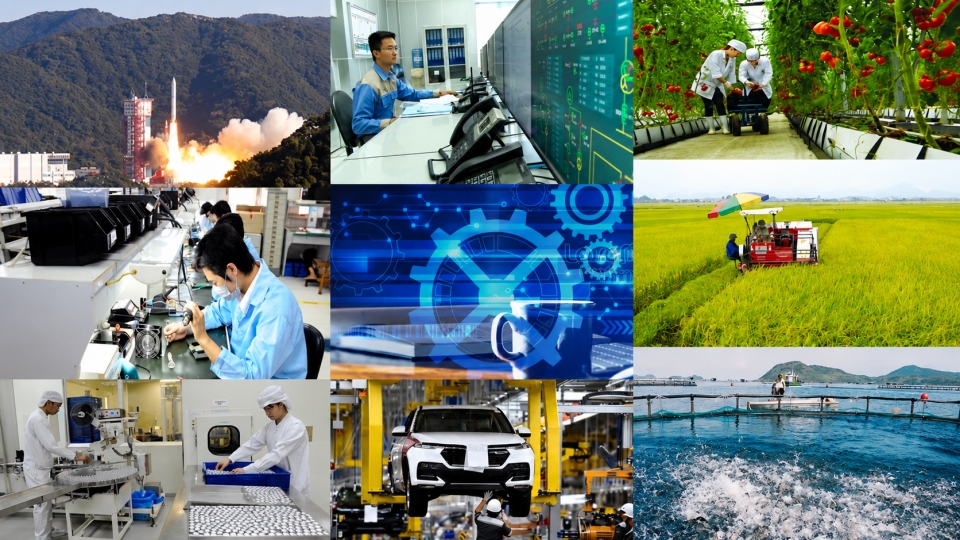
Vietnam emerges as Southeast Asia’s new innovation investment hub
VOV.VN - Vietnam is rapidly strengthening its position as one of Southeast Asia’s most attractive destinations for innovation and technology investment, as major international venture capital firms and financial institutions are to attend the Vietnam Innovation and Private Capital Summit 2026 (VIPC Summit).