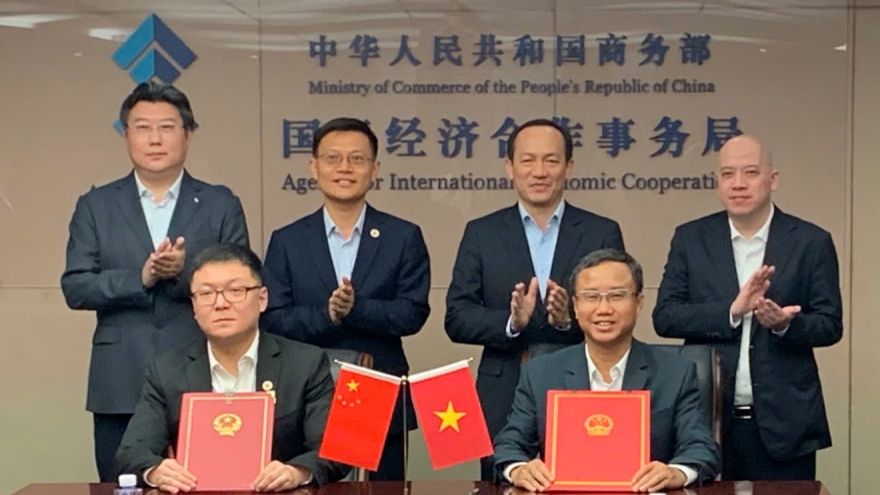
Vietnam–China railway connectivity seen as strategic breakthrough in economic cooperation

VOV.VN - Railway connectivity between Vietnam and China should serve as a strategic breakthrough in bilateral economic cooperation, helping unlock new growth drivers and enhance regional integration, Party General Secretary To Lam has said.
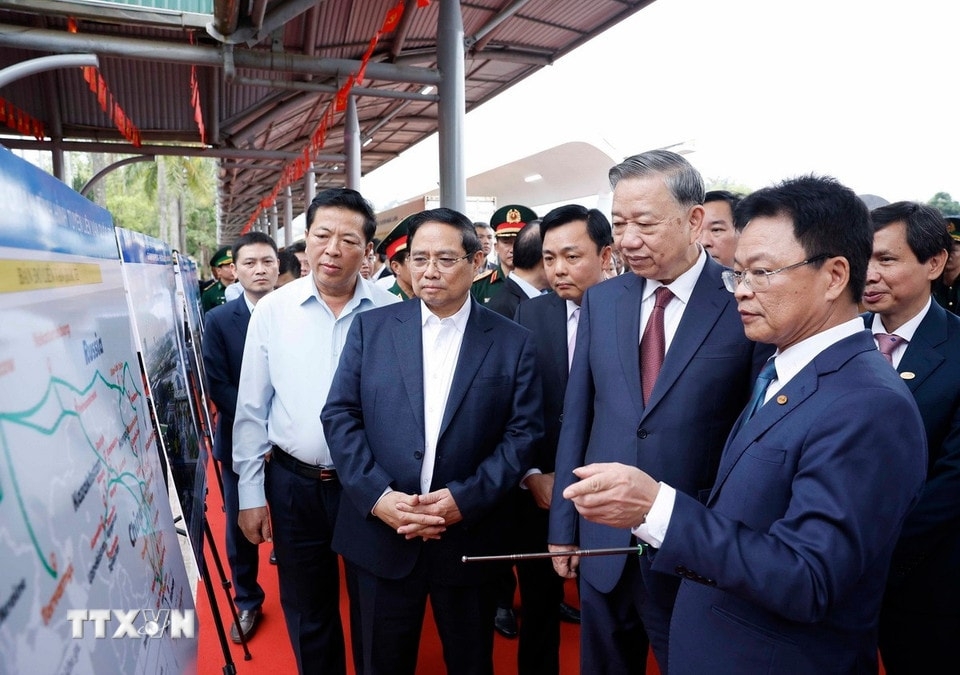
The Party leader was speaking at a working session held at Dong Dang railway station in Lang Son province on March 19, following a field inspection on the same day in which he was briefed on the development of three key railway corridors, namely Hanoi–Dong Dang, Lao Cai–Hanoi–Hai Phong, and Hai Phong–Ha Long–Mong Cai linking Vietnam and China, as well as the implementation of bilateral agreements between the two sides.
He emphasised that railway cooperation between Vietnam and China represents both a practical need and a major opportunity for long-term collaboration. He noted that enhanced rail connectivity could significantly reduce logistics costs, shorten transport times, and improve competitiveness. It would also facilitate cross-border trade, ease congestion at land border gates, and support the development of logistics centres, border economic zones, and industrial clusters in frontier provinces.
The initiative is expected to strengthen Vietnam’s integration into the broader Asia–Europe railway network, diversify international transport routes, and reduce reliance on maritime shipping. It also holds potential to foster regional economic corridors, reinforce supply chains, and elevate Vietnam’s position in Asia’s production networks.
Addressing financing challenges, the General Secretary called for diversified and sustainable funding mechanisms while ensuring national financial security. He stressed the importance of establishing a unified national coordination framework for strategic infrastructure projects, with clear responsibilities assigned across ministries and localities. Effective inter-agency coordination, he noted, must ensure alignment between transport infrastructure development and broader regional planning, logistics systems, and industrial zones along economic corridors.
Highlighting both opportunities and challenges, the top leader reiterated that railway connectivity with China should be treated as a key strategic priority, contributing to lower logistics costs and stronger economic competitiveness while enabling deeper integration into regional and global transport networks. He also held that all cooperation projects must align with Vietnam’s national development strategies and infrastructure planning, ensure economic efficiency, diversify funding sources, and maintain transparency in technology and standards.
Given the scale and urgency of the task, the General Secretary called for strong political determination and unity across the entire system. He assigned the Government Party Committee and the Ministry of Construction to formulate a comprehensive railway development strategy for Vietnam–China connectivity within the broader national railway development plan for 2026-2030, with a long-term vision extending to 2045, 2100, and 2130.
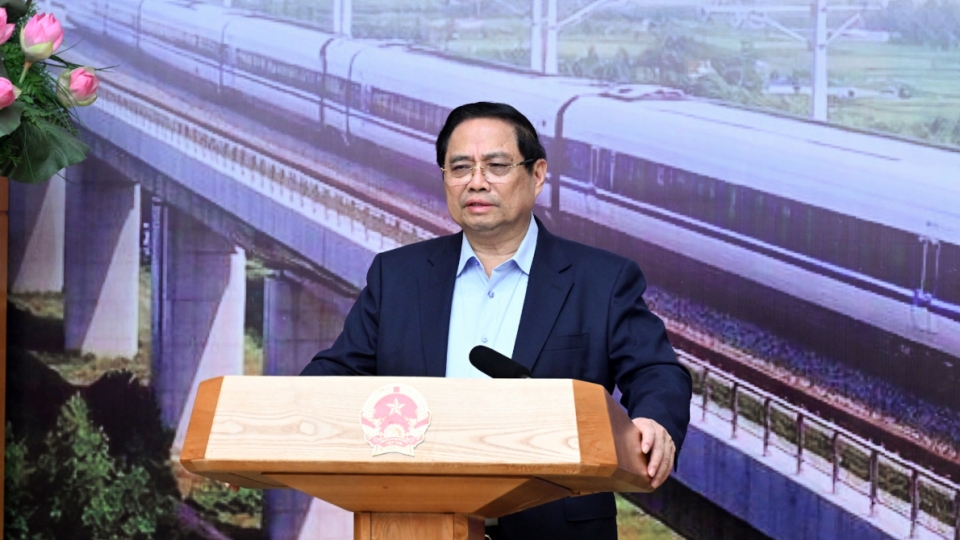
PM urges unified and self-reliant development of railway industry
VOV.VN - Prime Minister Pham Minh Chinh has called for institutional reforms, technology transfer and stronger domestic capacity to develop a unified and self-reliant railway industry and to support long-term economic growth.