




Party Charter amendments must be based on practical experience, not resolutions

VOV.VN - General Secretary of the Communist Party of Vietnam Central Committee and State President To Lam has stressed that amendments to the Party Charter must be based on practical experience, theory and tested issues, with only fundamental, principled and long-term provisions incorporated.
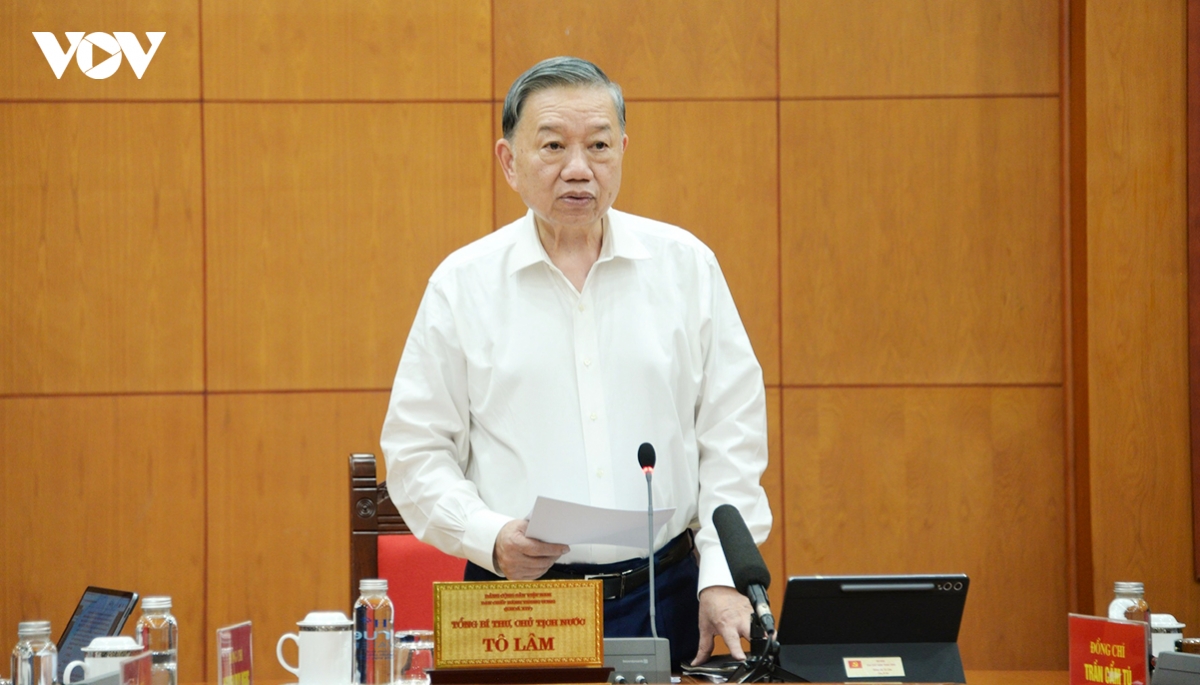
The top leader, who is head of the Central Steering Committee for summarising practical experience and studying amendments and supplements to the Party Charter, made the statement at a meeting of the committee’s Standing Board in Hanoi on September 16.
He said the process of reviewing practical experience and studying amendments and supplements to the Party Charter must ensure consistency in political perspectives, theoretical foundations and practical requirements. It should also be linked to major review exercises being conducted by the Party Central Committee and placed within the overall preparations for the 15th National Party Congress.
“Only issues that have been reviewed and tested in practice, are fundamental and principled, stable in the long term, and need to be implemented consistently throughout the Party should be considered for inclusion in the Charter. Specific provisions must be placed at the appropriate level of legal or regulatory documents. Issues for which there is not yet a sufficient basis should continue to be studied; resolution contents must not be mechanically incorporated into the Charter,” he said.
Party Charter must be grounded in practice and take a long-term view
According to the top leader, research into amendments to the Party Charter should be linked to the review of 100 years of Party leadership over the Vietnamese revolution, orientations for leading national development over the next 100 years, and the review of 40 years of implementing the Platform on National Construction in the Transitional Period to Socialism.
These review and research processes should reinforce one another, ensuring consistency between the review process, research and the completion of relevant documents.
He asked the committee’s standing body to proactively update major orientations from three resolutions expected to be submitted to the fourth coming Plenum of the 14th Party Central Committee, focusing on issues directly related to the Party’s organisation and operations.
Key areas include Party building, self-renewal and self-correction; improving the Party’s leadership and ruling methods and the mechanism of “the Party leads, the State manages and the People exercise mastery”; and clarifying authority and responsibilities, decentralisation and delegation of power in conjunction with power control and accountability of heads of organisations.
At the same time, research is needed into renewing the Party’s organisation and operating methods in line with the digital era, strengthening organisation, administration and decision-making based on data and the application of new technologies.
In his view, research quality must be given top priority, with appropriate methodologies and research tools, while questions and thematic studies should be examined in greater depth.
“Each proposed amendment must convincingly answer five questions: What issue does practice raise? What are its causes? Why does the Charter need to be amended? What options are available? What are the impacts and what conditions are required for implementation?”
This requires clarifying whether each difficulty stems from provisions of the Party Charter, implementing documents or the organisation of implementation, while determining the prevalence, duration and impact of each issue.
The leader underscored that the number of recommendations, or the number of chapters and articles proposed for amendment, cannot substitute for the quality of the arguments and issues under consideration.
Strengthening surveys and building a research database
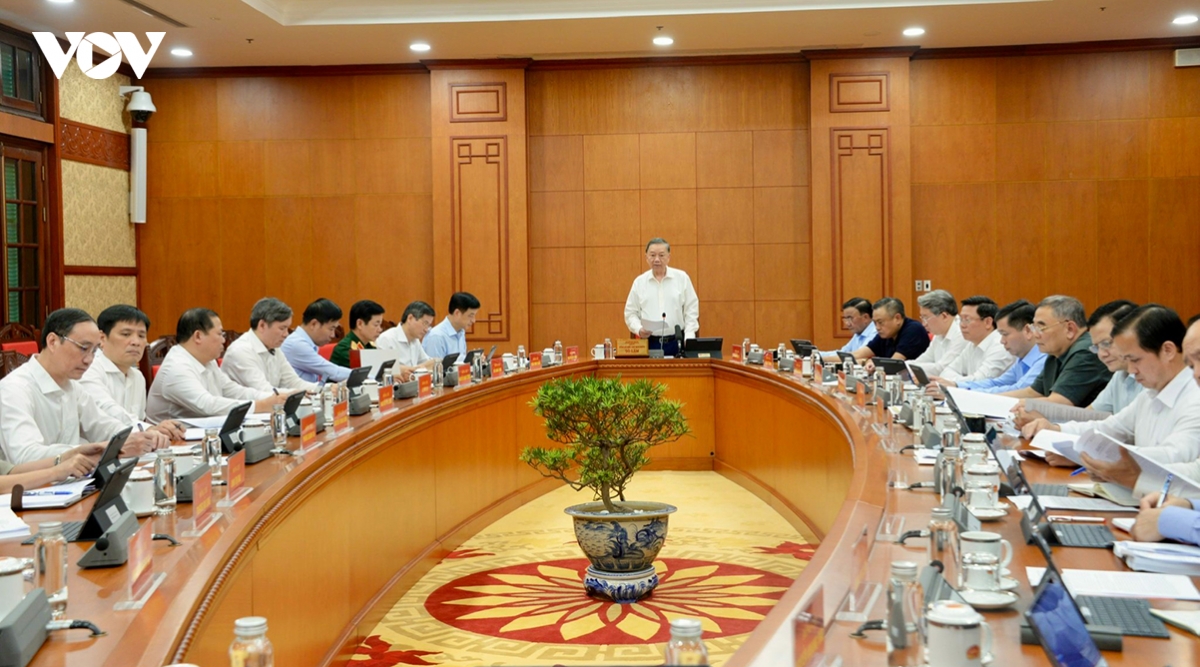
Party General Secretary and State President To Lam asked the committee’s standing body to continue consolidating and clarifying the political, theoretical and practical foundations, systematise the history of amendments and supplements to the Party Charter through successive national Party congresses, and build on the results of the 15-year review of the implementation of the Party Charter.
It should also develop a broad-based survey plan linked to in-depth research and selectively exchange international experience that is relevant to Vietnam’s conditions, alongside providing guidance on methods and plans for conducting reviews at grassroots level.
Another requirement is to accelerate the development of a shared digital data repository and the application of digital technology, big data and artificial intelligence in collecting, cross-checking, classifying, consolidating and analysing data.
Accordingly, data must have clear sources, be verifiable and be monitored consistently based on each criterion and period, ensuring data security and the protection of Party confidentiality.
The top leader also asked that all contributions be fully, accurately and objectively compiled, including differing views, and that decisions to accept or reject opinions be clearly explained on the basis of evidence.
“We must resolutely overcome formalistic consultation and the selection or compilation of opinions based on the subjective assessments of advisory bodies or the will of leaders; objectivity must be ensured.”
The top leader also noted that the overarching requirement is to stay close to practical realities and take a long-term view. Practical experience must be used to identify the right difficulties, causes and solutions. At the same time, fundamental issues concerning the Party’s organisation and operations that require long-term study must also be identified.
Clear responsibilities, tasks and timelines
Party General Secretary and State President To Lam asked for the plan to review practical experience and study amendments and supplements to the Party Charter to be finalised, ensuring the correct roadmap, clearly defined outputs and effective progress monitoring.
Given the tight schedule and large workload, each milestone, product requirement and quality-control mechanism should be carefully reviewed. Thematic reports must clearly identify the lead agency, coordinating bodies, outputs, deadlines and responsibilities.
Each thematic study or cross-cutting group of issues should have a designated focal point responsible for consolidation, together with mechanisms for using data and conducting cross-checks before information is incorporated into reports. Coordination among groups and agencies must be substantive, with delayed tasks or inadequate outputs identified and addressed promptly.
The top leader asked members of the Steering Committee to directly lead and direct the work, and regularly urge, inspect, supervise and provide critical review of the areas assigned to them.
Advisory and supporting bodies are responsible for proactively conducting research, making proposals, monitoring, consolidating information and supporting the Steering Committee’s activities, but should not assume the responsibilities of individual members. Each member is directly responsible for the progress, quality and results of work in their assigned area.
The review and research results must provide solid, practical and convincing arguments to support preparations for the 15th National Party Congress and contribute to strengthening the Party’s leadership and ruling capacity and its fighting strength in the new development period.
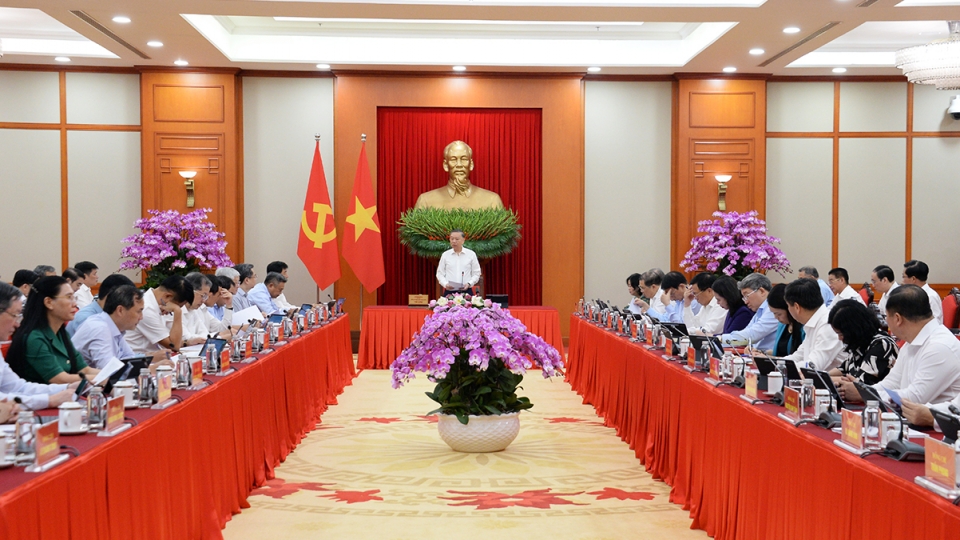
Party Charter review proposals to be submitted to upcoming plenum
VOV.VN - The Party Central Committee’s Organisation Commission has been tasked with completing a research framework and proposed amendments to the Party Charter for submission to the fourth Plenum of the 14th Party Central Committee.


