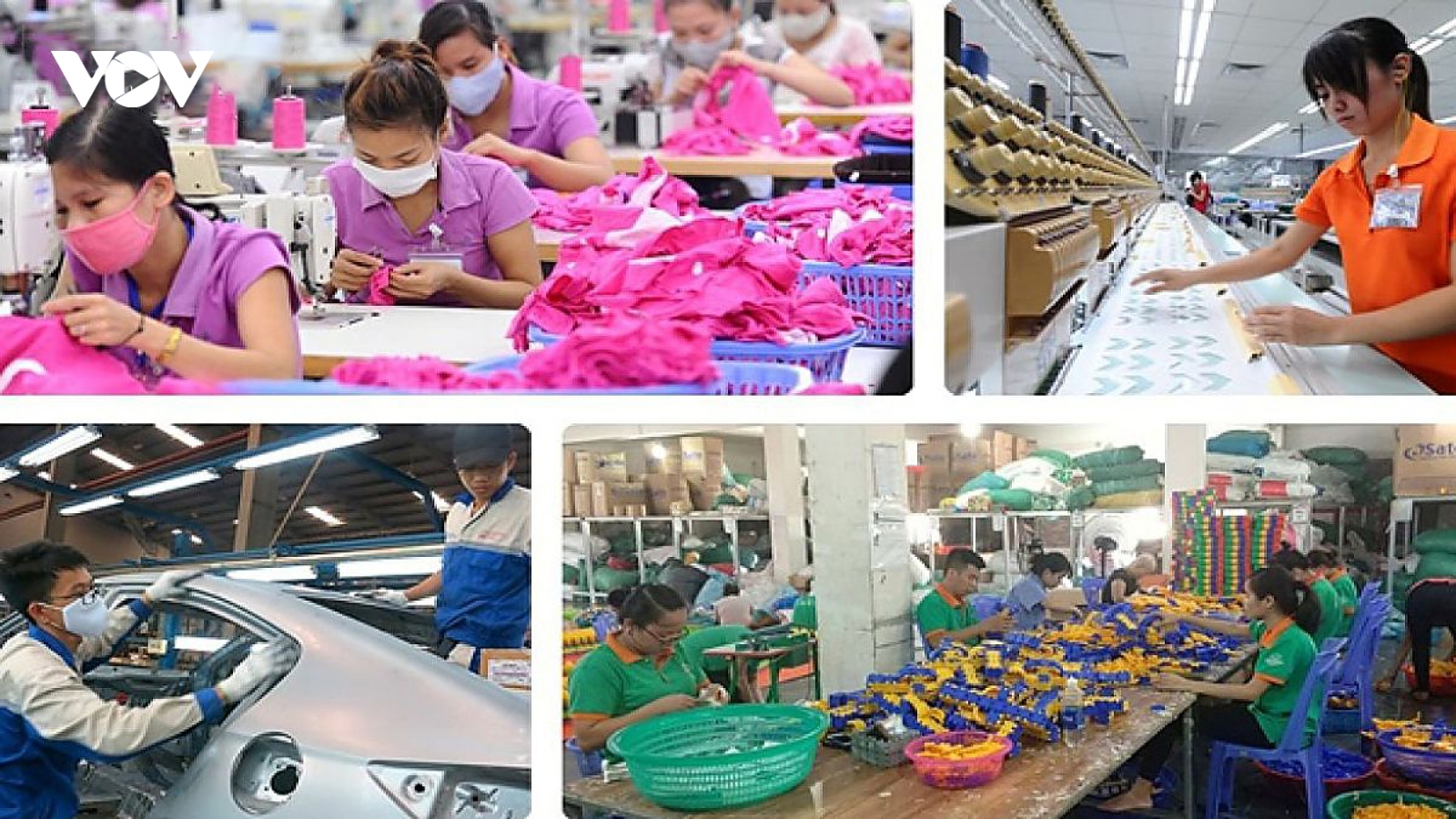
New Party Conclusion sets economic and budget priorities for 2027

VOV.VN - General Secretary of the Communist Party of Vietnam Central Committee and State President To Lam has just signed Conclusion No. 106-KL/TW, reviewing Vietnam’s socio-economic and state budget performance in 2026 and setting out key targets and implementation measures for 2027, including GDP growth of at least 10% and average inflation of around 4.5%.
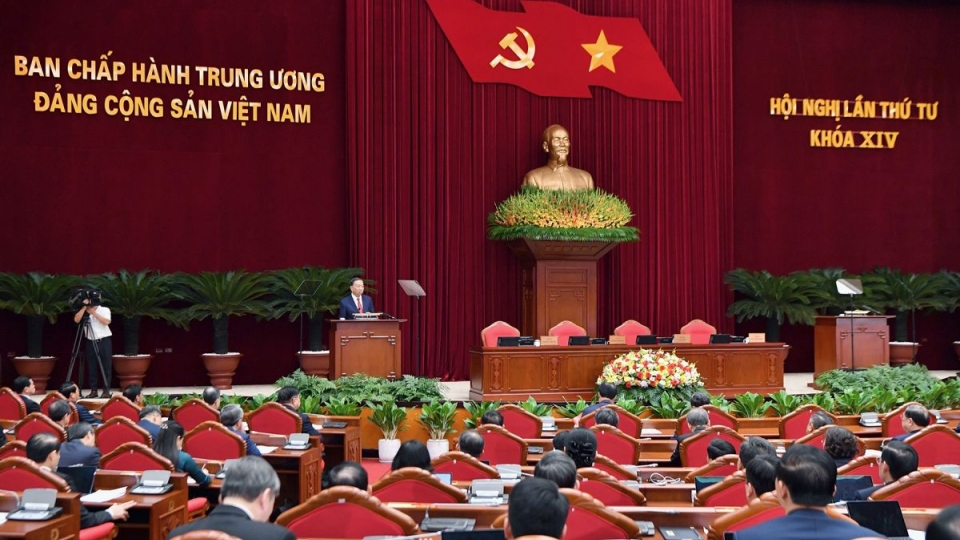
The Conclusion, adopted following the fourth plenum of the Party Central Committee in Hanoi in early October, 2026, provides an assessment of the country’s economic performance during the first year of implementing the Resolution of the 14th National Party Congress, highlighting achievements alongside persistent structural challenges. It also outlines priorities for economic management, budget discipline, institutional reform and public investment, with an emphasis on translating policy decisions into tangible results.
Economic gains accompanied by persistent challenges
According to the Conclusion, Vietnam has so far this year achieved important socio-economic results despite a challenging and unpredictable global environment. GDP grew by an estimated 9.01% in the first nine months of the year, while macroeconomic stability was maintained, inflation remained under control and major economic balances were broadly secured.
State budget revenue reached an estimated VND2.19 quadrillion in the reviewed period, equivalent to 86.5% of the annual estimate and up 12.1% year on year. Full-year revenue is projected to exceed the 2025 level by at least 10%, despite tax and fee exemptions, reductions and extensions worth approximately VND360 trillion.
Foreign direct investment also recorded its highest level since 2021, particularly in manufacturing and processing, semiconductors and high technology, according to the conclusion.
Progress was also made in institutional reform and infrastructure development. Administrative procedures and business conditions were streamlined, cutting compliance time by 53% and compliance costs by 55%. The two-tier local government model operated largely smoothly, while major transport infrastructure projects continued to advance.
An additional 395 kilometres of expressways were completed, bringing the eastern North-South Expressway into full operation. Construction also began simultaneously on five urban railway lines in Hanoi.
Progress was also recorded in education, health care and environmental protection. Vietnam adopted a single set of textbooks nationwide from the 2026–2027 academic year, continued tuition exemptions and reductions, and reorganised educational institutions in line with population size and distribution. The simultaneous inauguration of 107 schools in border communes also took place. In healthcare, around 52 million people received free periodic health check-ups and screening in the first eight months of the year.
National defence and security were strengthened, efforts to combat crime intensified, and diplomatic relations with seven partners upgraded in the first nine months, further enhancing Vietnam’s international standing.
However, the Conclusion identifies several challenges that require further attention. Macroeconomic management and inflation control continue to face considerable pressure, while exchange rates and money markets have been affected by external developments and lending rates remain high. Small and medium-sized enterprises continue to face difficulties accessing capital, land and credit; and shortages and price fluctuations in construction materials have constrained project implementation.
The export structure is also insufficiently sustainable. Meanwhile, science, technology, innovation and digital transformation need to contribute more substantially to productivity gains, stronger management capacity and changes in the growth model. Shortcomings persist in healthcare and education, while air pollution, urban flooding and traffic congestion remain unresolved in many areas.
The Conclusion attributes these difficulties partly to global volatility, including conflict in the Middle East, as well as domestic structural constraints. It also identifies weaknesses in implementation, noting that some ministries, agencies and local authorities, particularly their leaders, have not been sufficiently proactive or closely involved in their work. Some localities have also encountered difficulties in operating the two-tier local government model.
2027 growth target of at least 10% backed by tighter budget discipline
Vietnam is targeting economic growth of at least 10% in 2027, alongside maintaining macroeconomic stability, keeping inflation under control and safeguarding major economic balances. The Conclusion emphasises the need to translate this target into specific growth scenarios, indicators, tasks and deliverables for individual sectors and localities, with close coordination between fiscal, monetary and other macroeconomic policies.
Achieving this goal will require more effective mobilisation and use of resources. State budget revenue is expected to increase by approximately 9.1% compared with the 2026 outturn, alongside greater savings in public expenditure, particularly recurrent spending. The Conclusion also highlights the need to diversify funding sources, including government and local government bonds, official development assistance, credit and investment by state-owned enterprises, while creating a favourable and transparent business environment to attract private investment.
Stronger financial and budgetary discipline is another priority, alongside efforts to broaden the revenue base and combat tax evasion and transfer pricing. Public investment disbursement must also improve, with capital allocated according to project outcomes and transferred from projects with low disbursement rates to those making better progress.
Monetary policy and exchange-rate management are to reflect domestic and international conditions, with lending rates reduced and credit directed towards production and priority sectors. Vietnam also aims to diversify export markets, increase domestic value added, deepen its participation in regional and global supply chains, and ensure energy security.
Institutional reform and investment to support implementation
The Conclusion calls for further improvements to the legal and institutional framework, including the removal of contradictory and overlapping regulations, the timely issuance of implementing documents and the simplification of administrative procedures and business conditions.
The two-tier local government model is to be further refined, with decentralisation and the delegation of authority matched by adequate resources and clear accountability. The Conclusion also stresses stronger administrative discipline and action against the avoidance or shifting of responsibility.
Economic restructuring is another major priority. Vietnam is to strengthen domestic industrial ecosystems, develop supporting industries and improve the economy’s ability to withstand disruptions to external supply chains. Agriculture is to move towards more efficient, sustainable and higher-value production, while modern services, logistics and e-commerce are to be developed further.
The private sector is expected to play a greater role in economic development. The Conclusion requests stronger support for small and medium-sized enterprises, assistance for household businesses transitioning into formal enterprises, and the development of larger domestic private companies. State-owned enterprises are also to undergo substantive restructuring, while foreign investment is to be attracted selectively and linked more closely with technology transfer.
Public investment is expected to support growth through better project selection, faster disbursement and improved efficiency. The Conclusion calls for capital to be reallocated from projects with low disbursement rates to those capable of using funds more effectively, while long-standing project bottlenecks are to be addressed.
Infrastructure priorities include completing expressway networks, developing major seaports and transport corridors, advancing key railway projects and accelerating the development of Long Thanh and Gia Binh international airports. Energy infrastructure, including power generation, transmission grids and rooftop solar power, is also a priority.
Science, technology, innovation and digital transformation are to deliver more tangible results and contribute directly to productivity. The Conclusion suggests stronger digital and data infrastructure, effective operation of the National Data Centre, nationwide 5G coverage and preparations for 6G technology, alongside stronger cybersecurity and protection of national data sovereignty.
Growth targets linked to social development and accountability
The Conclusion makes clear that economic growth must be pursued alongside social progress, environmental protection and improvements in living standards.
Priorities include improving education and vocational training, developing high-quality human resources, strengthening healthcare and social welfare, expanding social housing and improving environmental protection. Defence, security, foreign affairs and international integration are also to be strengthened in parallel with economic development.
The document identifies implementation as a decisive factor in achieving the 2027 targets. The Party Committee of the Government and the Party Committee of the National Assembly are tasked with finalising relevant reports and draft plans and resolutions for submission to the National Assembly for consideration and decision, with timely adjustments where major changes occur.
Party committees, organisations, the Vietnam Fatherland Front and socio-political organisations at all levels are also required to develop concrete action programmes and ensure that the Party Central Committee’s decisions and the National Assembly’s resolutions produce practical and measurable results.
By setting out economic and fiscal priorities alongside institutional reforms and clearer implementation responsibilities, Conclusion No. 106-KL/TW provides a framework for translating the decisions of the 14th Party Central Committee’s fourth plenum into concrete tasks for 2027.
Vietnam targets 10%+ GDP growth in 2027, eyes productivity boost, resource efficiency
VOV.VN - Vietnam has set a target of at least 10% GDP growth in 2027, with the Party Central Committee stressing that the goal must be driven by higher productivity, stronger competitiveness and greater economic self-reliance, backed by more effective use of resources and faster implementation.