




Vietnam targets 10%+ GDP growth in 2027, eyes productivity boost, resource efficiency

VOV.VN - Vietnam has set a target of at least 10% GDP growth in 2027, with the Party Central Committee stressing that the goal must be driven by higher productivity, stronger competitiveness and greater economic self-reliance, backed by more effective use of resources and faster implementation.
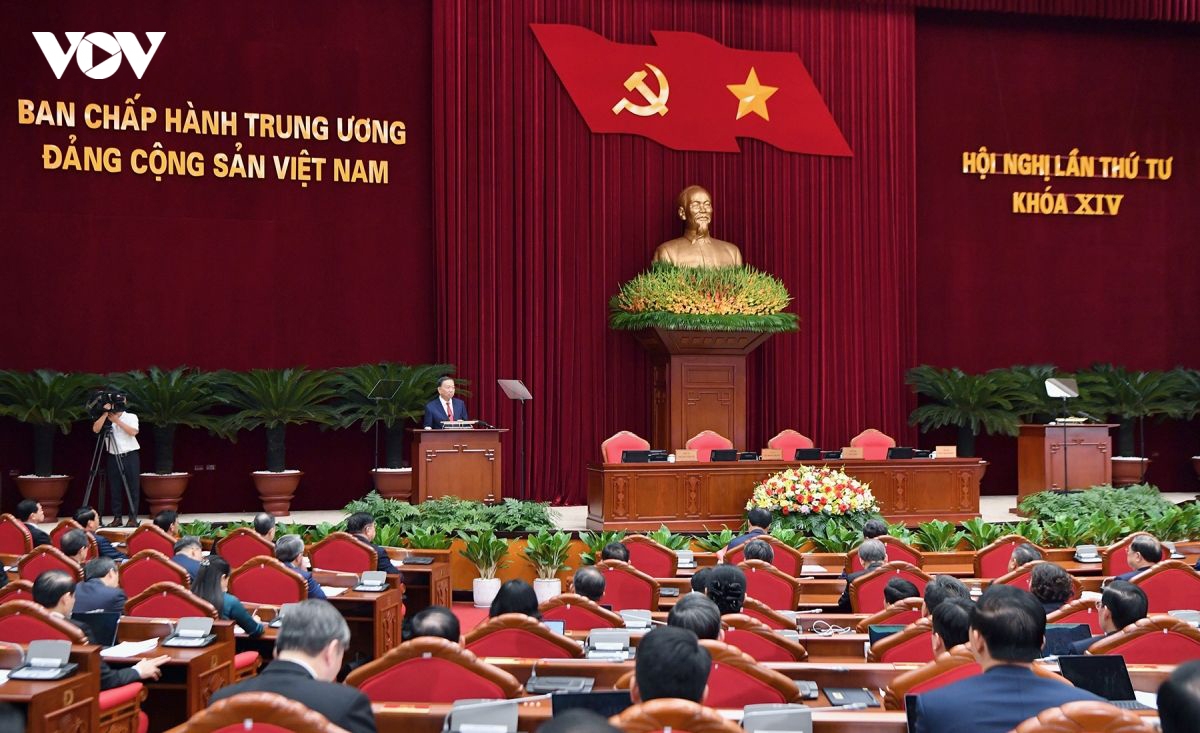
The target, adopted at the fourth plenum of the 14th Party Central Committee, is part of a broader effort to create momentum for the following years. In his closing remarks, General Secretary of the Communist Party of Vietnam Central Committee and President of Vietnam To Lam said 2027 must be a year of acceleration and breakthroughs, laying the foundation, position and capacity for subsequent development.
The Party Central Committee also set a target of keeping average consumer price inflation at around 4.5% while maintaining macroeconomic stability and major economic balances. High growth, the top leader stressed, must go hand in hand with social progress and equality, environmental protection and improvements in people’s living standards.
Turning available resources into growth
A central question raised in the speech is how the country can turn the resources already mobilised into actual productive capacity.
The Party Central Committee noted that although Vietnam has achieved important results in the first year of implementing the 14th National Party Congress Resolution, some resources already allocated have been slow to be put to use. The implementation of projects and the settlement of outstanding issues remain behind schedule in some areas.
Party General Secretary and State President To Lam called for resources already mobilised to be channelled into production and business, creating jobs and strengthening development capacity. Removing institutional bottlenecks, however, must go together with stronger capacity to absorb capital and adequate infrastructure, energy and human resources.
The approach also calls for greater mobilisation of private investment, stronger domestic businesses and firmer purchasing power. Public investment should play a leading role in attracting social investment and improving regional connectivity, while disbursement should be linked to actual progress and quality rather than simply the amount of capital spent.
Growth must rest on productivity and competitiveness
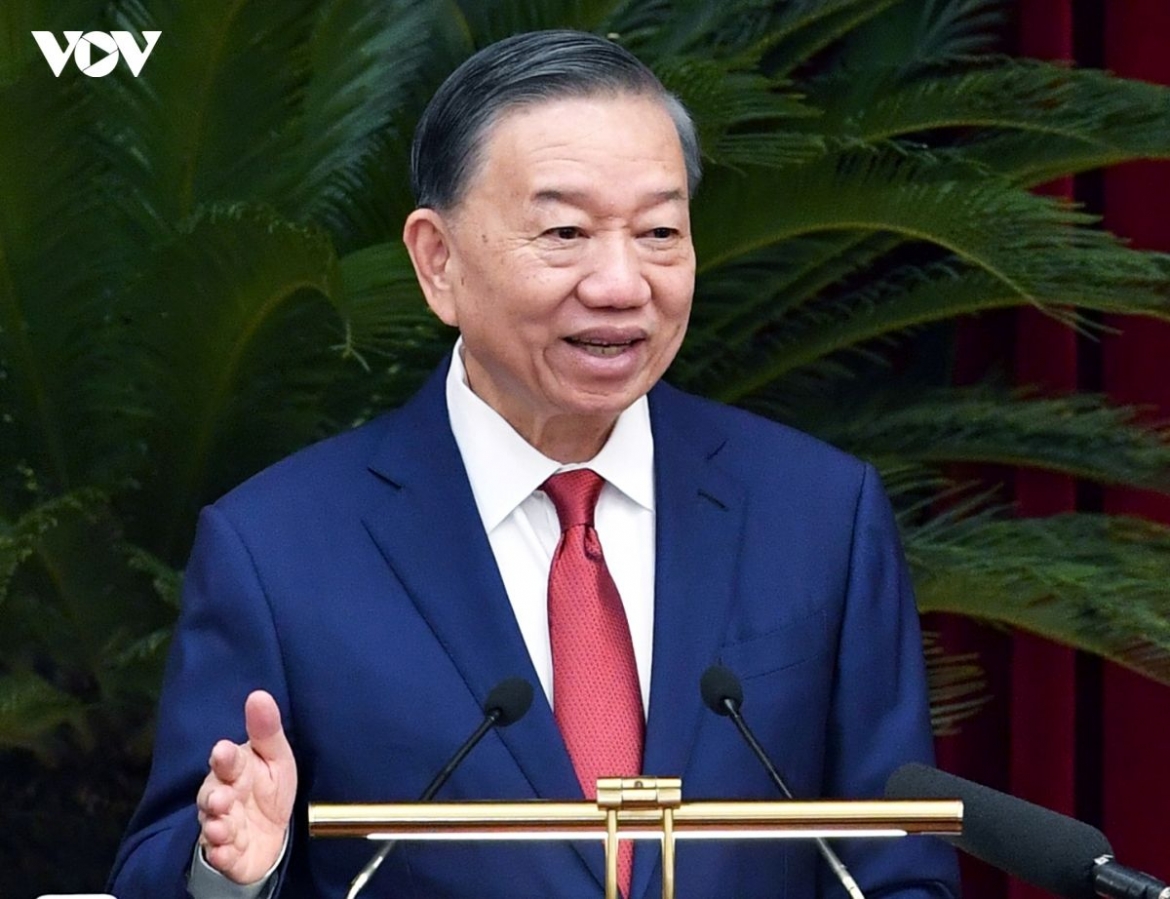
The 10%+ target is presented not simply as a matter of mobilising more capital, but as a demand for a stronger growth model.
The Party Central Committee stressed that high growth must be based on productivity, competitiveness, economic self-reliance and a stable long-term foundation. Science and technology, innovation and digital transformation are expected to play a stronger role in raising productivity and competitiveness.
Foreign investment is also expected to contribute more to domestic development through technology transfer and stronger links with Vietnamese enterprises. This places greater emphasis on the value created within the economy, rather than investment and trade expansion alone.
The leader’s speech also links growth with fiscal and monetary coordination, inflation control and risk management, while stressing financial discipline and the need to assess public spending through actual results.
Implementation becomes the test
Behind the growth target is a broader question of whether decisions can be translated into action quickly and effectively.
Party General Secretary and State President To Lam identified implementation as a weak point in some areas, citing slow coordination, limited initiative and capacity constraints at the grassroots level. He requested that ministries, sectors and localities resolve matters within their authority and report issues beyond their authority together with proposed solutions.
This is where the speech’s emphasis on decentralisation, authority and accountability connects directly with the 2027 growth target.
The Party Central Committee called for responsibilities and authority to be clearly defined and for the allocation of tasks to be matched by sufficient personnel and resources. Once authority has been delegated, those entrusted with it must make decisions and take responsibility for them.
The same principle applies to policy implementation. Responsibility cannot stop at issuing documents; agencies in charge must monitor implementation, address problems within their remit and propose changes when policies no longer fit reality. Where a policy fails to achieve its objectives, the quality of policy advice, policy design and implementation responsibility must all be examined.
Personnel reform is therefore also tied to the growth objective. The top leader’s closing speech calls for officials to be selected, assigned and assessed according to the demands of their tasks, with actual performance serving as a key basis for evaluating their competence and suitability.
Ultimately, the implementation of the Party Central Committee’s decisions will be measured by results. The Party General Secretary and State President called on each level of the Party organisation and each official to focus on key tasks, resolve matters within their responsibility and follow through on commitments.
“Once a task is accepted, it must be carried out; once a commitment is made, it must be fulfilled,” he said, urging the political system to move into action immediately after the plenum.
Vietnam rethinks personnel work to better identify, develop and use talent
VOV.VN - Renewing personnel work requires more than selecting and training officials, with experts calling for capable people to be tested through major and difficult tasks, given sufficient authority and resources, and assessed through their contributions and results.


