Mining university told to master deep-earth exploration technologies

VOV.VN - National Assembly President Tran Thanh Man has called on the Hanoi University of Mining and Geology to master advanced technologies for deep-earth exploration, offshore resource development and strategic mineral processing to support high-tech industries and national energy security.
Speaking at a ceremony marking the university’s 60th anniversary and receiving the Third-Class Labour Order on November 14, the leader outlined the institution’s strategic role in developing technologies and highly skilled professionals for Vietnam’s future economic needs.
Mastering strategic technologies for national development
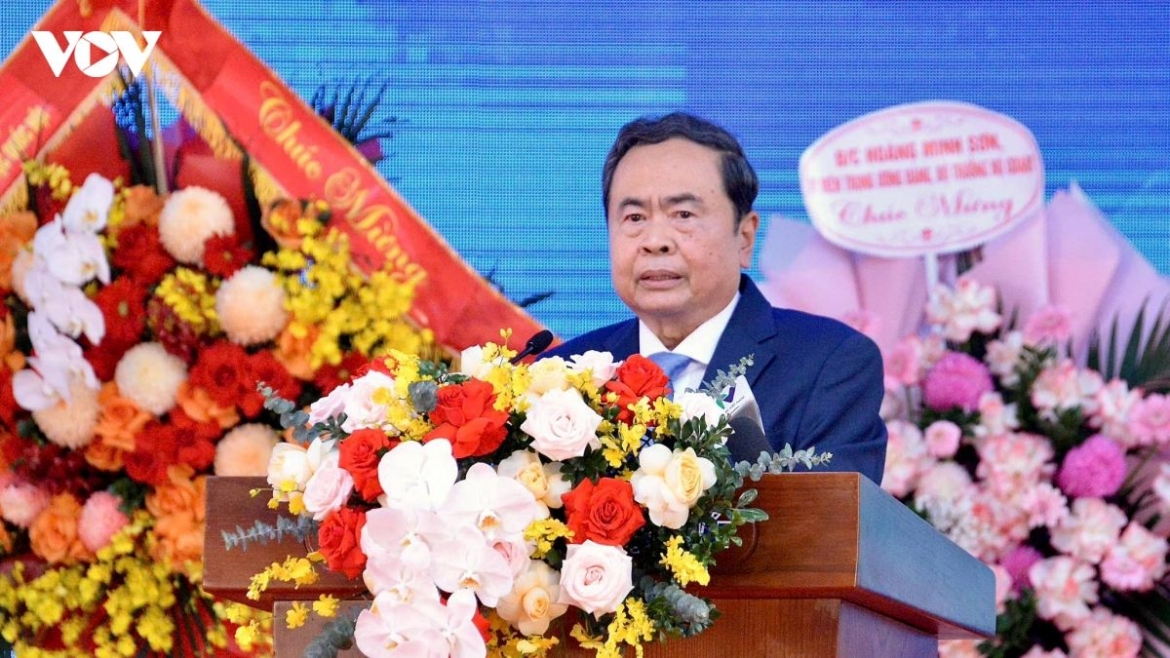
Established on November 15, 1966, during the country's struggle for national liberation, Hanoi University of Mining and Geology has grown into a leading centre for education and scientific research in Earth sciences, mining, geology, petroleum, surveying and mapping, underground construction, information technology and environmental protection.
In recent years, the university has undertaken more than 4,000 science and technology service contracts, generating revenue of over VND1.2 trillion, alongside hundreds of publications in reputable international journals. Its experts and scientists have also contributed policy advice and independent reviews to the development and improvement of Vietnam’s legal framework.
On behalf of the Party and State leadership, National Assembly President Man praised the achievements made by generations of the university’s lecturers, researchers and students over the past six decades.
He said the 14th National Party Congress and recent Politburo resolutions have set strategic development goals for Vietnam, highlighting the urgent need to advance science and technology, innovation, digital transformation and high-quality human resources.
In this context, he said the university must address a number of major challenges: mastering technologies for deep-earth exploration, extending its research and technological capabilities offshore, and developing advanced extraction and processing technologies for strategic minerals to serve high-tech industries and safeguard national energy security.
These priorities, he stressed, should go hand in hand with the green transition, improved disaster forecasting and early warning systems, and greater resilience to climate change.
The top legislator called on the university to pursue comprehensive reform of higher education and raise training quality to international standards. Its curricula should become more modern and interdisciplinary, incorporating digital capabilities and green transition skills, while strengthening practical learning and links between classrooms, fieldwork and businesses.
He also urged the university to focus research on key areas, including exploration and extraction technologies for strategic minerals and rare earths, safer deep mining, urban underground drilling, and early warning systems for natural disasters, flash floods and landslides.
He called for a shift from research primarily serving existing needs towards research that leads and drives innovation, with practical applications and socio-economic effectiveness serving as key measures of scientific value.
Strengthening research, policy advice and digital transformation
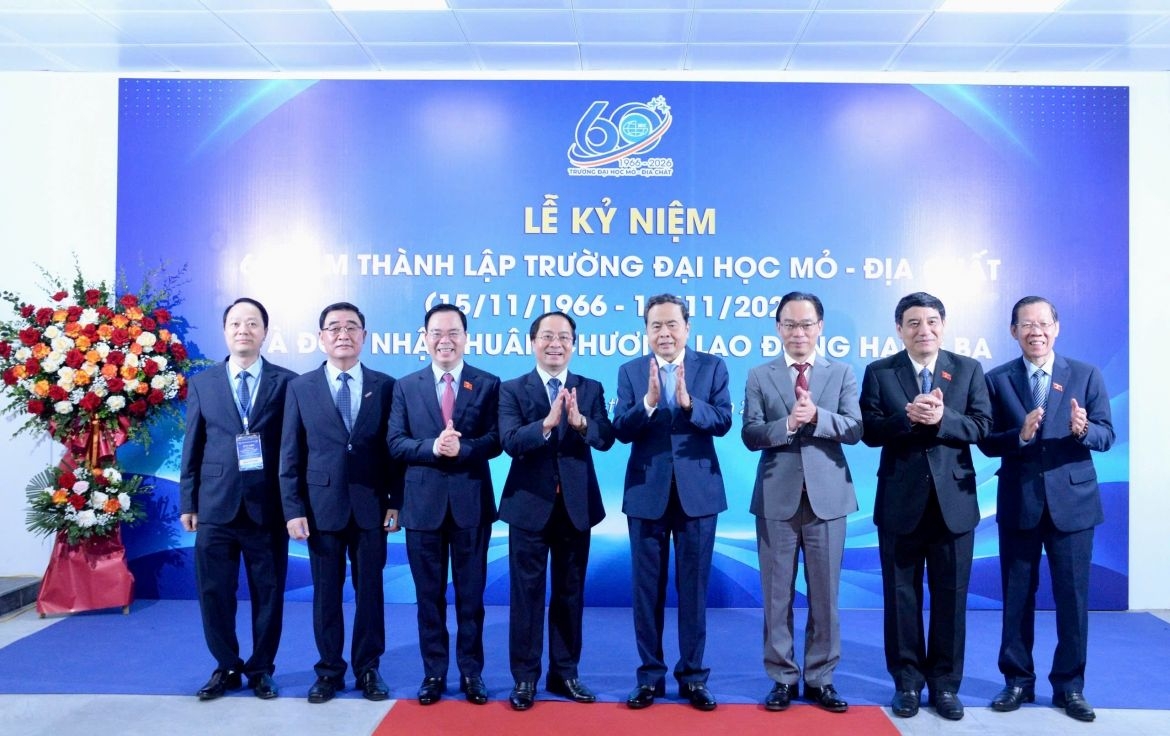
The National Assembly President also highlighted the university’s responsibility to contribute scientific expertise to policymaking, particularly in natural resources, minerals, energy, marine spatial planning and environmental protection.
He called on its scientists to strengthen their role in independent policy review and provide sound scientific and practical evidence to support the National Assembly’s legislative work and supreme oversight.
Digital transformation and modernisation of university governance were also among his priorities. He urged the institution to develop shared large-scale databases on geology, mining and digital geospatial information, while advancing university autonomy alongside accountability, transparency and public disclosure.
He further stressed the importance of building a strong Party organisation, developing the teaching workforce and improving staff welfare. The university should establish more attractive mechanisms to recruit leading scientists and talented young lecturers, while maintaining unity among its Party committee and management board.
Addressing students, the top legislator encouraged them to pursue ambitious goals, strengthen their resolve and devote themselves to learning and research, so they could master science and technology and contribute their knowledge and energy to the country’s sustainable development.
He also called on the Ministry of Education and Training, other ministries and agencies, major state-owned groups in oil and gas, coal and minerals, electricity and chemicals, as well as Hanoi authorities and local governments, to support the university’s development through investment in facilities and the removal of existing obstacles.
The support, he said, would help the university implement laws and National Assembly resolutions on education, training, science, technology, artificial intelligence and high-quality human resources.
At the ceremony, National Assembly President Tran Thanh Man presented the Third-Class Labour Order to the Hanoi University of Mining and Geology in recognition of its contributions over the past 60 years.

PM urges National Economics University to drive innovation in new era
VOV.VN - Prime Minister Le Minh Hung has called on National Economics University to help shape Vietnam’s next phase of development by training high-quality digital talent, contributing research and policy advice on strategic national issues, and pursuing international academic standards.