Leaders launch construction of 121 boarding schools in border areas

VOV.VN - Party General Secretary To Lam and Prime Minister Pham Minh Chinh attended a nationwide groundbreaking ceremony marking the start of construction for 121 inter-level boarding schools in land border communes.
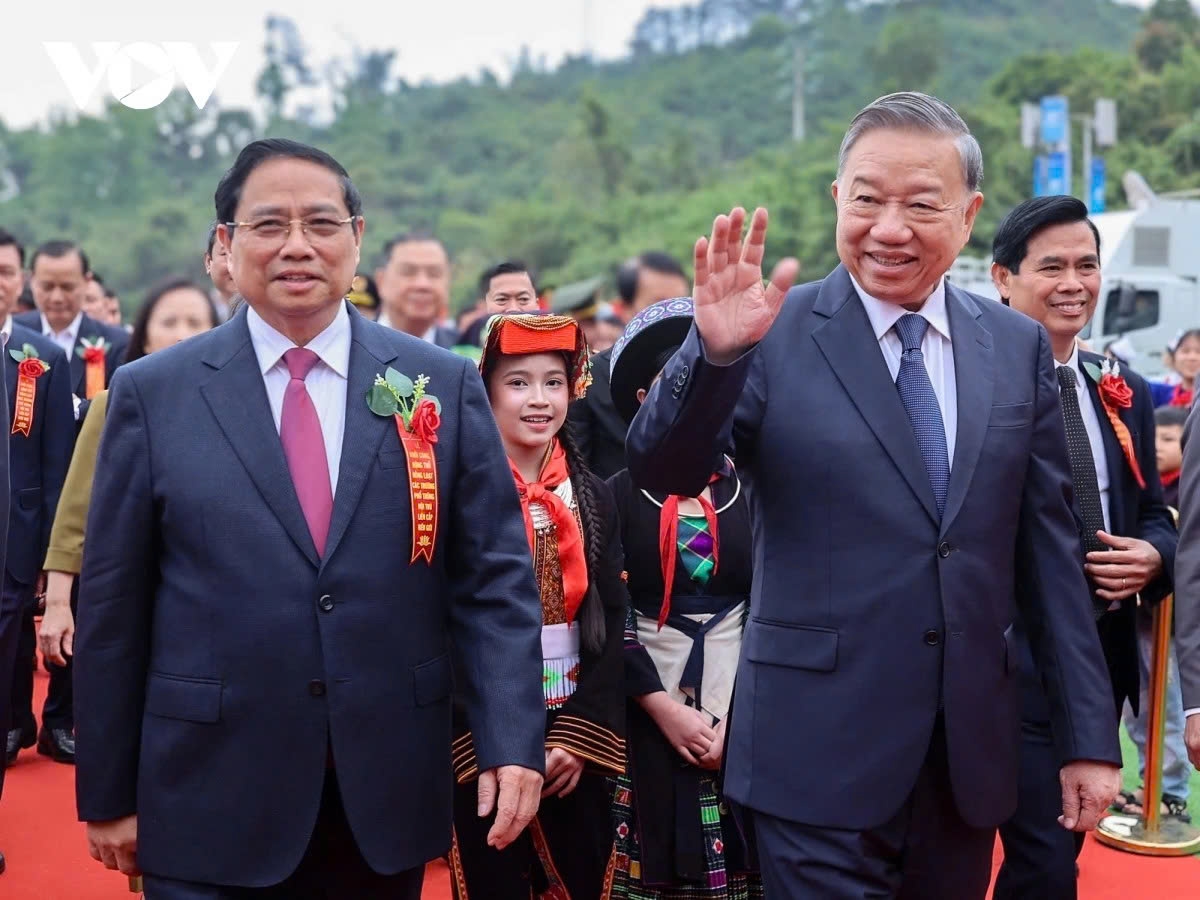
The ceremony was held simultaneously at 121 locations across 17 provinces, including Cao Bang, Lang Son, Lao Cai, Dien Bien, Nghe An, Ha Tinh, Quang Tri, Dak Lak, Tay Ninh, and An Giang.
Party leader To Lam and Prime Minister Pham Minh Chinh along with other officials attended the ceremony at Dong Dang Inter-level Boarding Primary and Secondary School in the northern border province of Lang Son.
The scheme represents a major investment in education infrastructure for border regions. Local authorities estimate the total funding required for the 121 schools at approximately VND30 trillion (nearly US$1.2 billion). Of this amount, the central government is expected to contribute VND28 trillion, while local budgets will provide the remaining sum.
The Ministry of Education and Training, in coordination with the Ministry of Finance, is continuing to review and finalise funding allocations to ensure that all projects are completed by August 30, 2027, in time for the 2027–2028 academic year.
This effort builds on earlier progress made in 2025, when 108 boarding schools in border communes were launched. These projects are scheduled for completion before August 30, 2026, and include a mix of funding sources such as central government investment, local budgets, and targeted support from provincial and municipal authorities.
The construction programme follows Conclusion 81 issued by the Politburo in July 2025, which approved the development of 248 inter-level boarding schools in land border communes. The policy is considered a key step in enhancing education access, improving the quality of human resources, and fostering sustainable socio-economic development in remote and ethnic minority areas. It also aims to strengthen national defence and security by improving living conditions and opportunities for communities in border regions.
Authorities have emphasised that all schools must meet strict standards in infrastructure, technical design, and operational capacity. Each facility is expected to provide adequate conditions for learning, boarding, cultural activities, and physical development, while ensuring absolute safety and long-term effectiveness. At the same time, the Ministry of Education and Training is working to refine institutional frameworks and develop tailored policies to ensure that these schools operate efficiently once completed.
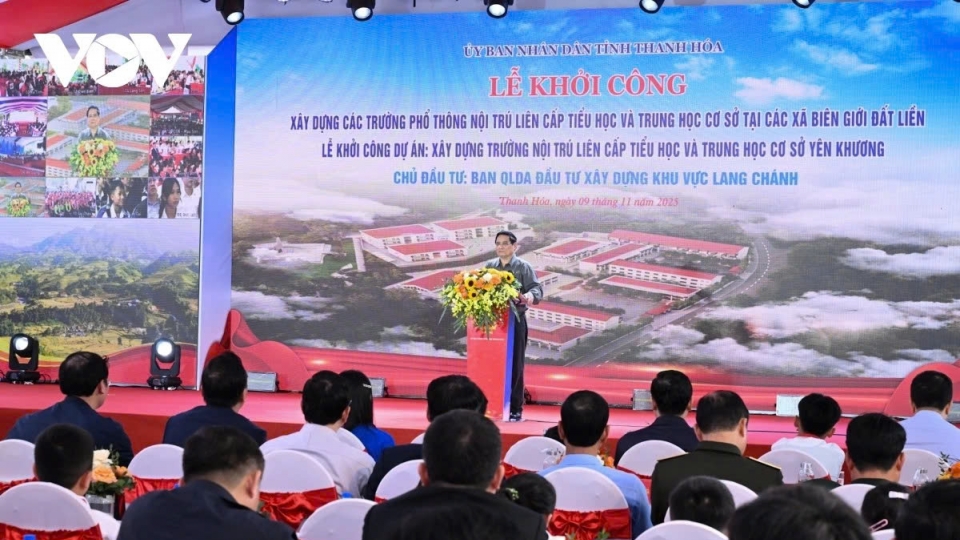
PM launches construction of 72 boarding schools in border communes
VOV.VN - Prime Minister Pham Minh Chinh on November 9 attended a groundbreaking ceremony in Yen Khuong commune, Thanh Hoa province, to commence the construction of 72 integrated boarding schools for primary and lower secondary levels in border communes nationwide.