


Ho Chi Minh City told to remove investment bottlenecks to meet 2026 growth target

VOV.VN - Ho Chi Minh City has been urged to tackle barriers to the private sector and accelerate stalled projects as it pursues double-digit economic growth in 2026, with private-sector investment rising just 5.3% despite stronger overall economic performance.
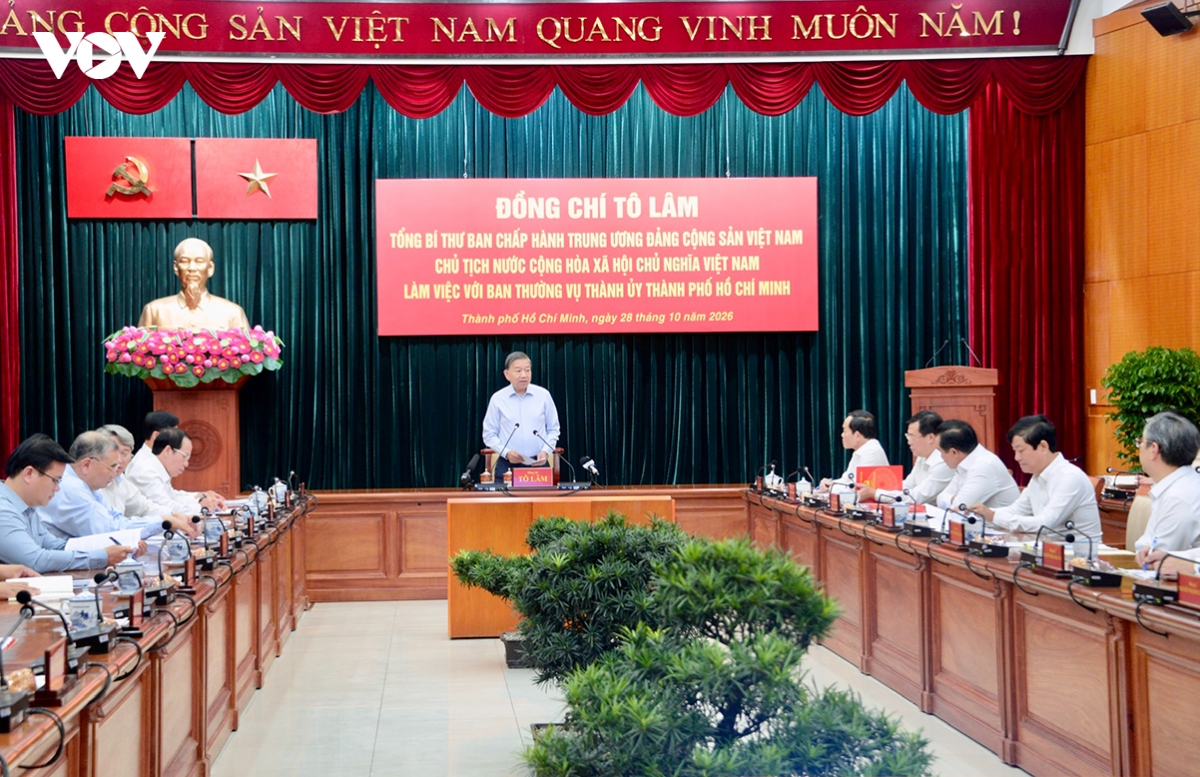
General Secretary of the Communist Party of Vietnam Central Committee and State President To Lam made the request at a working session with the Standing Board of the Ho Chi Minh City Party Committee on October 28.
The city’s gross regional domestic product (GRDP) grew 9.06% in the first nine months of the year following 9.86% growth in the third quarter. Industrial production increased by 10.9%, while the services sector expanded by 9.27%. Public investment disbursement reached 75.5% of the annual target assigned by the Prime Minister by the end of September, and budget revenue exceeded VND677 trillion.
The city is targeting growth of more than 10% for the full year, budget revenue of over VND1 quadrillion and full disbursement of its 2026 public investment allocation. However, private-sector investment grew by just 5.3% in nine months, highlighting the need to remove obstacles holding back businesses and unlock resources tied up in delayed projects.
Private investment and stalled projects in focus
At the meeting, General Secretary and President To Lam called for a serious assessment of the difficulties facing businesses, particularly those involving land access, site clearance, administrative procedures, infrastructure, construction, legal barriers, permits, inspections, taxation and customs.
He also highlighted resources remaining underused because projects have not completed the necessary procedures or have been slow to proceed. These challenges, alongside difficulties faced by some workers who have lost their jobs, underline the need to link economic growth with improvements in people's living conditions.
The city has been accelerating efforts to resolve long-standing project difficulties and has completed arrangements for handling more than 10,000 public land and property facilities. Priorities include speeding up public investment, encouraging private and social investment, supporting businesses, stimulating domestic consumption and expanding exports.
The top leader also called on the city to improve its forecasting capacity and prepare response scenarios for 2027 amid global uncertainties that could affect export orders, business costs, interest rates, exchange rates and investment flows.
The city must improve its forecasting capacity and proactively develop response scenarios for 2027, while staying steadfast in its long-term goals for productivity, technology, human resources and the living environment, he said.
He urged the municipal leadership to review overdue tasks, assign clear responsibilities and deadlines, and use its authority more effectively to reduce administrative procedures and costs for businesses and residents.
Growth must deliver tangible results
Beyond immediate economic targets, the city was asked to strengthen transport links, expand urban railways and transit-oriented development, and address flooding through infrastructure investment and the protection of water-retention areas.
The Party General Secretary and State President also called for science, technology and digital transformation to be directed towards improving productivity and strengthening business capabilities. He urged the city to allocate at least 4–5% of its total budget expenditure to these areas.
Improving living conditions was another key priority. The city was told to expand affordable housing, particularly rental accommodation for workers and low-income residents, while linking housing with employment, transport and essential services. Healthcare and education also need to be strengthened, especially in areas experiencing rapid population growth.
To promote private investment and attract international capital, the city was urged to engage more closely with businesses, provide practical support for small and medium-sized enterprises and household businesses, and ensure that foreign investment contributes to workforce training, technology transfer and the development of domestic suppliers.
Accountability is central to turning these priorities into results, he stressed, adding officials should be assessed on the basis of their actual performance and public satisfaction, with those who fail to meet requirements replaced immediately.
For Ho Chi Minh City, the challenge is not only to sustain rapid growth but also to ensure that investment translates into higher productivity, more stable employment and better living conditions. The city’s progress will ultimately be measured by tangible improvements, including completed infrastructure, reduced flooding and traffic congestion, more stable housing for workers and greater confidence among businesses to invest.
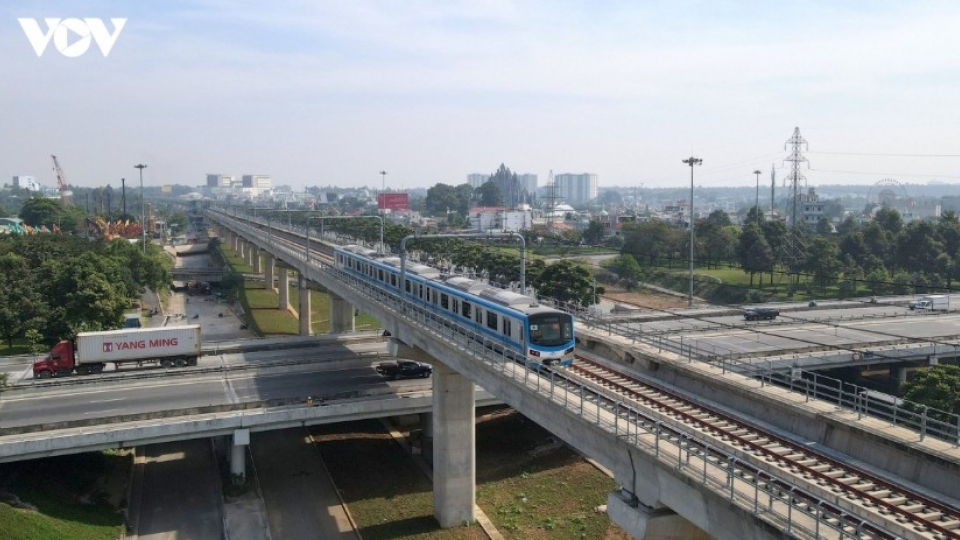
HCM City needs resource mobilization and mindset shift for TOD model
VOV.VN - Transit-Oriented Development (TOD) model offers a major opportunity for Ho Chi Minh City to redesign its development space and achieve sustainable growth.


