


HCM City needs resource mobilization and mindset shift for TOD model

VOV.VN - Transit-Oriented Development (TOD) model offers a major opportunity for Ho Chi Minh City to redesign its development space and achieve sustainable growth.
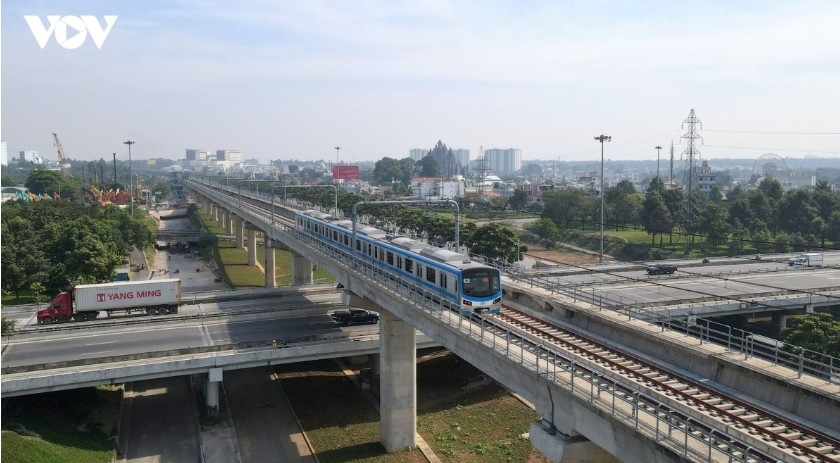
However, for effective implementation, the city must strongly attract private resources and shift its management mindset to to balance the interests of all parties involved.
Mobilizing corporate resources
According to Dr. Vu Dinh Anh, former Deputy Director of the Institute of Market and Price Research under the Ministry of Finance, Resolution 09 sets high requirements for Ho Chi Minh City, particularly in changing its infrastructure investment mindset. Regarding urban railways, the city needs to be creative and proactive in finding suitable implementation methods to put planning into practice. He notes that while infrastructure investment directly contributes to economic growth, the larger goal is building an infrastructure system capable of boosting sustainable mid- and long-term growth.
Since the state budget can only cover a fraction of the massive funding requirements, the city must introduce attractive mechanisms and policies to enable the non-state sector to participate more effectively.
From a business perspective, Nguyen Thanh Trong, Deputy Director of the Innovation Center at Becamex Group, proposes applying the Public-Private Partnership (PPP) model combined with Build-Transfer (BT) and Build-Operate-Transfer (BOT). At the same time, TOD urban projects must be planned alongside railway projects from the outset to attract investment resources and capitalize on land value increments, thereby generating funds to reinvest in the railway system.
Vu Xuan Dung, Design Director 2 at Bcons Group, argues that businesses should participate right from the planning phase surrounding metro lines to assist in identifying appropriate routes and station locations, accelerating legal procedures, and connecting transport planning with synchronized urban development.
Dung expresses that the biggest bottleneck at present is slow legal procedures, where securing investment approval for a project requires approximately 60 to 80 signatures and seals. If a project drags on for five years, it leaves no profit for the enterprise.
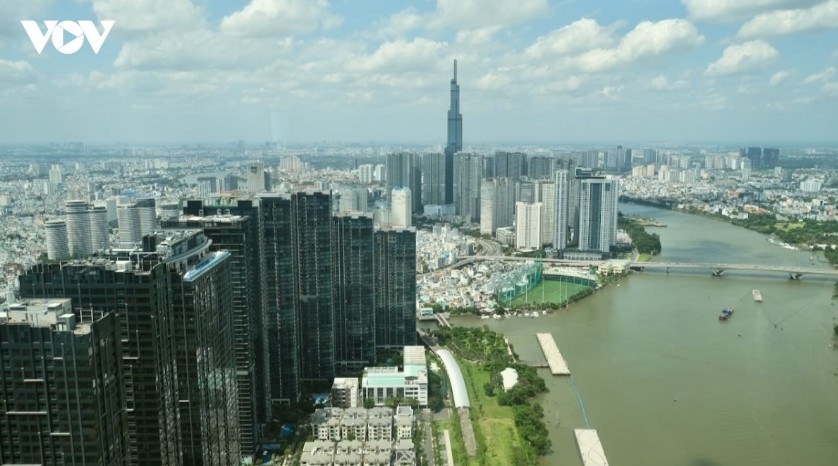
Innovating management mindset and planning
Associate Professor Dr. Tran Dinh Thien, former Director of the Vietnam Institute of Economics, remarks that Ho Chi Minh City needs to shift from centralized administrative decisions to market mechanisms under state supervision.
In land clearance, the most challenging phase directly linked to citizens' core interests, the State should only maintain its role in management, regulation, and framework creation, allowing the market to operate within controlled boundaries. The city needs to establish transparent land mechanisms that accurately reflect market realities to harmonize interests among all parties.
Architect Ngo Viet Nam Son affirms that successfully implementing TOD would mark an urban revolution for Ho Chi Minh City and the entire country, as transport infrastructure development will inherently increase surrounding land values to yield cost-recovery revenues. He suggests that the city reserve land to develop residential clusters and workplaces at affordable costs, while forming a complete TOD ecosystem comprising housing, amenities, parks, schools, and hospitals.
Implementation requires effective cross-sector coordination and market-based thinking to build a TOD ecosystem that balances all interests and delivers double-digit socio-economic growth for the city.
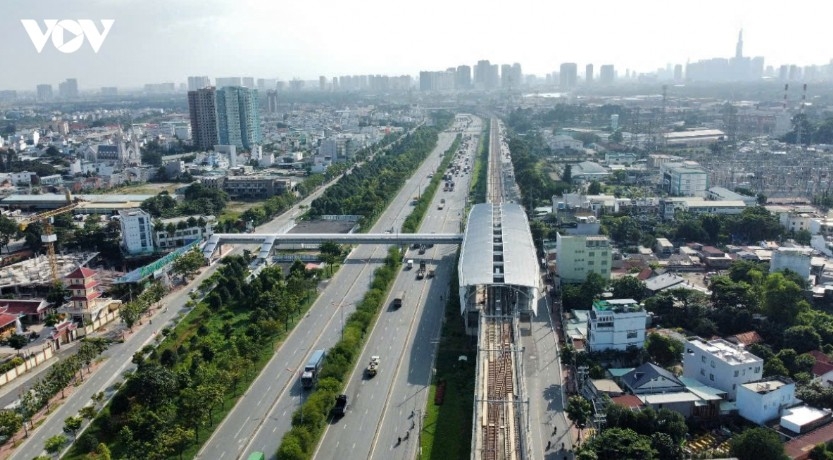
Strategic roadmap and targets
Ho Chi Minh City has determined a three-phase TOD roadmap: from 2025 to 2030, focusing on Metro Line 1, Metro Line 2, and Ring Road 3; from 2030 to 2045, expanding Metro Lines 3, 4, and 6 along with extension lines to Binh Duong and Vung Tau; and after 2045, completing a closed metro network with Lines 5, 7, 8, 9, and 10.
The TOD model serves as an opportunity for the southern metropolis to redesign and expand its development space, improve residents' quality of life, and transform into a civilized, modern urban center and a regional economic hub in Southeast Asia, in line with Resolution 09 guidelines.
By 2030, the city is poised to complete the foundations of its core transport infrastructure network, developing approximately 187 to 255 kilometers of urban railways, advancing toward over 500 kilometers by 2035. Additionally, Ho Chi Minh City targets piloting 5 to 7 core TOD areas, raising the public transport share to 35-40 %, operating a TOD Development Fund, and exploiting approximately 21,000 hectares of potential land reserves.
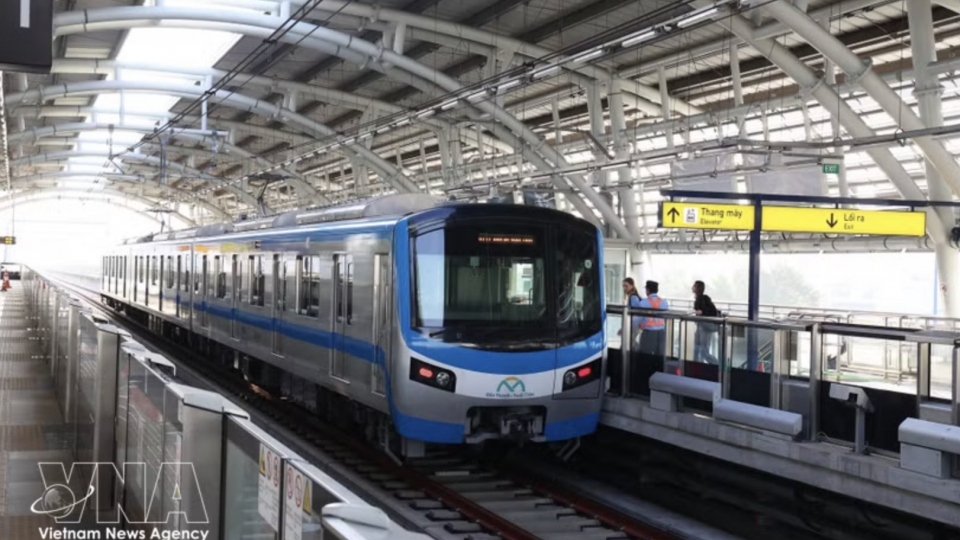
Metro, TOD open up new development space for Ho Chi Minh City
Ho Chi Minh City is not simply aiming to build 255km of metro lines by 2030; it is using the network as a backbone to reorganise urban space, with transit-oriented development (TOD) serving as a mechanism to turn transport infrastructure into a source of development resources.
Hanoi shapes future city with AI, TOD, 1,153km metro network
The Hanoi People’s Committee on May 19 revealed a 100-year master plan that molds the capital into a “Smart – Green – Multi-polar – Multi-centre” city, with artificial intelligence (AI), transit-oriented development (TOD), and a 1,153km metro system serving as strategic growth pillars.

