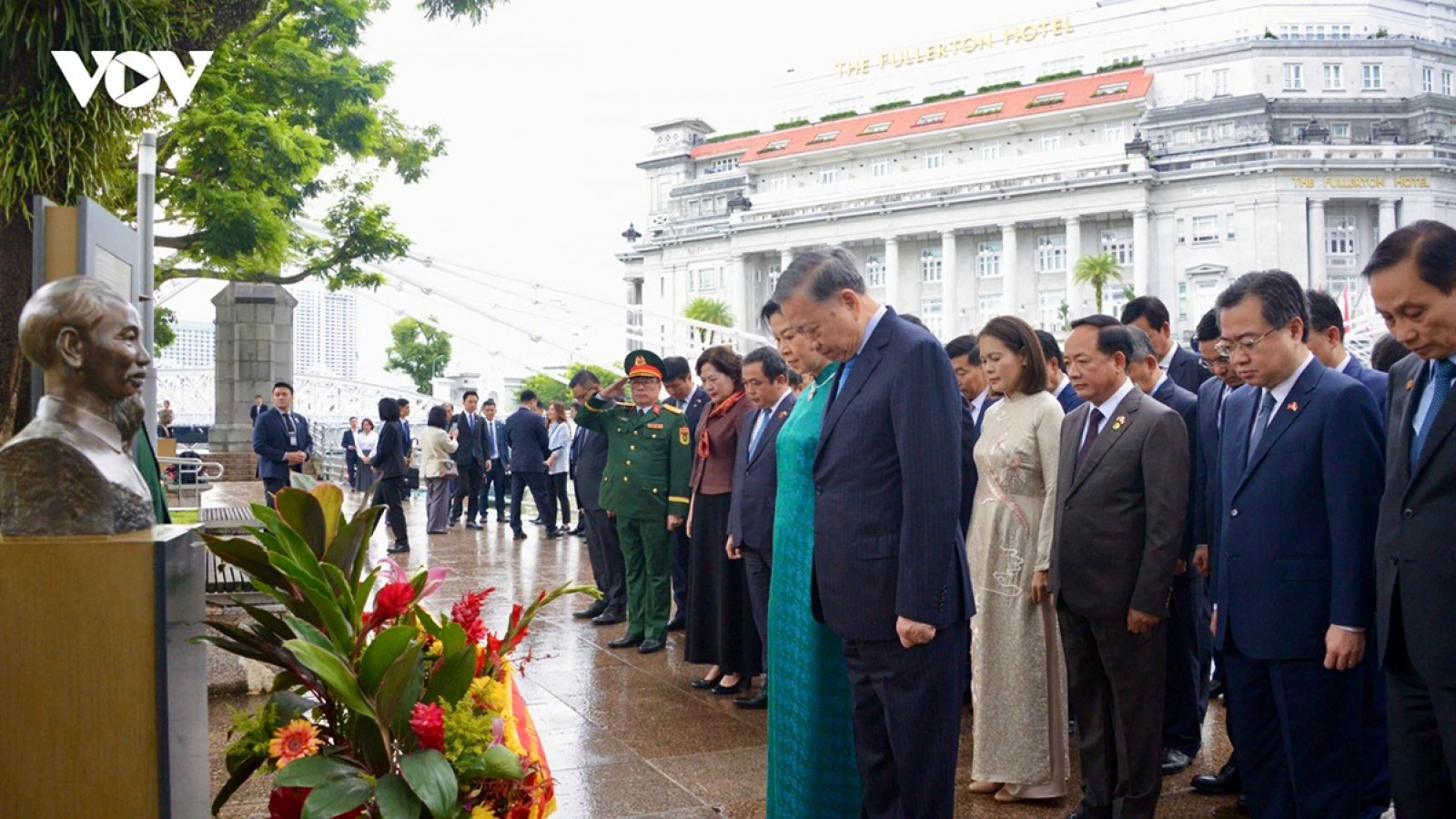
Vietnam message at Shangri-La draws international media attention

VOV.VN - The keynote address delivered by Vietnam’s Party General Secretary and State President To Lam at the 23rd Shangri-La Dialogue not only attracted the attention of policymakers and regional security experts, but also quickly grabbed international headlines.
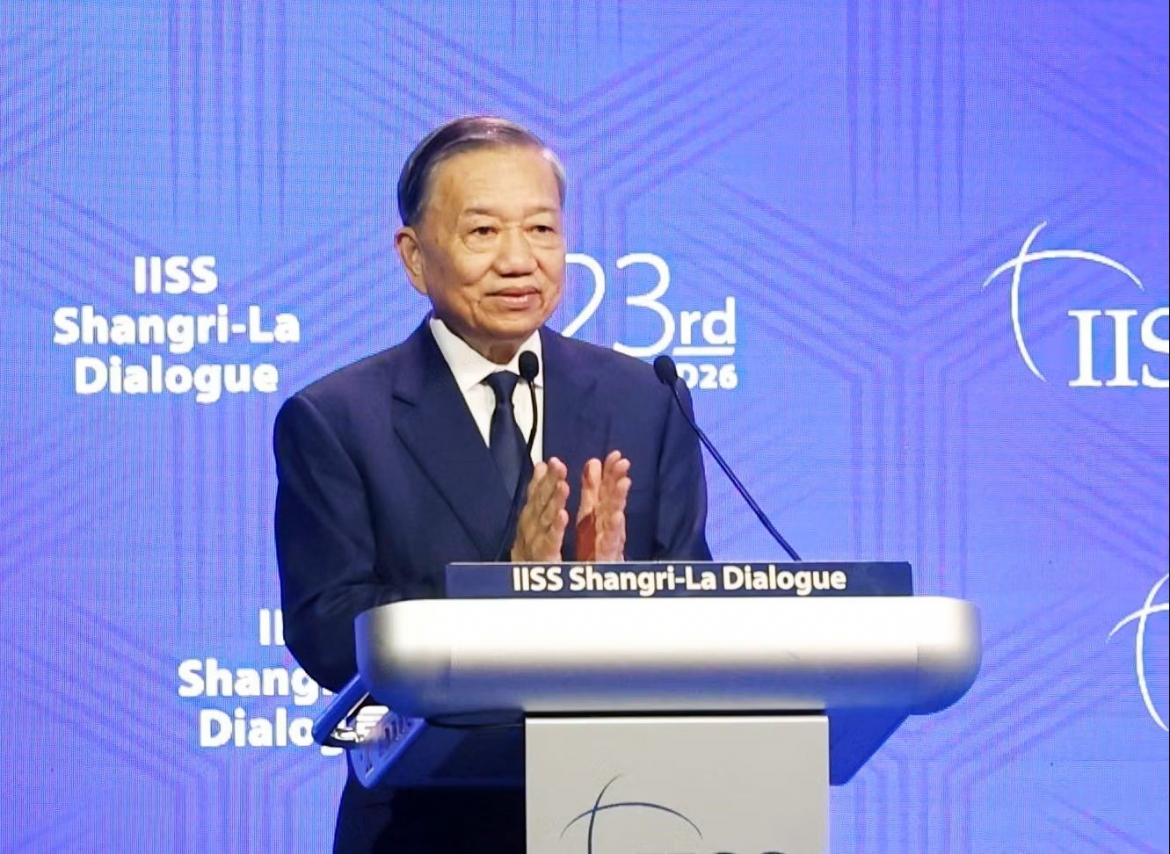
Just hours after the speech concluded on the evening of May 29 in Singapore, major international news agencies and newspapers published reports, analyses and commentaries on the messages delivered by Vietnam’s top leader at Asia-Pacific’s leading defence and security forum.
The strong international media interest carried particular significance as this marked the first time a Vietnamese Party General Secretary and State President delivered a keynote address at the Shangri-La Dialogue. The milestone reflected Vietnam’s rising profile in multilateral forums and demonstrated that the country’s views on regional peace, security and development are being closely followed by the international community.
In their initial coverage following the event, Reuters and AP highlighted the leader’s remarks on the three major crises facing the world today, i.e. the crisis of the international order, the crisis of development models and the crisis of strategic trust. Reuters particularly noted the Vietnamese leader’s call for stronger adherence to international law, sustainable growth drivers and transparent dialogue mechanisms aimed at preventing conflict.
Several international media agencies noted that the Vietnamese leader’s speech went beyond traditional security issues to address broader global challenges directly affecting peace, stability and development prospects worldwide.
In Singapore, The Straits Times described the Vietnamese leader’s appearance at the Shangri-La Dialogue as a historically significant moment. It said the speech reflected Vietnam’s increasingly prominent role in multilateral dialogue mechanisms and demonstrated the country’s proactive and responsible approach toward regional affairs.
Singapore-based broadcaster Channel News Asia (CNA) described the address as one of the most closely watched moments of this year’s dialogue. According to CNA, the Vietnamese leader directly addressed pressing global issues ranging from the erosion of international law and weaknesses in current development models to declining trust among nations. The broadcaster noted that Vietnam’s top leader opening Asia’s leading security forum reflected the country’s growing stature in regional and international affairs.
Japan’s Nikkei focused on Vietnam’s strategic approach to geopolitical uncertainties. The newspaper said Party General Secretary and State President To Lam reaffirmed Vietnam’s independent, self-reliant and balanced foreign policy while emphasising that all disputes should be resolved peacefully in accordance with international law, particularly the 1982 United Nations Convention on the Law of the Sea (UNCLOS). Nikkei also highlighted Vietnam’s position that ASEAN should continue playing a central role in maintaining regional balance and preventing bloc confrontation.
Bloomberg, meanwhile, focused on proposals aimed at strengthening trust and reducing the risk of conflict in the region. The outlet drew attention to the view that while strengthening defence capabilities is legitimate, sustainable security cannot depend solely on military power or arms competition. Bloomberg also highlighted calls for stronger preventive diplomacy, mediation and early conflict-management mechanisms.
US broadcaster CNBC concentrated on the message of responsible commitment by major powers toward the Asia-Pacific region. According to CNBC, the Vietnamese leader stressed that strategic competition may be unavoidable, but it must remain within a framework of international law, transparency and restraint in order to preserve long-term peace and stability.
Meanwhile, Hong Kong-based South China Morning Post centred on the Vietnamese leader’s approach to current global challenges. The newspaper described the message as being delivered in a calm but firm manner and highlighted warnings about three interconnected crises shaping the modern era, with the Asia-Pacific region increasingly becoming a focal point of those challenges.
From another perspective, US magazine Newsweek focused on messages related to the international order and the role of international law in resolving disputes. The publication cited the Vietnamese leader’s warning that the global order could be undermined if respect for international rules and norms is not maintained.
According to Newsweek, one of the speech’s notable points was the message that the world can adapt to changes in the international environment, but such adaptation must be achieved through dialogue, restraint and respect for international law rather than coercion or the use of power.
The extensive coverage by major international media outlets showed that Vietnam’s messages at this year’s Shangri-La Dialogue resonated widely with the global community. Beyond addressing urgent global issues, the speech also reflected Vietnam’s consistent approach to promoting peace, cooperation, dialogue and respect for international law.
At a time when the world faces intertwined security, economic and geopolitical challenges, the message further reinforced the image of Vietnam as a proactive, responsible and constructive contributor to regional and global peace, stability and development efforts.
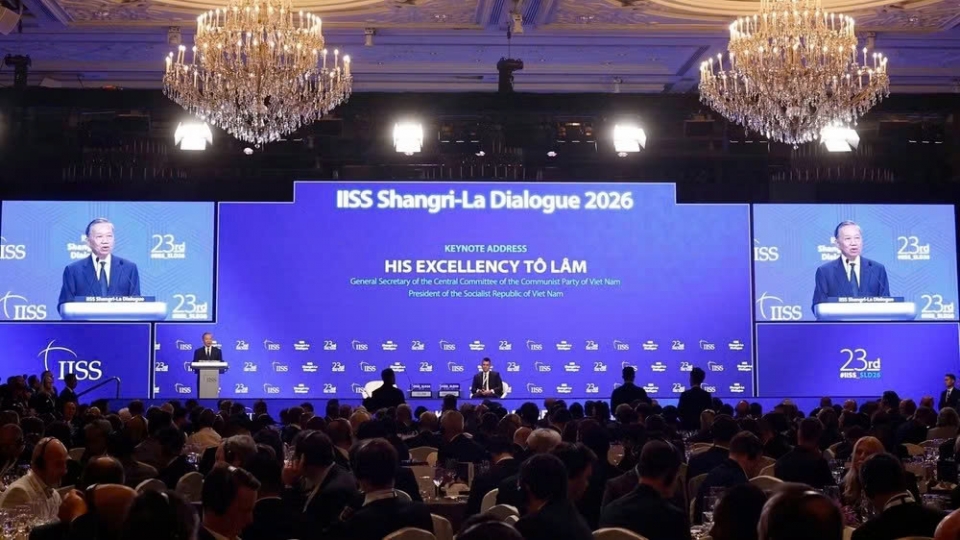
Vietnam signals proactive regional role at Shangri-La Dialogue 2026
VOV.VN - Peace and stability cannot be sustained through power competition alone, but must instead rest on international law, dialogue, restraint and inclusive development, according to a senior Vietnamese leader.