Vietnam, Czech Republic step up law enforcement cooperation

VOV.VN - A delegation from Vietnam’s Ministry of Public Security, led by Deputy Minister Senior Lieutenant General Le Quoc Hung, held talks with leaders of the Czech Ministry of Justice during a working visit to the Czech Republic on October 11–12 to discuss ways to enhance bilateral law enforcement cooperation.
Strengthening cooperation against transnational crime
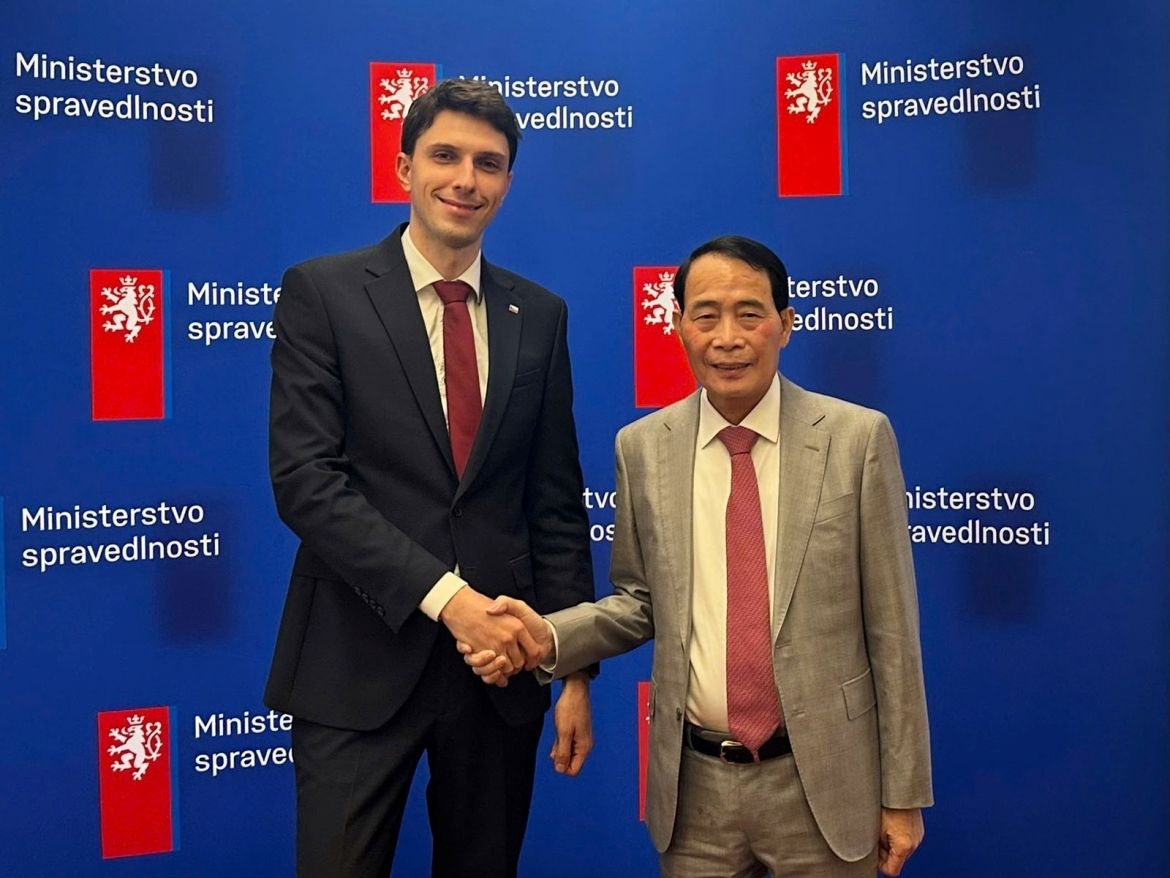
At the meeting, Hung said relations between Vietnam and the Czech Republic are developing positively under their Strategic Partnership framework and existing cooperation agreements. These include agreements on crime prevention and control, the transfer of sentenced persons and the readmission of citizens, which provide an important legal basis for cooperation between the two countries’ law enforcement agencies.
Both sides have stepped up information exchange and verification, particularly in cases involving transnational crime, drug trafficking, human trafficking, money laundering and high-tech crime. They have also exchanged information, through INTERPOL channels and the Czech Police Liaison Officer’s Office in Vietnam, on Vietnamese nationals suspected of committing crimes in the Czech Republic who are believed to be hiding in Vietnam.
Hung cited reports saying around 100,000 Vietnamese nationals are currently living, working, studying or running businesses in the Czech Republic. Vietnam’s Ministry of Public Security has recently received no cases involving Vietnamese citizens travelling to or from the Czech Republic or migrating there illegally. Vietnamese and Czech citizens generally comply with the laws of their host countries, he said.
To make cooperation more effective, Hung called for continued exchanges of delegations and experience in combating organised and transnational crime, drug-related offences, money laundering, high-tech crime and environmental crime. He also proposed broader cooperation in digital transformation, cybersecurity, the use of artificial intelligence in maintaining security and public order, law enforcement training, criminal sentence enforcement and anti-corruption policy development.
He urged both sides to implement existing agreements effectively, particularly the 2019 agreement on crime prevention and control and the 2017 agreement on the transfer of sentenced persons. He also called for early negotiations on an extradition agreement to address practical needs.
Other proposals included closer coordination in information verification, joint investigations and the apprehension of wanted suspects, as well as considering a hotline to facilitate timely exchanges on the protection of senior leaders and diplomatic missions and immigration management.
Hung also stressed the need to ensure the safety and security of each country’s citizens and diplomatic missions on the other’s territory, and to prevent any organisation or individual from using one country as a base for activities directed against the other.
Czech Republic highlights prevention and legal safeguards
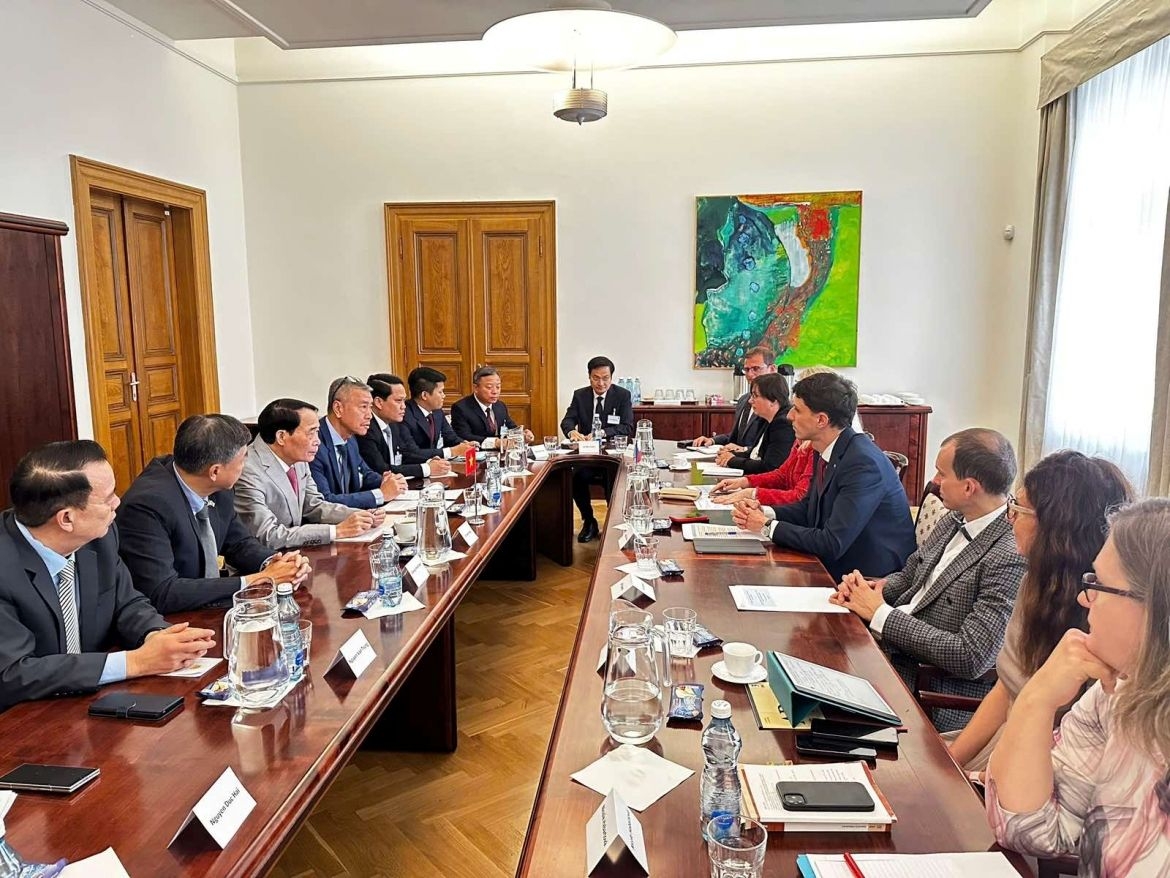
Adam Šimice, Deputy Minister of Justice of the Czech Republic, welcomed Vietnam’s crime prevention efforts, particularly in anti-corruption.
He said corruption has serious consequences for national and global economies, making international cooperation in this area important. Alongside strict action against corruption, the Czech Republic places emphasis on prevention through public awareness and education.
Šimice noted Czech experience in developing and enforcing rules on conflicts of interest, protecting whistleblowers and increasing transparency in lobbying could provide useful areas for bilateral exchange.
According to him, the two countries already have police cooperation arrangements and mechanisms for exchanging criminal intelligence, providing a basis for further collaboration.
On Vietnam’s proposal to facilitate the recruitment of Vietnamese workers, the Czech side stressed that labour and immigration policies must take security requirements into account, particularly the risks of forged documents and qualifications and disguised recruitment schemes operated by organised criminal networks. At the same time, the Czech Republic is committed to enabling the Vietnamese community to live, work and integrate in compliance with local laws.
Labour and visa issues on the bilateral agenda
Vietnamese Ambassador to the Czech Republic Duong Hoai Nam called on the Czech Ministry of the Interior to advise the government on facilitating the admission of Vietnamese workers.
Drawing on nearly three years of work in the Czech Republic, the ambassador pointed out labour shortages are a concern for many localities. He cited the Czech Republic’s approval of quotas for up to 10,600 Filipino workers and around 3,000 Indonesian workers, and called for Vietnam to be considered for similar opportunities.
The ambassador also proposed visa exemptions for Vietnamese official passport holders to facilitate exchanges of delegations and cooperation between government agencies. The Vietnamese Embassy receives around 50 official delegations each year, he said, and invitation-note procedures can add to preparation time.
Nam expressed hope that the proposals could be considered for inclusion in the agenda of a planned visit to Vietnam by Czech Prime Minister Andrej Babiš, potentially helping to deliver tangible outcomes in bilateral relations.
Earlier, the Vietnamese delegation met with staff at the Vietnamese Embassy in the Czech Republic. Ambassador Nam briefed the delegation on bilateral relations, highlighting their positive political development, particularly following the elevation of ties to a Strategic Partnership during Prime Minister Pham Minh Chinh’s visit to the Czech Republic in January 2025.
He stressed that closer cooperation between ministries, sectors and relevant agencies would be important to translating the new partnership framework into practical results.
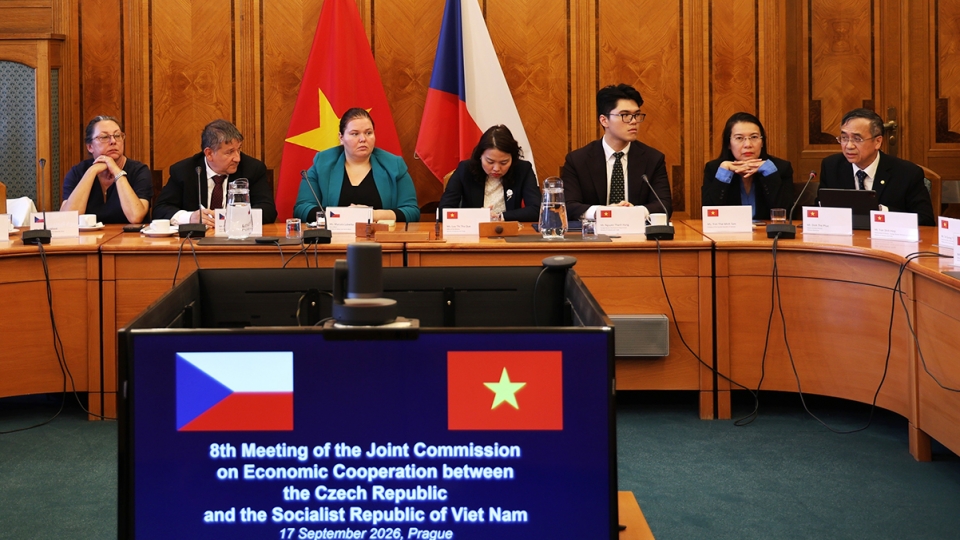
Czech Republic, Vietnam outline directions to expand economic cooperation
VOV.VN - The Czech Republic and Vietnam have recently examined measures to expand economic cooperation in the new period, with a focus on energy, mining, railways, health care, high-tech agriculture and defence equipment.