Vietnam, China top leaders hold talks, agree to deepen strategic cooperation

VOV.VN - Vietnam and China will further deepen political trust, enhance strategic coordination, and expand practical cooperation across key sectors, including infrastructure connectivity, trade, investment, energy and tourism.
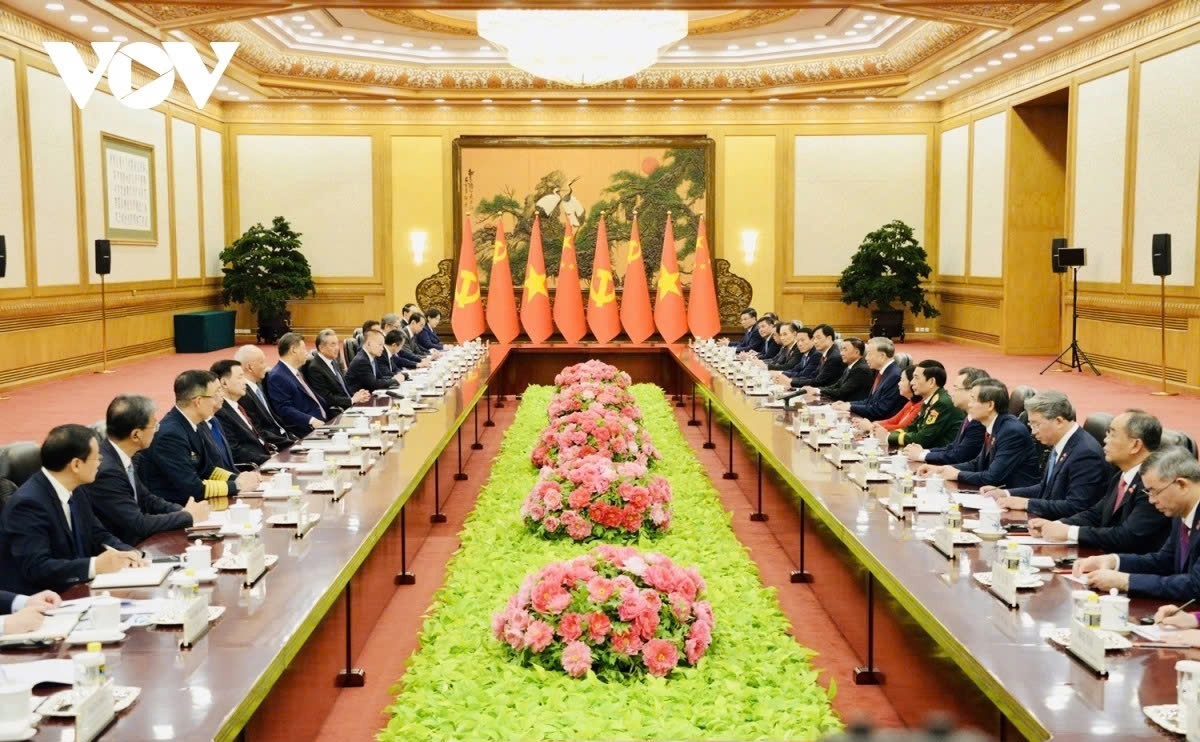
The agreement was reached during talks in Beijing on April 15 between To Lam, General Secretary of the Communist Party of Vietnam and State President, and Xi Jinping, General Secretary of the Communist Party of China and President of China, following an official state-level welcoming ceremony for the Vietnamese leader.
Party General Secretary and President To Lam thanked the Chinese leader for the warm reception and reaffirmed that developing relations with China is a consistent policy, a strategic choice, and a top priority in Vietnam’s foreign policy. He also reiterated Vietnam’s support for China’s global initiatives and its adherence to the “One China” policy.
The Vietnamese leader briefed his host on key outcomes of the 14th National Party Congress, emphasising Vietnam’s development orientation and its goal of strengthening bilateral ties in a more substantive and effective manner.
He outlined proposals to further strengthen political trust and elevate strategic coordination to new heights, while maintaining regular high-level exchanges and enhancing the effectiveness of comprehensive cooperation across Party, government, parliamentary, and mass organisation channels. He also called for deeper theoretical exchanges, expanded cadre training, and stronger practical cooperation among key agencies, particularly in diplomacy, defence, and public security.
He underscored the importance of effectively implementing the ministerial-level “3+3” strategic dialogue mechanism; promote cooperation in security, defence industry, and military trade; and support each other in successfully hosting APEC 2026 and 2027.
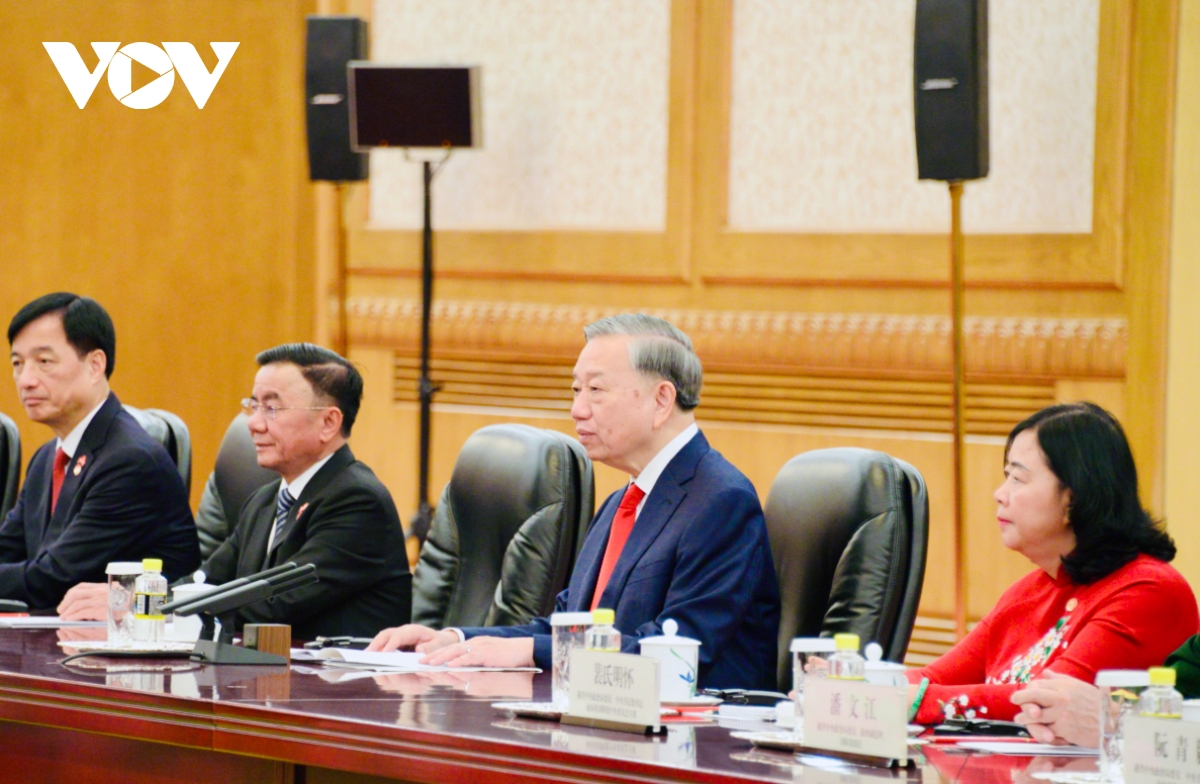
The Vietnamese leader put forward plans to elevate economic, trade, investment, and tourism cooperation to a new level, aligning with each country’s development goals. He stressed the importance of prioritising strategic infrastructure connectivity, especially railway cooperation, and transitioning from traditional trade to more substantive economic linkages, integrating bilateral trade with infrastructure, logistics, and market connectivity.
In addition, he called on China to further open its market to Vietnamese goods and work toward more balanced and sustainable trade. He also encouraged increased investment, technology transfer, and the development of supporting industries, as well as the establishment of integrated supply chains and production networks in Vietnam.
The Vietnamese leader further proposed enhanced coordination to ensure strategic energy security, alongside expanded cooperation in education and training, science and technology, culture, people-to-people exchanges, and local-level partnerships. He also suggested increasing the number of scholarships for Vietnamese students and strengthening collaboration between leading universities of the two countries.
For his part, Party General Secretary and President Xi Jinping welcomed his guest’s visit, describing it as a reflection of Vietnam’s high priority for relations with China. He reiterated that China considers Vietnam a key partner in its neighborhood diplomacy and expressed confidence in Vietnam’s continued development under its current leadership.
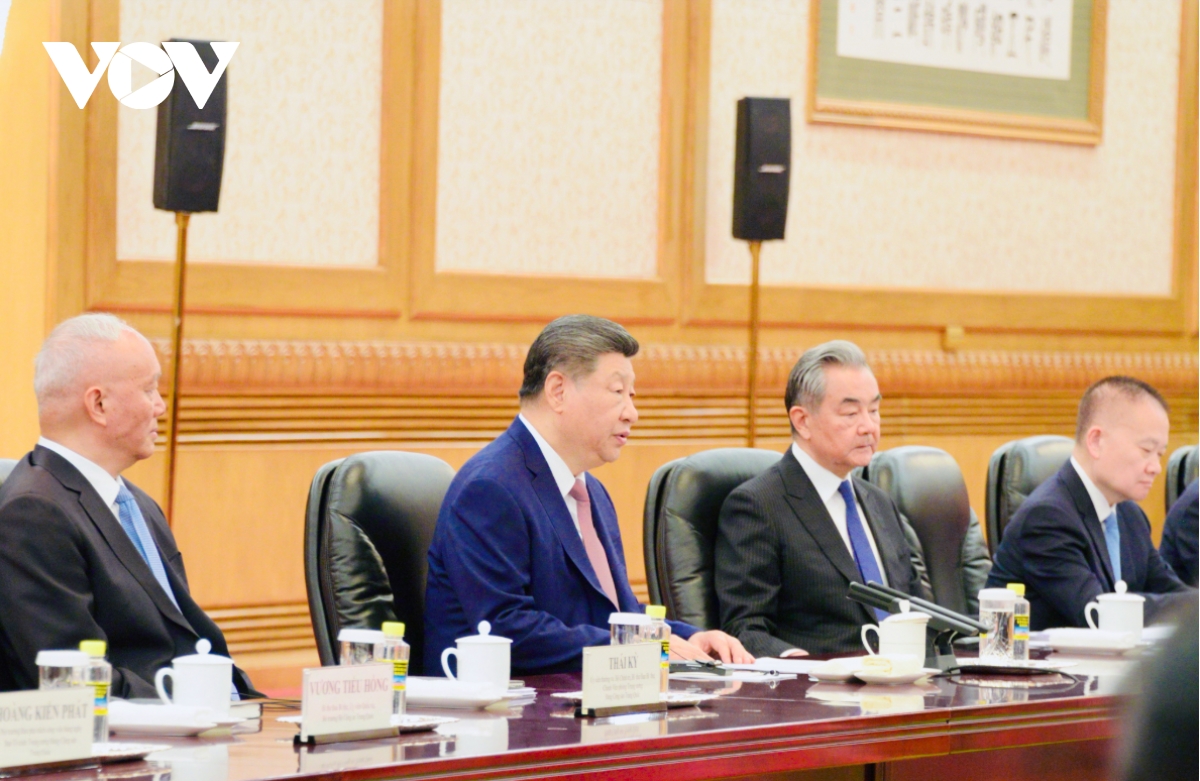
He acknowledged Vietnam’s proposals, and called for further deepening political trust and strategic dialogue, while maintaining regular high-level exchanges and enhancing the role of Party-to-Party channels. He underscored the importance of sharing governance experience and fully utilising the “3+3” strategic dialogue mechanism to advance bilateral cooperation.
The Chinese leader stressed the need to align the Belt and Road Initiative with the Two Corridors, One Belt framework, accelerate strategic infrastructure connectivity, and promote progress on key standard-gauge railway projects linking the two countries.
He welcomed the growing presence of high-quality Vietnamese goods in the Chinese market and encouraged deeper cooperation in key industries, supply chains and production networks, alongside stronger policy coordination in science and technology and expanded cultural and people-to-people exchanges. He added that both sides should work together to maintain a stable, open and cooperative international environment and contribute to regional and global peace and development.
A highlight of the talks was the joint announcement of the Vietnam–China Tourism Cooperation Year 2026–2027, aimed at boosting tourism promotion, upgrading infrastructure and services, and maintaining the two countries as each other’s leading source of tourists. Vietnam also proposed exploring reciprocal visa facilitation for group travelers.
Both sides agreed to continue managing differences appropriately and advancing cooperation in line with the growing level of Vietnam–China relations, on the basis of international law. They reaffirmed the importance of fully implementing the Declaration on the Conduct of Parties in the East Sea (DOC) and accelerating efforts toward an effective and substantive Code of Conduct (COC), in accordance with international law, particularly the 1982 United Nations Convention on the Law of the Sea (UNCLOS).
Party General Secretary and President To Lam underscored the need for both sides to respect each other’s legitimate rights and interests, and to resolve disputes through peaceful means in line with international law, especially UNCLOS 1982.
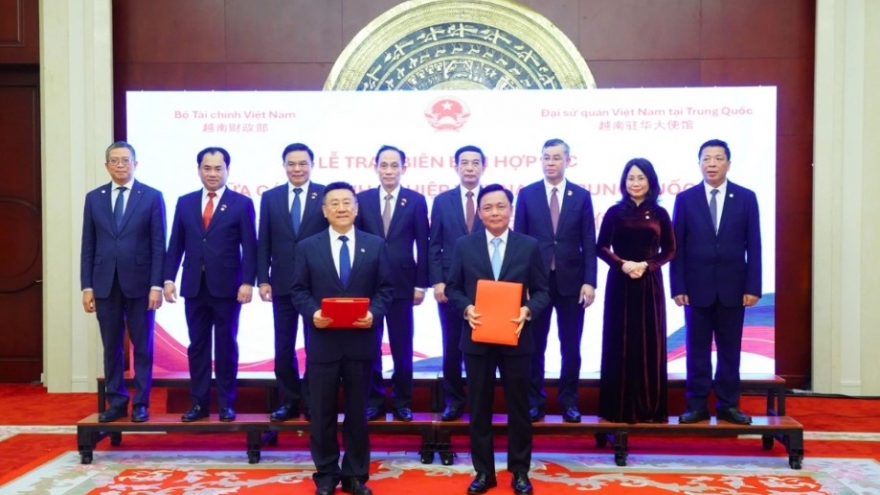
Following the talks, both host and guest witnessed the signing of multiple cooperation agreements covering Party-to-Party relations, public security, justice, economy, science and technology, supply chains, production networks, social affairs, media, and local cooperation, reflecting the comprehensive outcomes of the visit.
On regional and international issues, both sides reaffirmed their commitment to resolving differences through peaceful means in accordance with international law, including the 1982 United Nations Convention on the Law of the Sea (UNCLOS). They also pledged to fully implement the Declaration on the Conduct of Parties in the East Sea (DOC) and work toward an effective and substantive Code of Conduct (COC).
Later the same day, Party General Secretary and President Xi Jinping and his spouse hosted a state banquet in honour of Party General Secretary and President To Lam, his spouse and their entourage. The two leaders and their spouses also held a tea meeting, highlighting the close and friendly ties between the two countries and reaffirming their shared commitment to advancing bilateral relations into a new phase.
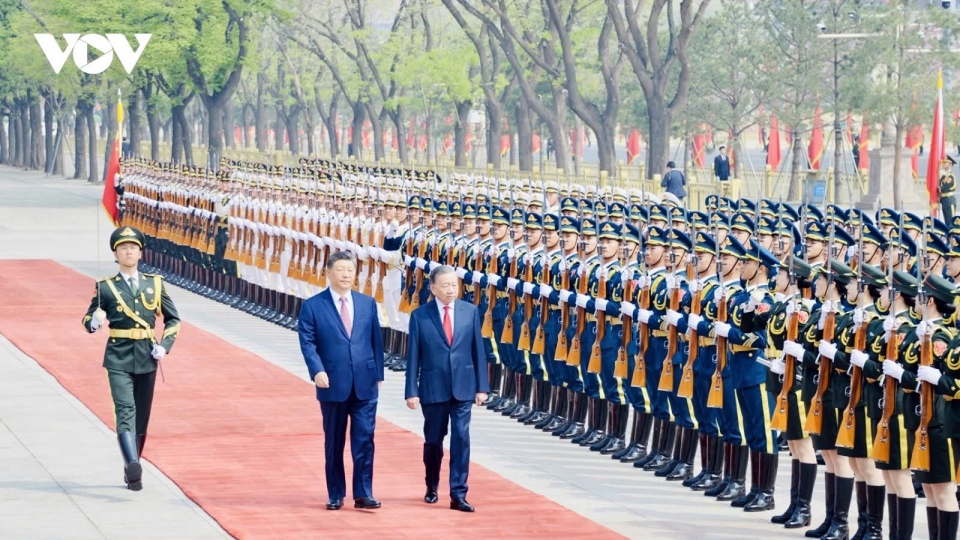
China accords 21-gun salute to welcome Vietnam’s top leader To Lam on state visit
VOV.VN - A 21-gun salute rang out across Tiananmen Square on April 15 as Chinese Party General Secretary and President Xi Jinping hosted a state welcoming ceremony for his Vietnamese counterpart To Lam at the Great Hall of the People in Beijing, underscoring the high level of respect accorded to the visit.