


Vietnam, China step up infrastructure, trade and supply-chain connectivity

VOV.VN - Vietnam and China will strengthen infrastructure connectivity, trade and stable supply and production chains, while expanding science and technology cooperation to deepen bilateral economic ties.
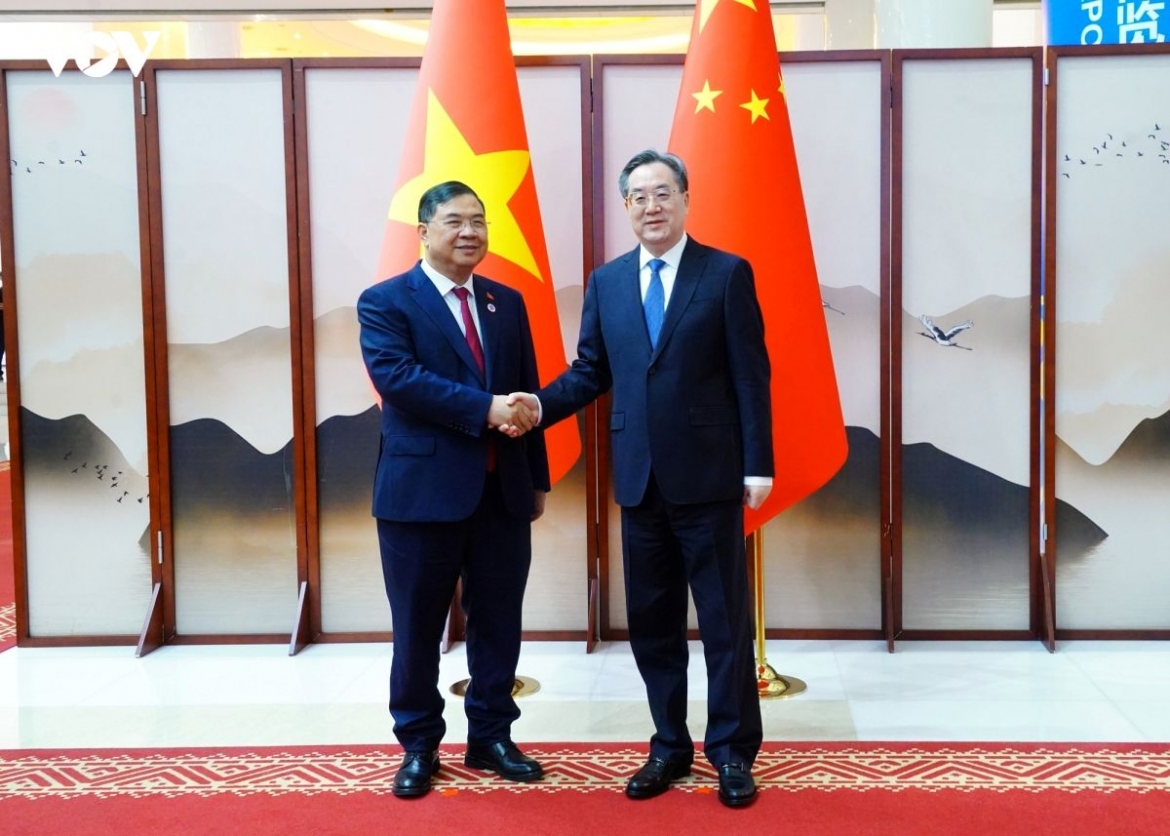
The agreement was reached during talks in Nanning, Guangxi Zhuang Autonomous Region, China, on September 16 between Pham Gia Tuc, Permanent Deputy Prime Minister of Vietnam, and Ding Xuexiang, Vice Premier of the State Council of China. The talks took place on the sidelines of the 23rd China-ASEAN Expo (CAEXPO) and the China-ASEAN Business and Investment Summit (CABIS) in Nanning.
The leaders noted that Vietnam-China relations have continued to develop positively and comprehensively, in line with the strategic orientations agreed by the senior leaders of the two Parties and countries. They agreed to further translate high-level common understandings and agreements into concrete outcomes and make bilateral cooperation increasingly substantive and beneficial to the peoples of both countries.
In this context, infrastructure connectivity, trade, supply chains, and science and technology were identified as areas requiring continued efforts.
Accelerating railway, border-gate and logistics connectivity
Permanent Deputy Prime Minister Tuc called on the two sides to step up infrastructure connectivity, first and foremost ensuring progress in the development of standard-gauge railway lines connecting Vietnam and China. He also proposed making more effective use of international intermodal rail services to connect the two countries with third-country markets.
The two sides were also urged to move ahead with the establishment of cross-border economic cooperation zones, implement the smart border-gate model, strengthen electricity connectivity and address difficulties facing several specific projects.
These proposals form part of efforts to strengthen links between the two economies, facilitate the movement of goods and expand the scope for bilateral cooperation.
Vice Premier Ding spoke highly of Vietnam’s proposals and affirmed China’s readiness to follow through on high-level common understandings and advance practical cooperation projects.
China pledged to accelerate the development of standard-gauge railway lines connecting the two countries and linking them with the China-Europe railway network, while working together to build stable supply and production chains, promote smart border gates and develop cross-border economic cooperation zones.
Facilitating trade and investment

On trade, Tuc called on China to further facilitate Vietnamese agricultural exports to the Chinese market, strengthen cooperation on quarantine and inspection, and soon sign a memorandum of understanding designating Vietnam as the partner country for the “Sharing the Big Market – Exporting to China” programme in 2027.
China welcomed Vietnam’s participation in the programme and said it is ready to increase imports of high-quality Vietnamese agricultural products. It also called on the two sides to make effective use of trade fairs and trade promotion mechanisms organised by China to promote balanced and sustainable bilateral trade.
Ding also affirmed China’s support for capable Chinese enterprises to increase high-quality investment in Vietnam, contributing to the country’s industrialisation and modernisation.
Both sides therefore agreed to expand cooperation in science and technology, innovation, high-quality human resources training and electricity connectivity.
Expanding science and technology cooperation
Alongside traditional areas such as trade, investment and infrastructure connectivity, science and technology and human resources training were highlighted as areas for further cooperation.
Tuc called for stronger cooperation in science and technology, human resources training and technology transfer, as well as faster implementation of aid-funded projects for Vietnam.
China said it is ready to expand cooperation in science and technology, innovation and high-quality human resources training.
The two sides also agreed to strengthen coordination at multilateral forums; work together to successfully organise activities during Vietnam’s APEC Year 2027 and related APEC activities in 2026; promote people-to-people exchanges; and effectively implement activities under the Vietnam-China Year of Tourism Cooperation 2026-2027.
They also held frank and candid discussions on controlling and appropriately handling differences, contributing to peace, stability and cooperation in the region.
Linking businesses with priority sectors
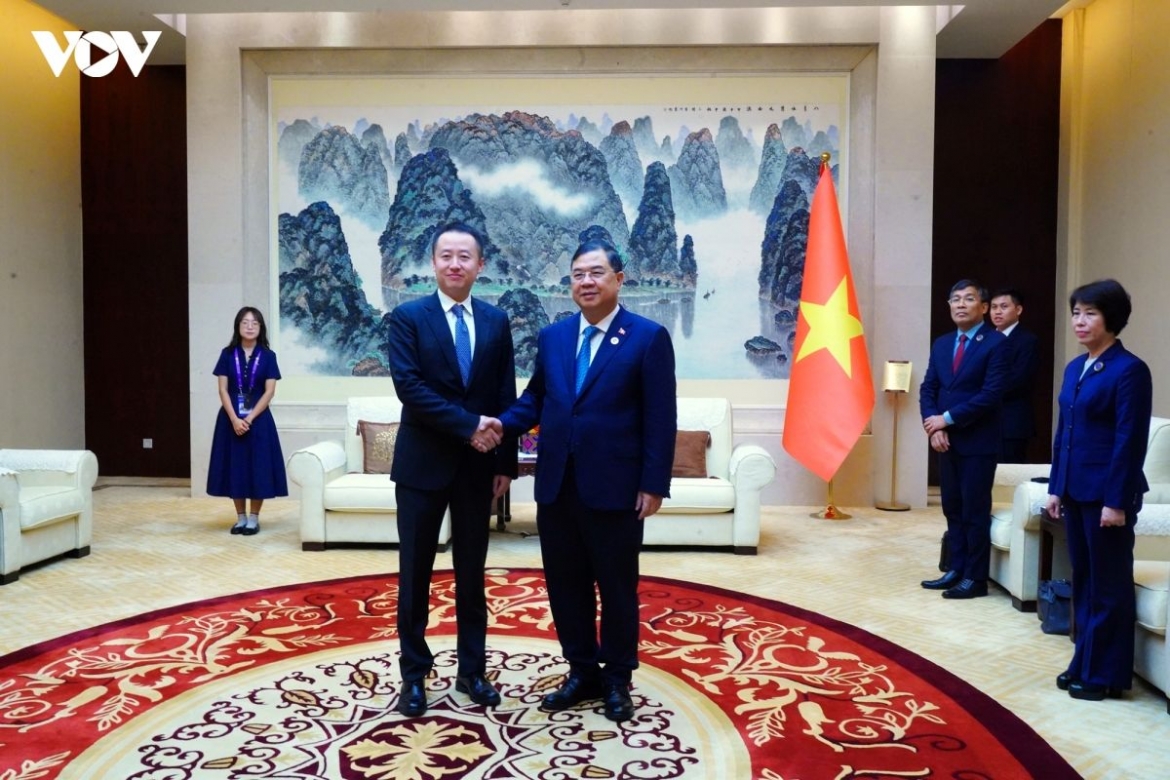
Later the same day, Permanent Deputy Prime Minister Pham Gia Tuc held meetings with executives of several major Chinese corporations, including Huawei, China Communications Construction Company (CCCC), and China Energy Engineering Corporation (Energy China).
At the meetings, he called on Chinese companies to leverage their strengths in capital, technology, management experience and project implementation capacity to increase high-quality, long-term investment in Vietnam.
Priority areas included transport infrastructure, railways, energy, digital transformation, telecommunications, science and technology, and high-quality human resources training.
Strengthening infrastructure connectivity, expanding supply chains, facilitating trade and enhancing technological cooperation were identified as important avenues for translating high-level common understandings into concrete outcomes and making Vietnam-China economic cooperation more substantive.

Vietnam, China review defence cooperation, seek deeper practical ties
VOV.VN - General Phan Van Giang, Minister of National Defence of Vietnam and General Zhang Shengmin, Vice Chairman of the Central Military Commission of China, met in Beijing on September 16 on the sidelines of the 13th Beijing Xiangshan Forum to review Vietnam-China defence cooperation.


