PM Pham Minh Chinh arrives in Moscow, beginning Russia visit

VOV.VN - A high-ranking Vietnamese delegation led by Prime Minister Pham Minh Chinh arrived at Vnukovo-2 International Airport in Moscow at 5:00 p.m. (local time) on March 22, beginning an official visit to the Russia at the invitation of Prime Minister Mikhail Mishustin.
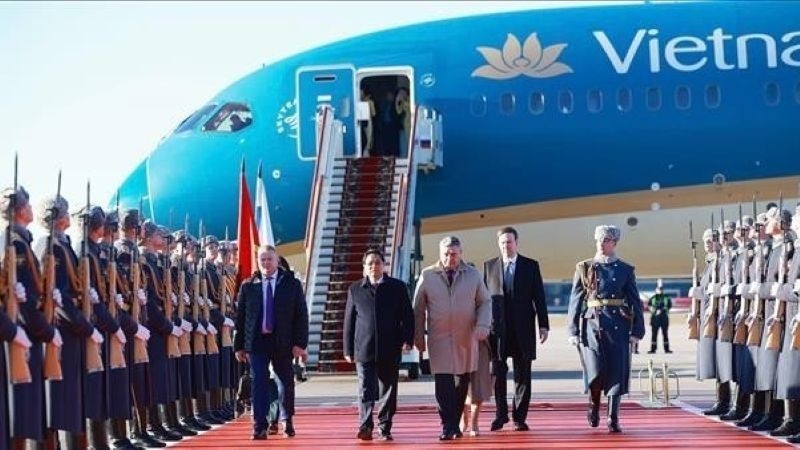
The Vietnamese PM and his entourage were welcomed at the airport by Russian Deputy Foreign Minister Andrey Rudenko. The ceremony featured national anthems of both countries, a guard of honour, and a military review by the Vietnamese leader.
The visit aims to further consolidate and enhance the Comprehensive Strategic Partnership between Vietnam and Russia, particularly in key areas such as politics, economy, trade, investment, energy, and oil and gas.
Amid growing global challenges related to energy security, energy cooperation has been identified as a central pillar of bilateral ties. Both sides are expected to expand collaboration in exploration, production, and human resource development in the energy sector.
During the four-day visit, the two sides are scheduled to sign a number of important cooperation agreements and promote collaboration in other fields, including infrastructure development, science and technology, education and training, culture, and people-to-people exchanges.
According to the agenda, Prime Minister Pham Minh Chinh will hold talks with Prime Minister Mikhail Mishustin, meet with President Vladimir Putin, and have meetings with Federation Council Chairwoman Valentina Matviyenko and State Duma Chairman Vyacheslav Volodin.
He will also meet with the Russia–Vietnam Friendship Association, the Vietnamese community in Russia, and representatives of major Russian corporations and enterprises. The Prime Minister is also scheduled to visit educational and high-tech institutions, as well as to lay wreaths at the Ho Chi Minh Monument and the Tomb of the Unknown Soldier in Moscow.
The visit is expected to create new momentum for comprehensive cooperation between the two countries across politics, defence, economy, science and technology, and people-to-people exchanges, while shaping a long-term vision for bilateral relations in the coming period.
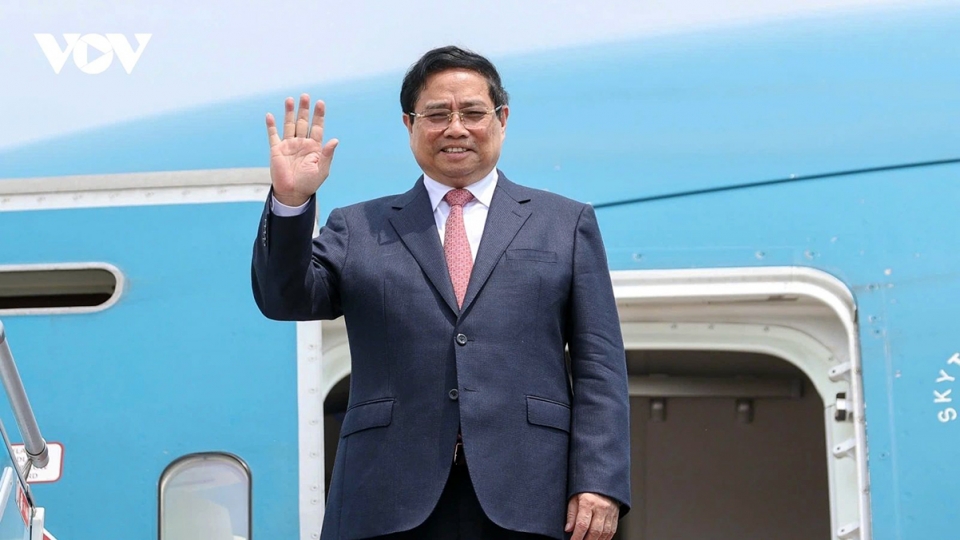
PM departs for official visit to Russia to boost strategic ties
VOV.VN - A high-ranking Vietnamese delegation led by Prime Minister Pham Minh Chinh left Hanoi on March 22 for an official visit to Russia at the invitation of Russian Prime Minister Mikhail Mishustin.