Chinese scholar highlights Vietnamese leader’s visit in bilateral ties

A Chinese scholar has underscored the importance of General Secretary of the Communist Party of Vietnam (CPV) Central Committee and State President To Lam’s upcoming visit to China in further consolidating and effectively implementing the “six major orientations” in bilaterael relations.
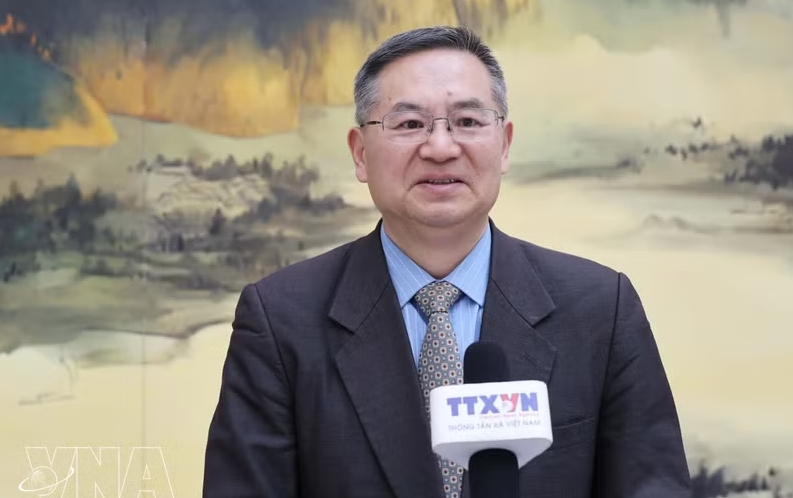
In an interview granted to Vietnam News Agency correspondents in Beijing, Prof. Dr. Cheng Hanping, a prominent Chinese scholar serving as Executive Director of the Institute of Regional and Country Studies and Director of the Vietnam Research Centre at the Zhejiang University of Technology, said the visit takes place shortly after the 14th National Congress of the CPV and the fourth sessions of the National People’s Congress of China and the Chinese People’s Political Consultative Conference – key events that define China’s major policy orientations for the year.
He stressed that the timing of the visit underscores not only the traditional friendship between the two countries but also their shared commitment to strengthening cooperation and development amid an increasingly complex international environment.
According to Cheng, the visit carries great significance as both sides seek to respond to rising unilateralism and hegemonism by jointly promoting multilateralism and globalisation, thereby contributing to global stability.
The scholar noted that building a Vietnam – China community with a shared future requires coordinated efforts from both sides, particularly in enhancing connectivity.
Cross-border railway transport has expanded rapidly while economic and trade ties continue to grow and infrastructure cooperation has been strengthened, supported by incentives under the China – ASEAN Free Trade Area 3.0.
He also cited the Vietnamese Minister of Foreign Affairs as highlighting railway connectivity as a shared priority and that improved rail links between the two countries will significantly boost industrial and economic partnerships.
From a broader perspective, Cheng said China has played an important stabilising role amid global uncertainties, adding the enduring friendship and steady development of Vietnam – China ties make a meaningful contribution to peace and stability in the region.
He went on to say that China’s adherence to the Five Principles of Peaceful Coexistence and its commitment to maintaining the post-World War II international order contrast with approaches taken by some other major powers. On that basis, Vietnam and China, with mutual respect and friendly cooperation, continue to set an example of international relations.
As two important socialist countries, Cheng concluded, their sustained cooperation, stable societies and strong economic development, along with improving living standards, represent considerable contributions to global stability and the development of the international socialist movement.
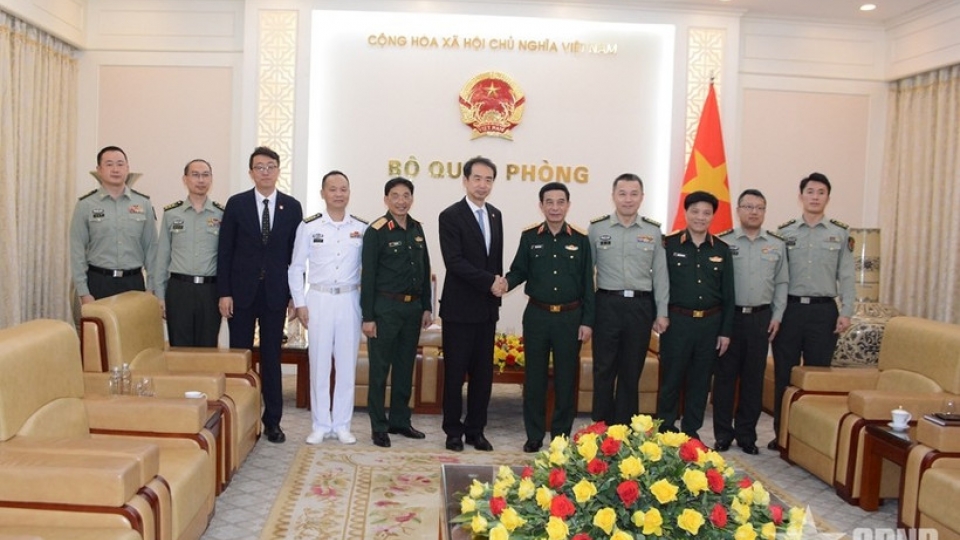
Defence Minister praises growing military ties with China
Minister of National Defence Gen. Phan Van Giang has spotlighted the deep, substantive and effective relationship with China, crediting it with strategic guidance from leaders of the two Parties and countries.