Chinese expert: China-Vietnam cooperation rises to higher level

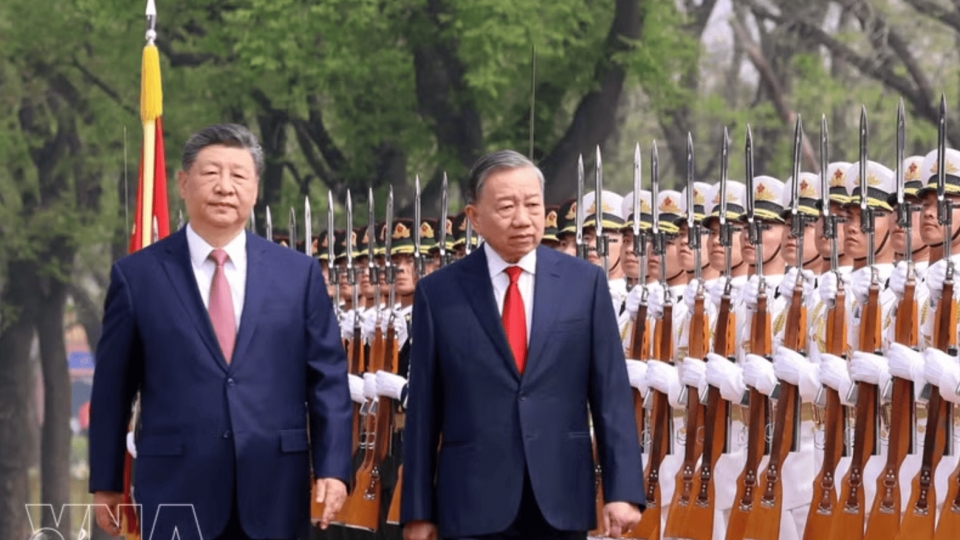
VOV.VN - A Chinese expert has said China-Vietnam cooperation is rising to a higher level, citing outcomes from the recent state visit by Vietnam’s Party General Secretary and President To Lam to China from April 14 to 17.
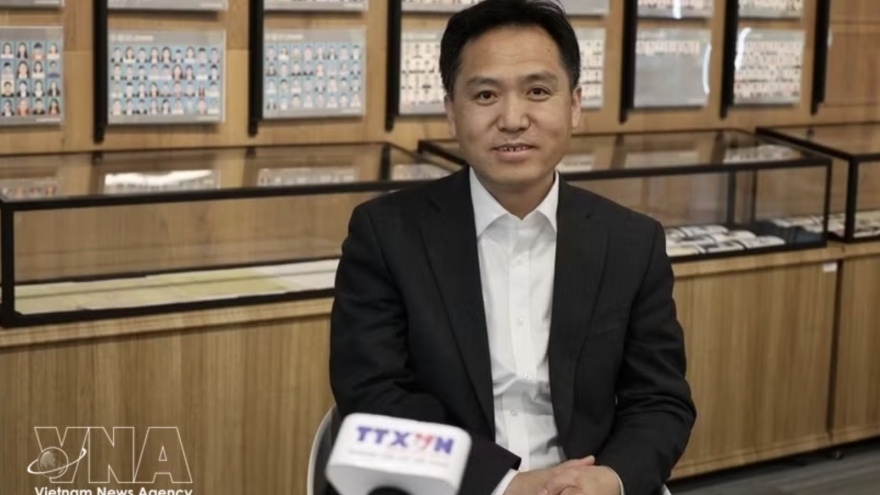
Lei Xiaohua, a researcher at the Institute of Southeast Asian Studies under the Guangxi Academy of Social Sciences, wrote in the Global Times, a publication of the People’s Daily, the mouthpiece of the Communist Party of China, that the two sides issued a joint statement during the visit proposing to advance the building of a China-Vietnam community with a shared future that carries strategic significance at a higher level.
This shows China-Vietnam relations are accelerating toward a new stage, a choice both sides have actively made based on shared strategic interests, practical development needs and responsibility for regional stability.
According to the author, the push for stronger cooperation stems from profound changes in the international environment, where regional stability and strategic cooperation have become more important than ever.
The world today is increasingly unstable, with rising unilateralism and protectionism, major shifts in global industrial and supply chains, intensifying geopolitical competition, and growing uncertainty.
In this context, strengthening strategic exchanges and deepening cooperation between China and Vietnam is not only necessary for each country’s modernization, but also a requirement for jointly addressing shared challenges. Lei said the upgrade in cooperation is reflected in four aspects.
First, a higher level of political trust. The joint statement states that the two countries share common aspirations and a shared future. It identifies building a China-Vietnam community with a shared future of strategic significance at a higher level as the common direction for bilateral relations in the new period, showing stronger positioning of ties and deeper strategic trust.
Second, a higher level of strategic linkage. In an article published in the People’s Daily, To Lam proposed raising the level of strategic linkage between the two countries. The joint statement also sets out specific directions, including linking development plans between the Belt and Road Initiative and the “Two Corridors, One Belt” framework; strengthening connections across trade, infrastructure, logistics and markets; accelerating rail, road and border connectivity; and making railway cooperation a new focus of strategic cooperation.
After travelling on China’s high-speed rail, To Lam noted that although he passed through only a few provinces, he could still see balanced development among them. This observation shows that consensus is forming between the two Parties and the two countries on major issues such as governance, as well as on conditions for boosting cooperation in specific areas such as railways.
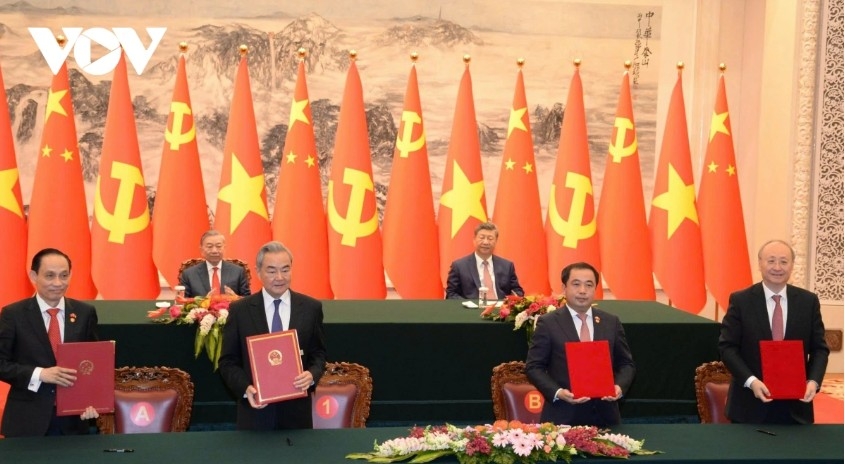
Third, cooperation has reached a higher level. The two sides signed 32 cooperation documents across fields including economics, supply chains, customs, science and technology, people’s livelihoods and human resource development.
During his visit to Nanning, the top Vietnamese leader said, “I hope Vietnam and China will work together to make science, technology and innovation a core driving force”.
This statement shows that cooperation has moved beyond traditional trade and economic exchange, shifting from expansion in scale to improvements in quality and modernization, and from traditional cooperation to a higher level of industrial coordination and modernization.
Fourth, a stronger public foundation. During the visit in Nanning, To Lam expressed confidence in the younger generations of both countries, saying that nurture great aspirations, continue to innovate, dare to think and act, and become a bridge of knowledge and strong vitality, helping bring China-Vietnam relations firmly into the future.
The joint statement also proposes organizing activities such as the China-Vietnam People’s Forum, border residents’ festivals, and study programmes for Vietnamese youth in China, while promoting tourism as an important bridge for people-to-people exchange.
The expert added that for China-Vietnam cooperation to promote in a stable and in-depth manner, traditional “comrades and brothers” ties need to be turned into broader, more stable and more sustainable social consensus.
He also explained the significance of elevating cooperation to a higher level. First, bilateral relations are developing from cooperation between two countries into an important positive driver for regional stability.
The stronger China-Vietnam relations are, the greater their support for regional peace and stability. Second, both sides support multilateralism and open cooperation, and are committed to maintaining an international system centered on the United Nations and an international order based on international law.
Third, in an increasingly unstable world, a stable, sustainable and more strategic China–Vietnam relationship makes an important contribution to regional peace and prosperity.
The article concludes that elevating China-Vietnam cooperation to a higher level is a necessary choice shaped by global changes, regional conditions and the needs of bilateral relations.
The article concludes that elevating China-Vietnam cooperation to a higher level is a necessary choice to respond to global changes, regional conditions and the needs of bilateral relations.
It stems from shared strategic interests, is pushed forward by modernization needs, and benefits from high-level political determination and deep bonds between the two peoples.
As the international situation becomes more complex and uncertain, the value of high-level cooperation stands out more clearly.
As long as both sides follow high-level directions, deepen strategic trust, expand mutually beneficial cooperation and strengthen public support, building a China-Vietnam community with a shared future will make rapid progress.
Vietnam, China accelerate building of multidimensional connectivity framework
The “comrades and brothers” friendship between China and Vietnam continues to be deepened through close neighbourly ties, while the strategic importance of the China–Vietnam community with a shared future has become increasingly prominent within the framework of comprehensive strategic cooperation.